

About the manufacturer
Horse Bit, Spur & Stirrup Manufacturing in China
Relia manufactures horse bits, spurs and stirrups in Qingdao, China, for overseas tack brands, importers and distributors. Choose existing designs for wholesale supply, or develop your product from a customer drawing with your own logo. We connect the component geometry, materials, finish and assembly details so you can compare a complete version before placing an order.
Three parallel product ranges
From component to assembly
Manufacturing Around the Selected Construction
At Relia, we make these three product ranges ourselves. The production route follows the part: casting, forging or stamping can be arranged where appropriate, with the required machining, welding, polishing, surface treatment and assembly.
Our horse-bit casting work includes prepared mould assemblies, pouring and work on the connected castings. Spur and stirrup projects follow their own geometry and component requirements; the final finish and assembled fit remain part of the same product decision.
- GeometryDefine the shape and connections.
- Making routeSelect the forming and surface work.
- Complete buildReview parts, movement and fit.
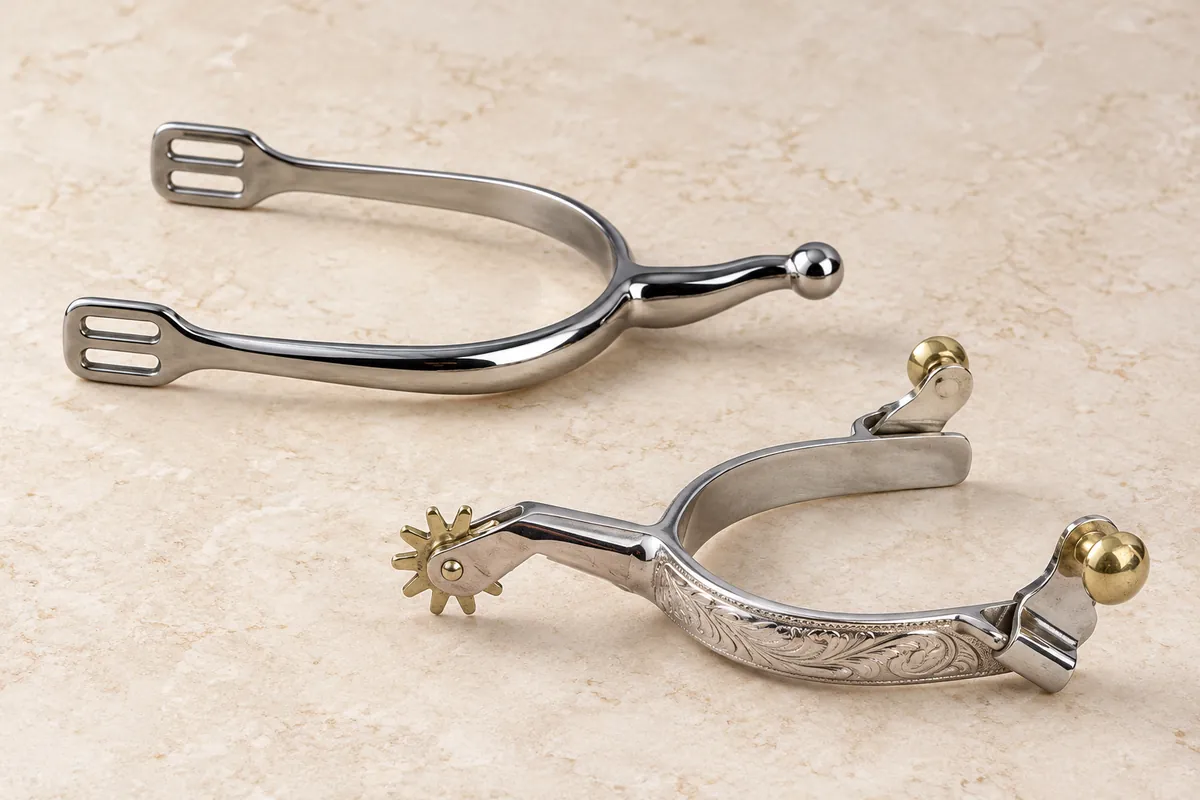
English and Western spur ranges
Spur Manufacturing Around the Boot and Terminal
Relia manufactures English and Western spurs for wholesale ranges and customer designs. Start with the heel-band opening and profile, then define the neck or shank, terminal or rowel, and strap attachments together. A knob-end English spur and a decorated rowel spur give you different constructions to develop, with the boot interface kept visible in each choice.
For your own design, send the complete drawing and logo artwork with the band, shank, slots or buttons and paired arrangement identified. We plan the required forming, finishing and assembly work around that geometry. The sample review follows the band profile, shank alignment, strap route and the fit or movement of the specified terminal or rowel.
- Heel bandOpening and profile around the intended boot.
- Shank & terminalReach, direction and the selected tip or rowel.
- Strap routeSlots or buttons and the supplied attachment arrangement.
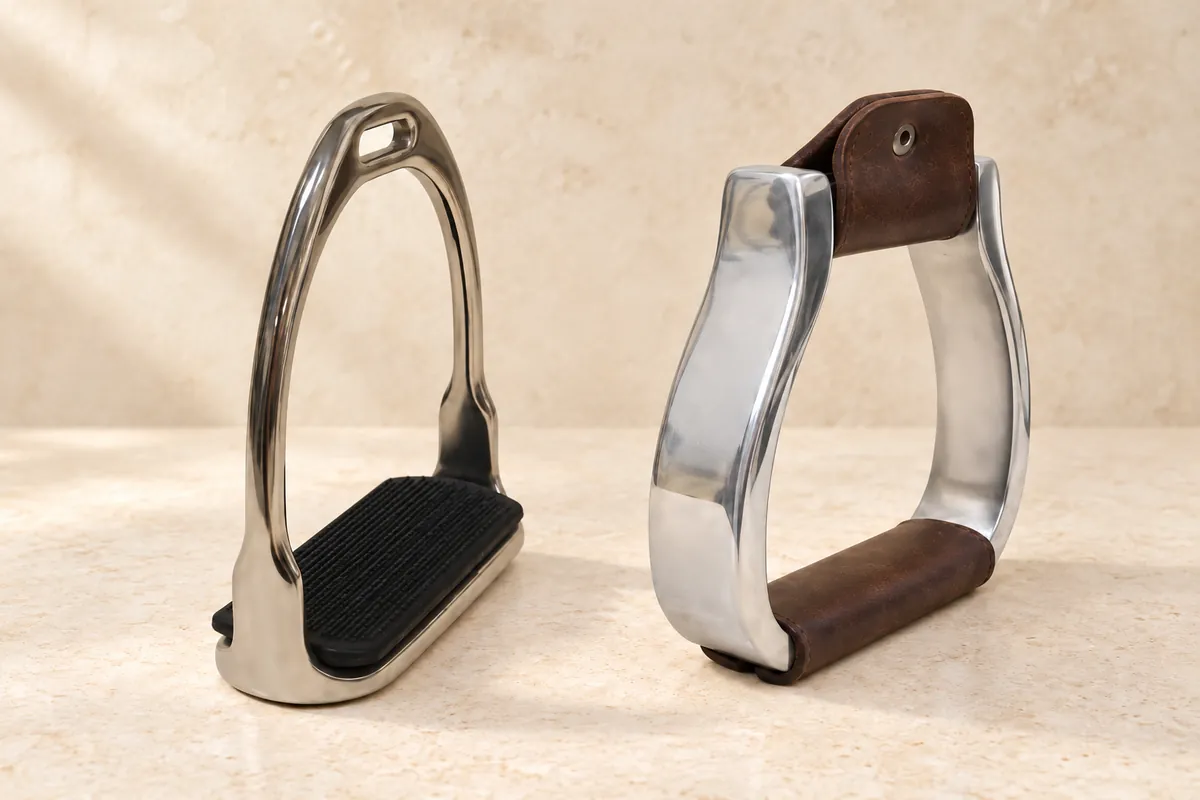
English and Western stirrup ranges
Stirrup Manufacturing Around the Frame and Tread
Relia manufactures English and Western stirrups for wholesale supply and drawing-based development. Compare the frame opening, usable tread and upper leather slot or fender connection as one assembly. An English frame with a black pad and a broad-sided Western construction give you different upper connections and foot-surface layouts to consider.
For a custom version, define the upper interface, frame profile, pad boundary and supplied fixing parts before choosing the surface appearance and positioning your logo. We plan the making, finishing and assembly route around that construction, then review its materials, dimensions, appearance and component fit. Keep each replacement pad and its fixing arrangement connected to the exact frame design.
- Upper connectionThe slot, leather or fender interface and supplied parts.
- Frame & treadUsable opening, foot surface and pad boundary.
- Complete assemblyFrame, pad and fixing parts reviewed together.
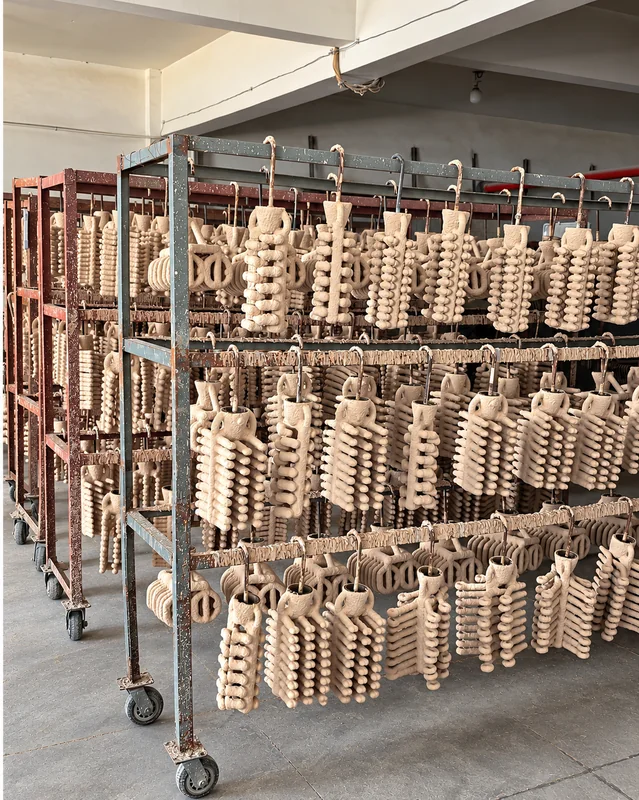
Horse-bit component casting
Prepare the Shape Before the Pour
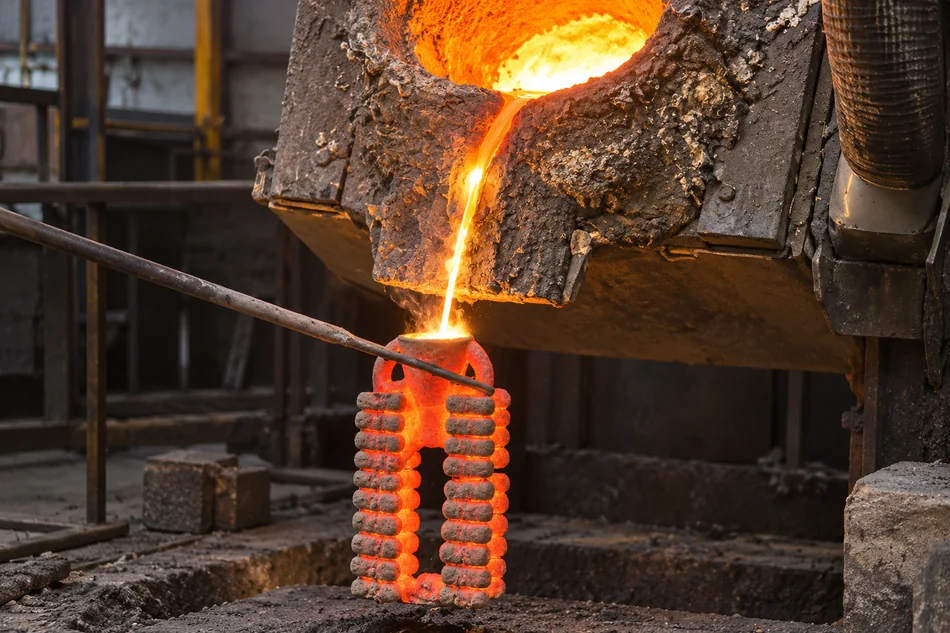
For cast horse-bit components, the prepared mould assembly carries repeated part shapes around a central feed path. Coating and arranging the assemblies are preparation stages for the pour. The intended part profile and its connecting features need to be settled before the cast pieces are separated.
Your drawing should identify the component outline and the surfaces that later meet a cheek, link or other part. Those interfaces help define what must be worked and checked after casting.
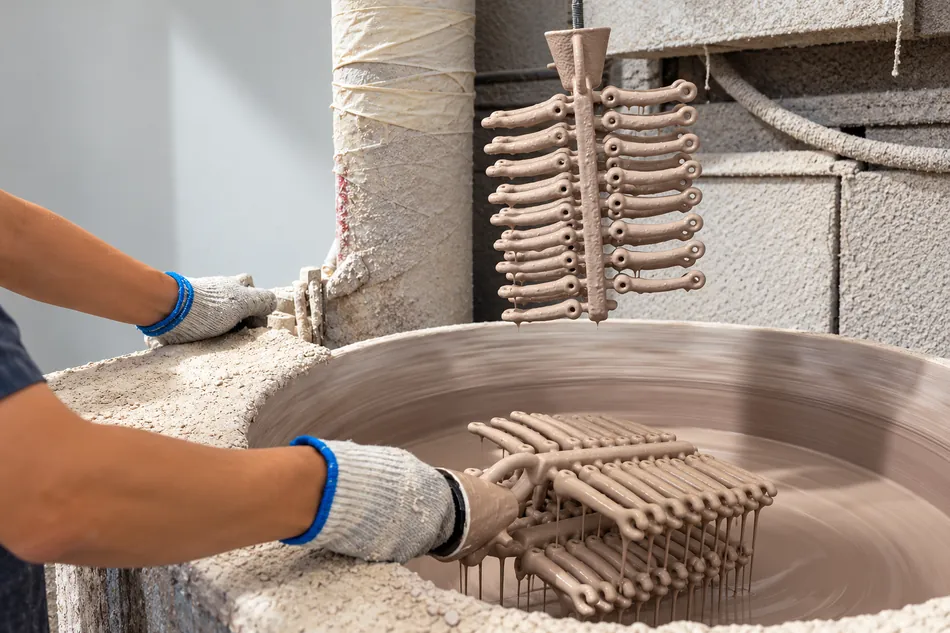
From mould assembly to metal
Pour the Component, Then Complete the Working Parts
Molten metal enters the prepared mould assembly and forms connected components. That first casting still includes its feed connections. Separation and surface work turn the connected pieces into individual parts for the selected assembly.
For a horse bit, the mouthpiece profile, joint and cheek connections matter together. A polished outside surface is only one part of the finished configuration; the connecting geometry and component movement also need attention.
Separation, finishing and assembly
Work the Surface and Preserve the Interfaces
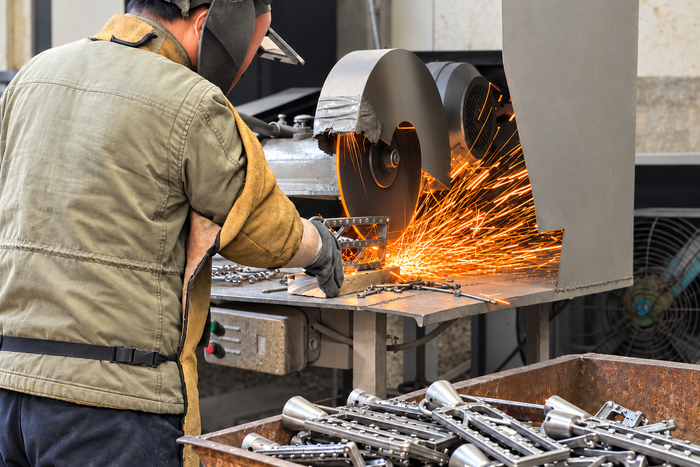
Abrasive work separates casting connections and dresses the remaining surface. Machining, welding, polishing and surface treatment are then selected as the particular design requires. The components are brought together as the agreed product version.
For decorated metalwork, keep the pattern and surface appearance separate from the joint, slot or other functional interface. This gives you a clear way to review a finish change without losing the dimensions and connections that make the assembly fit.
For a decorative version, explore our artisan hand-engraving approach for bits, spurs and stirrups. Plan the pattern area alongside the working connections and your separate logo layout.
Material, size, finish and fit
Four Checks Around the Complete Product
We carry out four practical areas of checking: materials, dimensions, appearance, and moving parts or assembly fit. The detail follows the product. A bit joint, a spur rowel and a stirrup pad or fixing arrangement each bring a different connection into the review.
Identify the critical interfaces in your drawing so the sample can be compared against the same construction, finish and supplied parts.
Review the Interfaces for Your Product
- Horse bits
- Compare the mouthpiece and cheek dimensions with the drawing; review joints, rings and assembled movement.
- Spurs
- Review heel-band profile, shank alignment, strap slots and the fit or movement of the specified terminal or rowel.
- Stirrups
- Compare frame opening, usable tread and upper connection; review the pad and fixing parts with the complete assembly.
Materials
Verify the specified component materials for the selected build.
Dimensions
Check the dimensions and connecting geometry identified for that version.
Appearance
Check the agreed surface appearance, finish and decorative detail.
Moving Parts & Assembly Fit
Check the movement and fit relevant to the complete assembly.
Three independent design briefs
Fit Starts with the Connecting Parts
Each product has its own interfaces. A decorative change should stay connected to the part that carries it, while the working geometry remains clear. Keep these three briefs parallel so a matching finish never hides a different mouthpiece, boot interface or upper stirrup connection.
| Range | Define together | Review on the sample |
|---|---|---|
| Horse bits | Mouthpiece profile, cheek form, joint and attachment points. | Component layout and the movement intended for that assembly. |
| Spurs | Heel-band opening, neck or shank, slots, terminal or rowel. | Boot contact, strap route and the complete paired layout. |
| Stirrups | Frame opening, usable tread, upper slot or fender connection. | Boot space, connecting surfaces, pads and fixing parts. |
Custom product development
Keep Your Drawing and Brand on One Version
Bring a complete drawing or existing sample, the changes you want, and your logo artwork. Agree the component materials and finish alongside the logo size, position and orientation. One identifiable version keeps the functional parts and brand appearance connected.
Product drawing
Geometry, dimensions, interfaces and the supplied component arrangement.
Logo & surface plan
Artwork, position, orientation and appearance on the selected surface.
Speak with our team
Send the Product You Want to Build or Buy
Share the model or drawing, size range and quantity by version. Add the connecting details that matter to your product, your logo artwork if required, and the delivery destination.
Qingdao Relia Saddlery Co., Ltd.Changjiang Road, Qingdao, Shandong, China