

For brands developing a complete Pelham assembly
Custom Pelham Bits from Your Drawings
Develop a Pelham bit with the mouthpiece, cheek attachments and supplied hooks or chain defined together. We manufacture from customer drawings and support your logo, reviewing the complete sample scope with your product team. Show the construction and size your range needs, then agree one assembly and contents list before comparing finish or branding revisions.
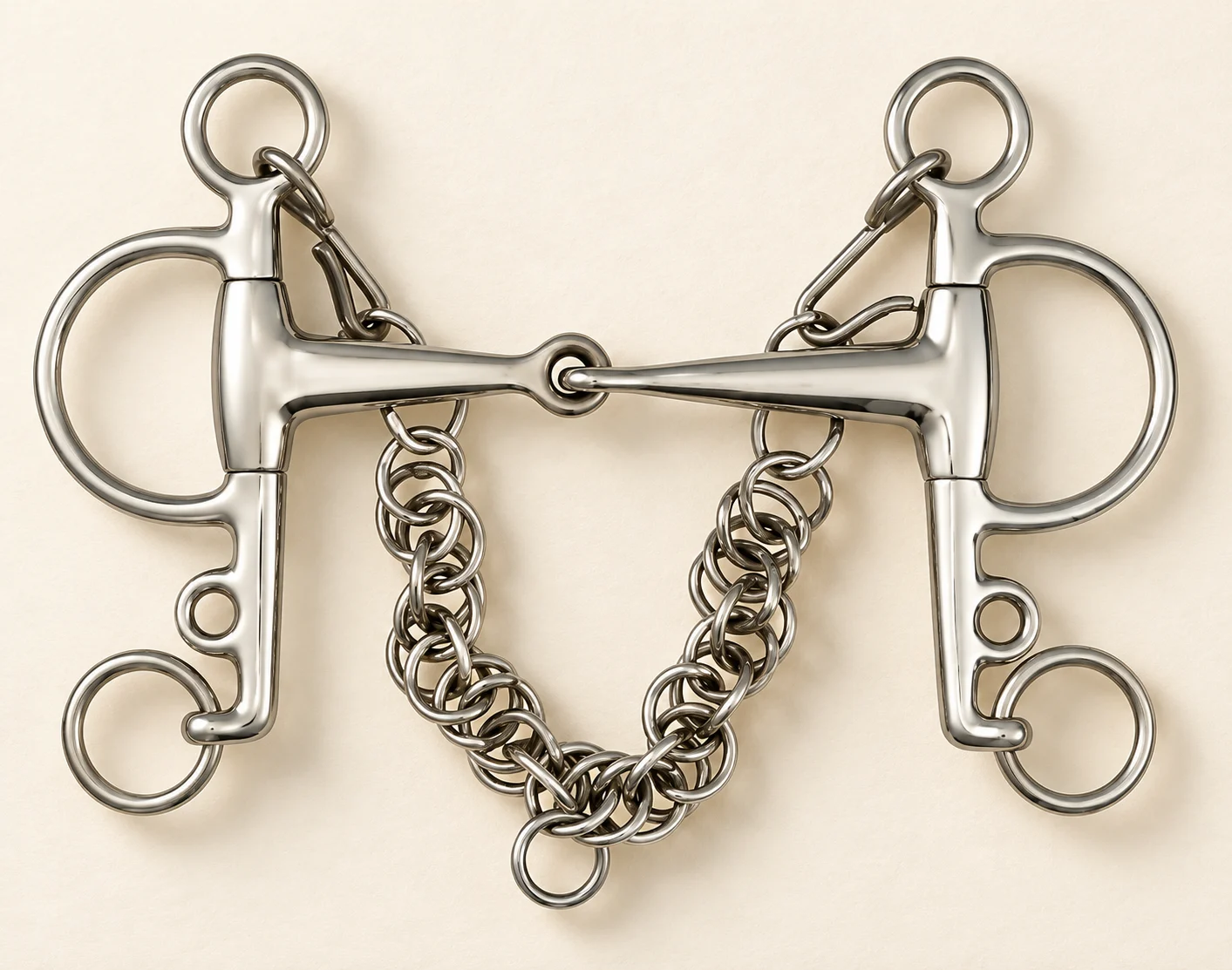
Define the Pelham as a Complete Product
Approve the complete product your brand will quote and supply. Relia manufactures its own Pelham bits and accepts your drawings and logo. Our material, dimensional, appearance and assembly checks keep the mouthpiece, attachment points and agreed accessory set together, so a finish change does not conceal a different assembly.
Model configurations and dimensions
At Relia, we accept customer drawings and customer logos for horse-bit development. The Pelham model includes different mouthpiece constructions and cheek arrangements, so a style name alone is too broad for a new branded product. We connect the proposed assembly to its component materials, interfaces and supplied contents.
Start with the complete drawing, then add detail views for the features that change. The Pelham selection guide provides the separate ready-reference comparison.
Profile, joint or cover construction, section and measured width.
Upper and lower connections located from defined datums.
Itemized hooks, chain and other specified components.
Customer artwork and its agreed location on the assembly.
Choose the Mouthpiece Construction
Our range includes distinct Pelham mouthpieces rather than one universal specification. The examples below make the starting construction clear. They also show why a covered mouthpiece, a 13 mm jointed mouth and a 16 mm jointed mouth need separate component and assembly records.
For your design, specify the actual geometry and materials instead of carrying one model’s dimensions into another.
| Model | Mouthpiece configuration | Assembly details |
|---|---|---|
| 25456-16-125 | Single joint; 5-inch width; 16 mm | 136 mm cheeks |
| 42456/16/125 | Curve-jointed egg Pelham; 125 mm; 16 mm stainless steel | Polished; chain and hook listed |
| D22530/13/125 | Jointed Pelham mouth; 125 mm; 13 mm | Separate model specification |
| #72 | Curved jointed mouth with black soft rubber | 120, 125 and 140 mm mouth references |
Locate the Upper and Lower Connections from Datums
Draw the upper eye, mouthpiece junction and lower attachment positions from named reference points. Include the opening sizes, section profile and required connection clearances. A single overall cheek length cannot locate all of those features.
The model 25456-16-125 detail shows the upper eye and lateral ring beside the mouthpiece. Your custom drawing should describe their exact positions and the intended routing for the full assembly.
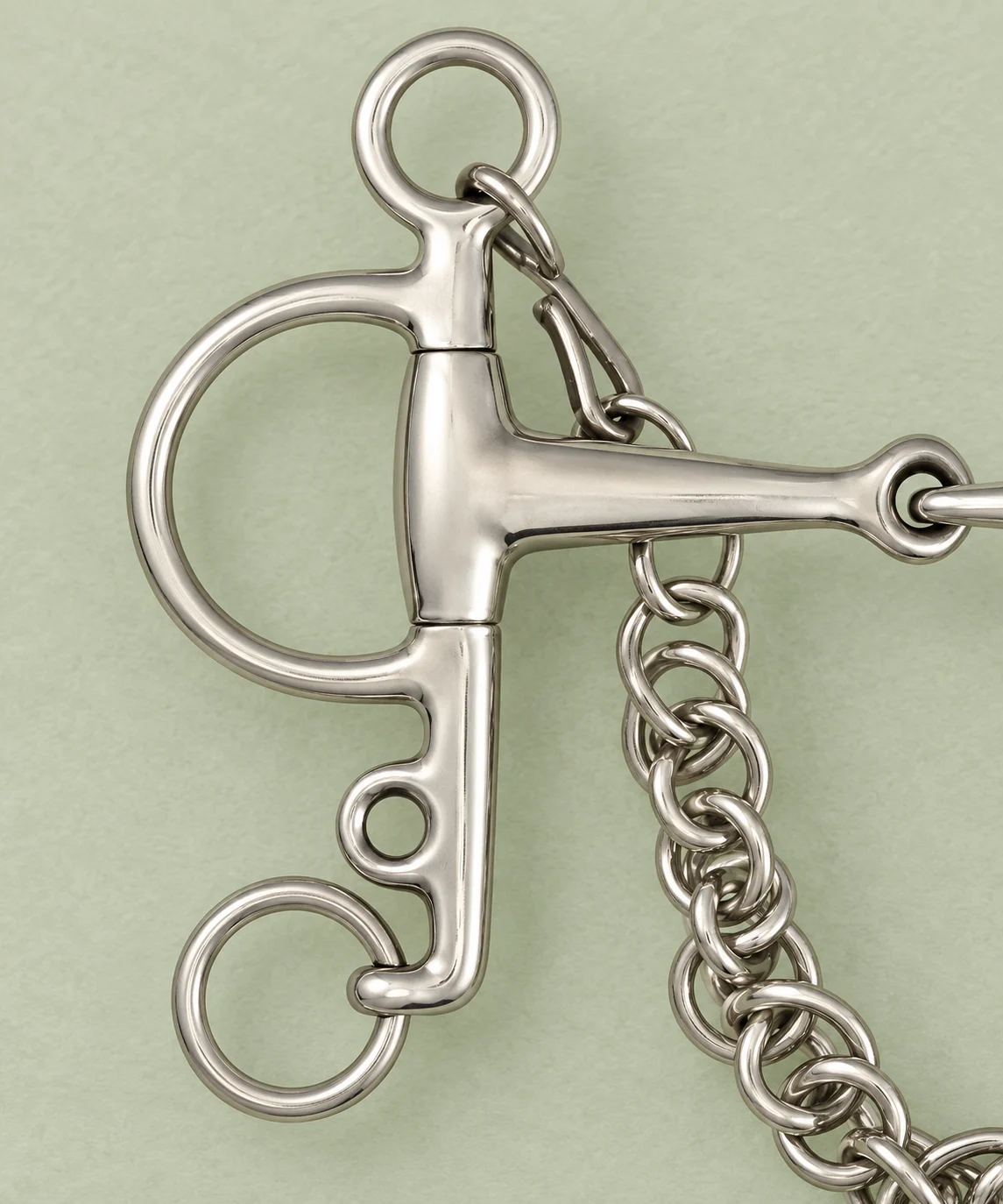
Make the Hook and Chain Set Explicit
Keep the accessory choice with the complete assembly. The 42456/16/125 configuration includes a chain and hook. For your custom version, identify each accessory’s attachment, material requirements and dimensions in the component schedule, then agree the supplied count and arrangement against the complete sample.
| Part group | Record in the project | Check on the complete sample |
|---|---|---|
| Upper attachments | Eye geometry, hook type and connection | Clearance, placement and agreed routing |
| Chain | Length, section, link form and material requirements | Exact supplied configuration |
| Lower attachments | Opening sizes, location and movement requirements | The intended connections and surfaces |
| Other contents | Each separately supplied part and quantity | Itemized sample inventory and instructions |
Connect the Production Plan to the Assembly Checks
The Pelham drawing locates the upper eye, mouthpiece junction and lower attachment from named datums. We arrange the applicable forming, machining or welding, polishing, surface treatment and assembly for that construction. Any hooks and chain remain identified components with their own material and connection requirements.
Our checks cover materials, dimensions, appearance and moving parts or assembly fit. Review the finished mouthpiece profile, cheek positions, openings and accessory arrangement on one complete sample. Keep the measurement pose, accepted artwork and supplied count attached to that same version, giving your production decision more substance than an overall cheek dimension or a polished body alone.
- Technical definitionComplete drawing, detail views, materials and contents.
- Production reviewAgreed component route, connections, finishing and tooling scope.
- Dimensional reviewMouthpiece, cheek datums, openings and attachment clearances.
- Assembly reviewRequired movement, surfaces, supplied components and appearance.
Define the Mouthpiece Section and Outer Junction
Factory model 25456-16-125 lists a 5-inch, 16 mm single-jointed mouthpiece. For your custom version, draw the section profile and its transition into the cheek connection. The width and thickness fields belong alongside those details, with clear measurement positions.
Record the material and finishing requirements for each component. If your project uses a covered construction such as model #72, add the required outer profile, ends and underlying component specification as a separate design.
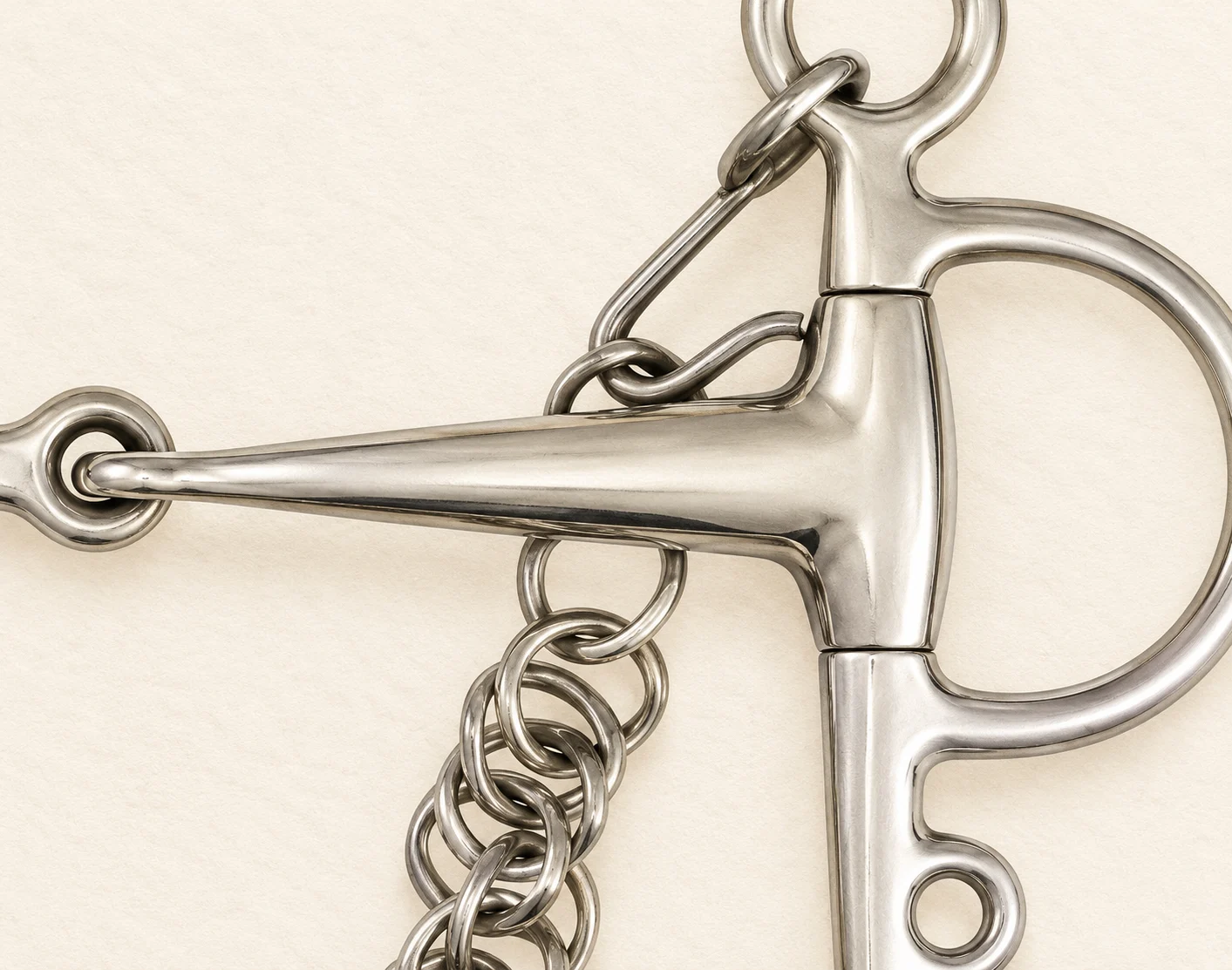
Review the Whole Hooked and Chained Assembly
The 42456/16/125 reference combines its jointed mouthpiece, cheek arrangement and listed chain-and-hook supply. That is a useful reminder to approve the complete version, not only the polished metal body. Compare the supplied parts, required movement and attachment details with the same drawing revision.
For a joint redesign, continue with the mouthpiece development guide. For another cheek construction, use the shank and attachment drawing guide.
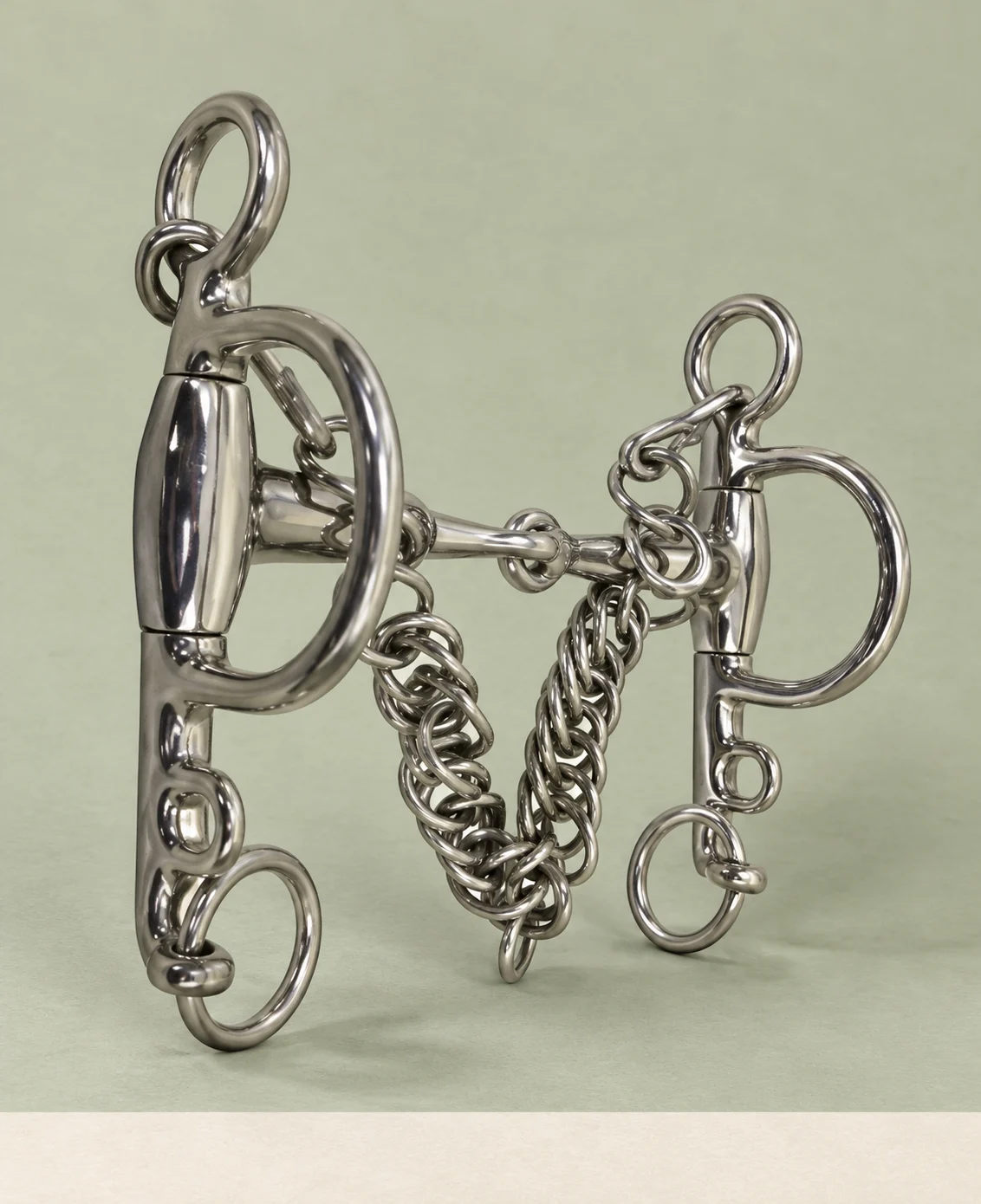
Keep Every Pelham Version Identifiable
Give each mouthpiece, measured cheek drawing and accessory combination its own product version. Connect the logo artwork and finish reference to the accepted complete sample, then identify the quantities and packing for that version. A later cover, joint or attachment change should have an explicit revision.
Review the shared OEM agreement scope · Develop a full-cheek drawing project.
Mouthpiece, cheeks and detail drawings that belong together.
Hooks, chain and any other agreed supplied parts.
Artwork location and the accepted finish sample.
Accepted sample, version quantities, packing and current terms.
Keep the Complete Assembly Visible in the Brief
Bit references show how much the cheek, ring arrangement and mouthpiece can differ. For your Pelham project, identify the precise reference and supply a complete assembly drawing so the attachments remain part of the discussion.
We review your logo position against that defined construction and finish, with the accepted sample kept as the reference for the ordered version.
Specify the Pelham as a Complete Assembly
Choose the construction and size for the intended model.
Include the complete side geometry and supplied accessories.
Keep drawing, finish, artwork and accepted sample aligned.
Send Your Pelham Assembly Drawings
Send the complete mouthpiece and cheek drawings with attachment positions, required materials and accessory schedule. Add your logo artwork, proposed range and quantities. We can review the design and discuss a sample covering the full branded assembly.
Send your product brief · Explore our factory business
Qingdao Relia Saddlery Co., Ltd.
info@reliasaddlery.com · +86 18561762631
Changjiang Road, Qingdao, Shandong, China
- Choose the productSend the model code, product link or your drawing.
- Describe your versionInclude the size, construction or appearance you need to discuss.
- Plan the next stepAdd quantity and destination, then agree the sample and quotation scope with us.