

Custom frame and tread development
Custom English Stirrup Frames and Treads
Develop an English stirrup around your frame, tread and upper leather-slot drawing. We manufacture stirrups and support your logo, so a saddle brand or distributor can define its own complete geometry. Bring the intended boot and leather into the sample brief, then agree the dimensions, materials and supplied parts your team needs to review before extending the range.
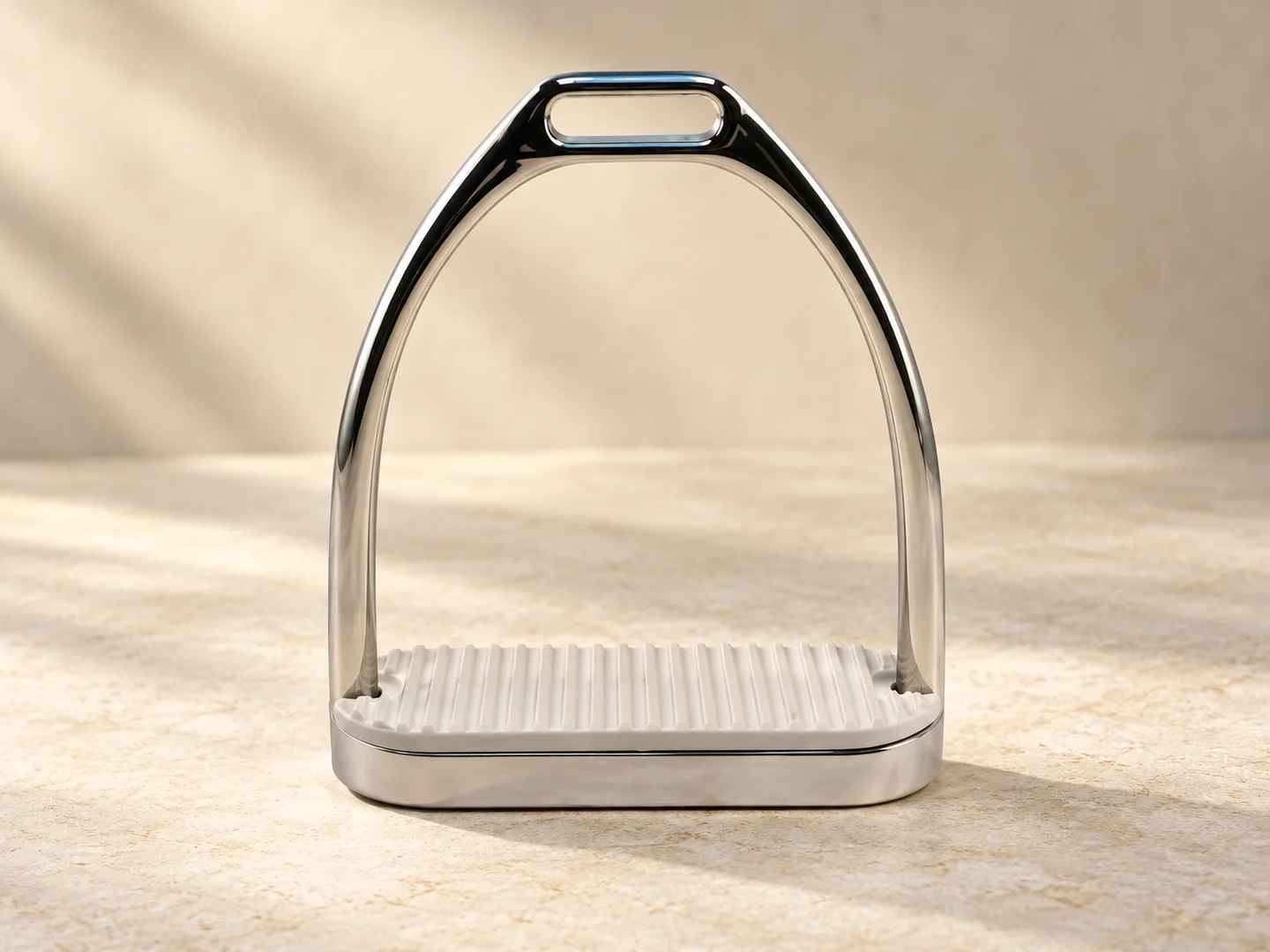
Separate Frame Options from Tread Versions
Keep the boot space and leather connection within the same design. Relia manufactures English stirrups and accepts your drawings and logo. Our material, dimensional, appearance and assembly-fit checks follow the frame with its selected tread or pad, giving your team a complete sample to evaluate.
Choose the tread direction your design needs. The 25855 white-pad, 25855-RB black-wraparound and 25854 picked-tread forms give distinct frame-and-tread examples. Keep the chosen construction in view while your drawing defines the actual boot space, leather slot, component materials and supplied parts.
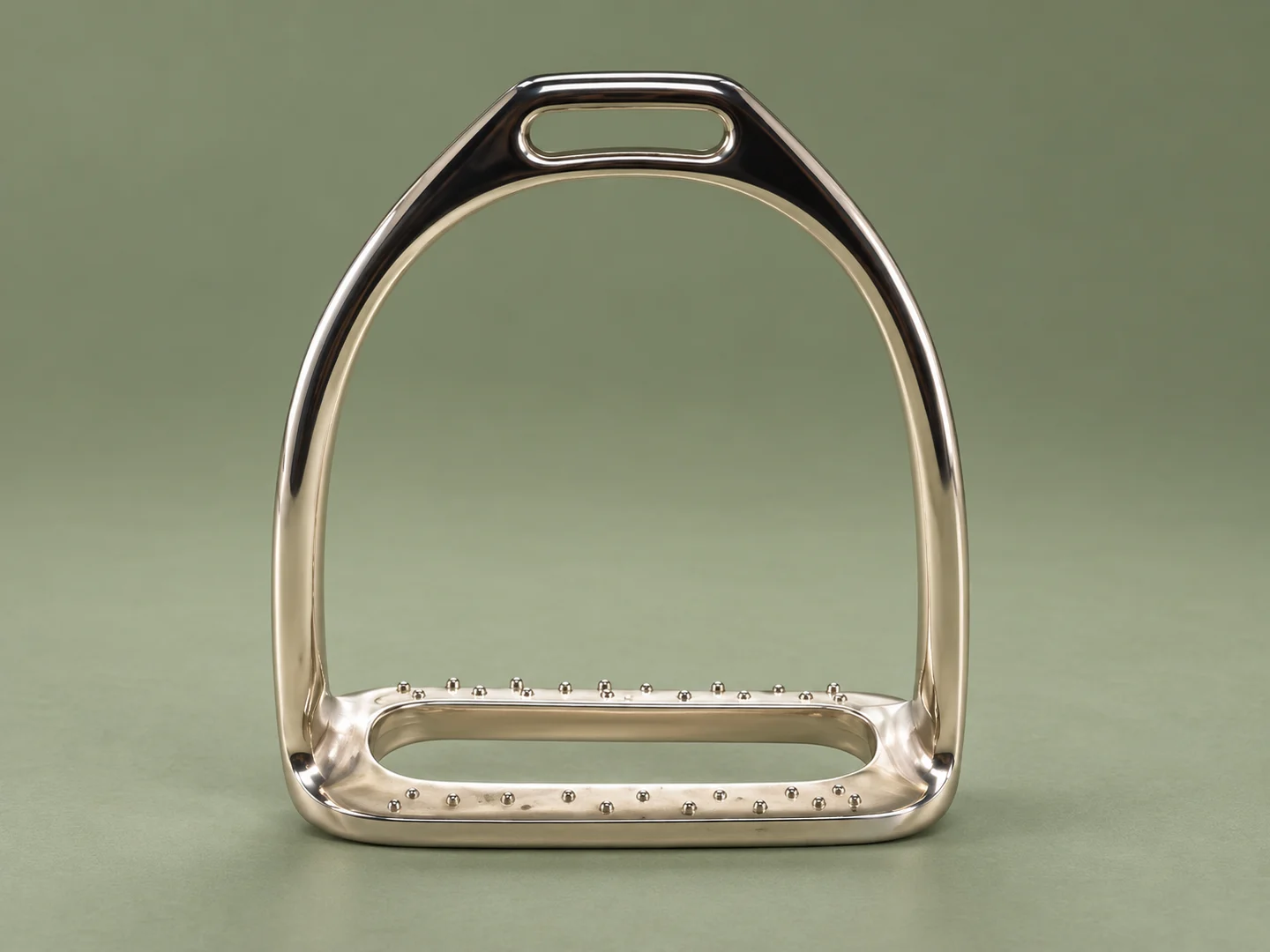
Dimension Three Interfaces on One Assembly
The upper slot, boot opening and tread work as one connected arrangement. Show each in the same assembly drawing so a wider tread does not become an unrecorded change to the leather path or inner clearance. Give measurement endpoints and identify the boot and leather used for the sample discussion.
| Interface | Drawing detail | Reference equipment |
|---|---|---|
| Upper attachment | Clear slot width, depth, edge profile and orientation | Actual stirrup leather |
| Frame opening | Internal envelope and boot clearance | Intended footwear |
| Tread | Usable surface and connection to the frame | Selected tread or pad arrangement |
Link Frame Geometry to Finished Features
The frame section, upper attachment, side profile and tread junction define the features to make. We select the appropriate forming operations, with machining or welding where needed, followed by polishing, surface treatment and assembly. A pad, metal tread or separate fixing keeps its own place in the component plan.
Our checks cover materials, dimensions, appearance and moving parts or assembly fit. Review the finished slot edges and usable tread with the actual boot/leather arrangement and installed components. Keep the logo and finish acceptance with that same frame revision, so a broader platform or changed surface does not hide a different opening or leather path.
- Define
Assembly views, critical interfaces and part materials.
- Review
How frame shape, slot edges and tread junction will be made.
- Compare
A sample against the defined dimensions and finished surfaces.
Keep the Leather Slot in the Fit Review
The top opening needs more than a width label. Include its usable opening, edge transitions and the path the leather follows through it. Check that arrangement with the intended leather during the sample discussion, using the boot, tread and attachment guide to keep the three interfaces connected.
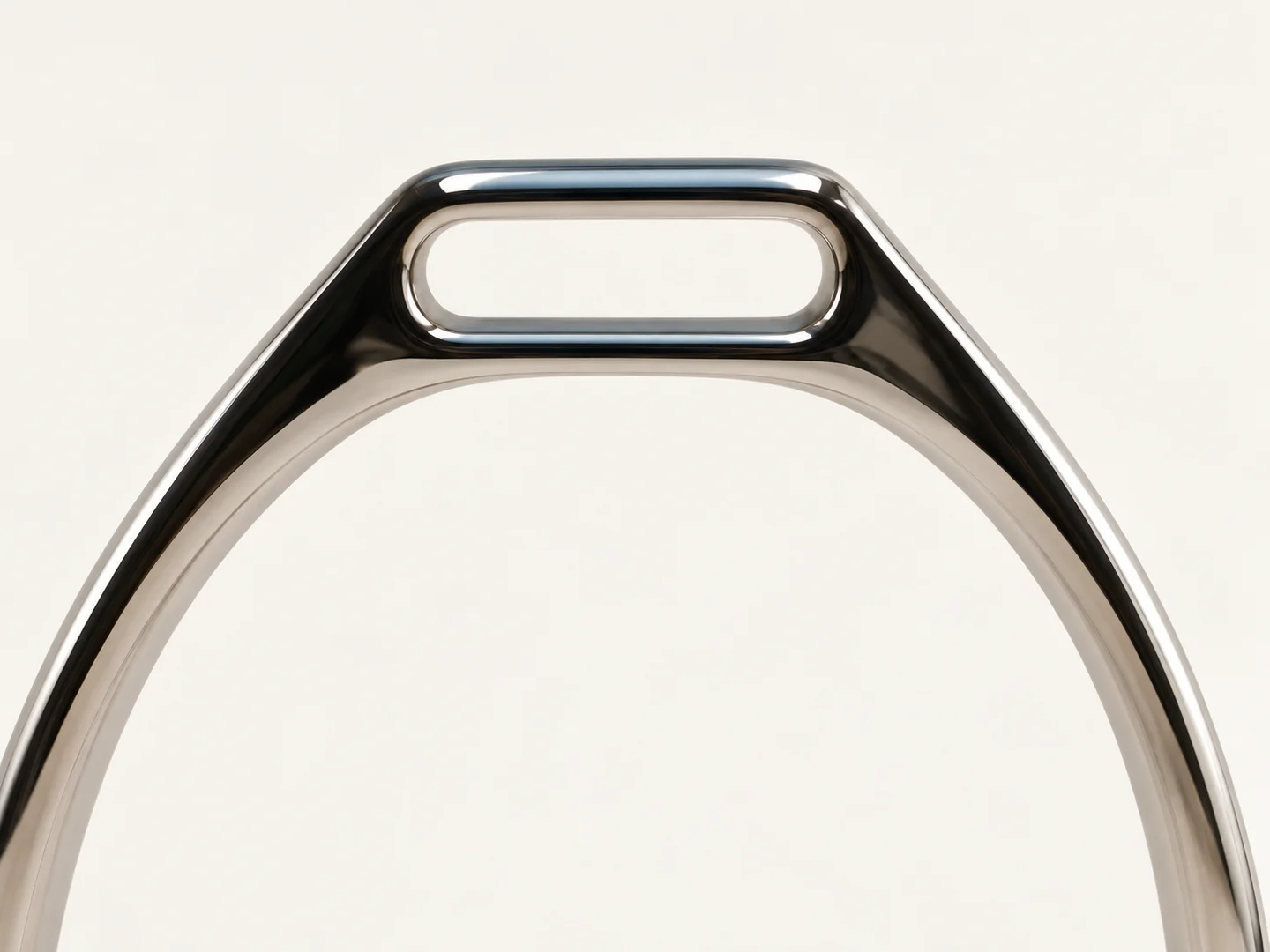
Keep Material and Geometry Decisions Distinct
A stainless-steel model example can explain a frame shape without settling the material for a new design. Allocate the frame, tread, pad and any fixings separately. If your main decision is an aluminum component and finish brief, use the more focused custom aluminum stirrup development page.
Outline, section shape, attachment and clearances.
Material and finish for each actual component.
How the tread and any pad or fixing meet the frame.
Give the Logo Its Own Placement View
Send your logo artwork with a marked face, size and reading direction on the selected frame revision. Keep it separate from dimensions and working-surface notes so both remain legible. We can discuss the branding method and sample appearance for that construction and finish.
| Reference | Include |
|---|---|
| Product revision | The frame and tread drawing carrying the logo |
| Artwork | The file and version to use |
| Placement view | Proposed surface, size and orientation |
| Appearance target | The selected finish sample or clearly described target |
Compare the Tread as Part of the Frame
The model’s 25854 black-pad version provides another complete tread arrangement to discuss. For a wider or differently shaped custom tread, specify the working surface, its edge and its connection to the frame together. Keep any replacement requirement in the serviceable tread assembly brief.
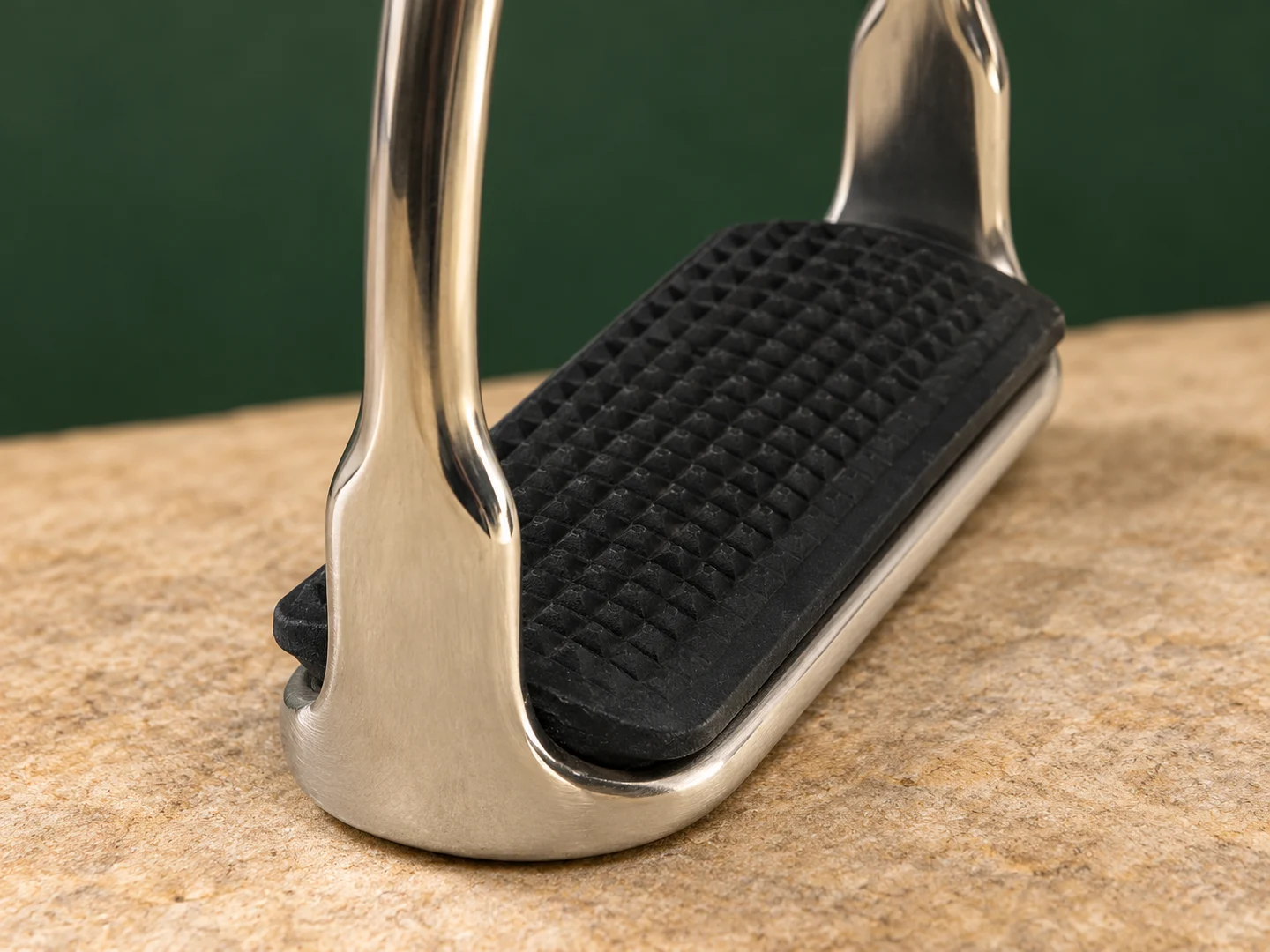
Turn the Drawing into a Manageable Sample Scope
Choose the dimensions and interfaces that will decide the first sample. Bring those together with the material schedule, logo artwork and selected appearance. Record accepted changes on one revision before discussing quantities, sample arrangements and the next production step.
- Product brief
Frame and tread drawings, boot and leather references.
- Sample review
Upper interface, usable tread, clearances and logo appearance.
- Agreed version
Accepted drawing, component inventory and quantities by version.
Define the Stirrup from the Opening to the Tread
Use complete stirrup references to discuss frame outline, tread configuration and appearance. Select a reference direction, then identify the opening, upper slot and usable tread on your drawing.
For a branded version, send the logo artwork with its intended position. We review it against the selected construction and finish before agreeing the sample scope.
Define the Stirrup from the Opening to the Tread
Mark the usable opening, upper slot and complete frame outline.
Identify the foot surface, pad boundary and supplied fixing parts.
Keep the dimensions, finish and artwork position on the same revision.
Share the Frame, Tread and Leather Details
Send your frame and tread drawings, upper-slot dimensions and intended boot-and-leather references. Add your logo artwork, quantities by version and destination country so we can discuss a focused custom stirrup sample. Send the brief to info@reliasaddlery.com, call +86 18561762631, or use WhatsApp +1 404 203 0971. Qingdao Relia Saddlery Co., Ltd., Changjiang Road, Qingdao, Shandong, China. You can also start your enquiry with our team.
- Choose the productSend the model code, product link or your drawing.
- Describe your versionInclude the size, construction or appearance you need to discuss.
- Plan the next stepAdd quantity and destination, then agree the sample and quotation scope with us.