

Legacy parts · practical replacement
Replacement Tack Fittings When Only the Old Part Remains
Find a replacement fitting by the connection it needs to preserve. Bring the old part together with its strap, holes or mounting area, then compare a buckle or saddle-mounted candidate against that assembly. An unworn counterpart and marked dimensions help distinguish the intended shape from wear or damage.
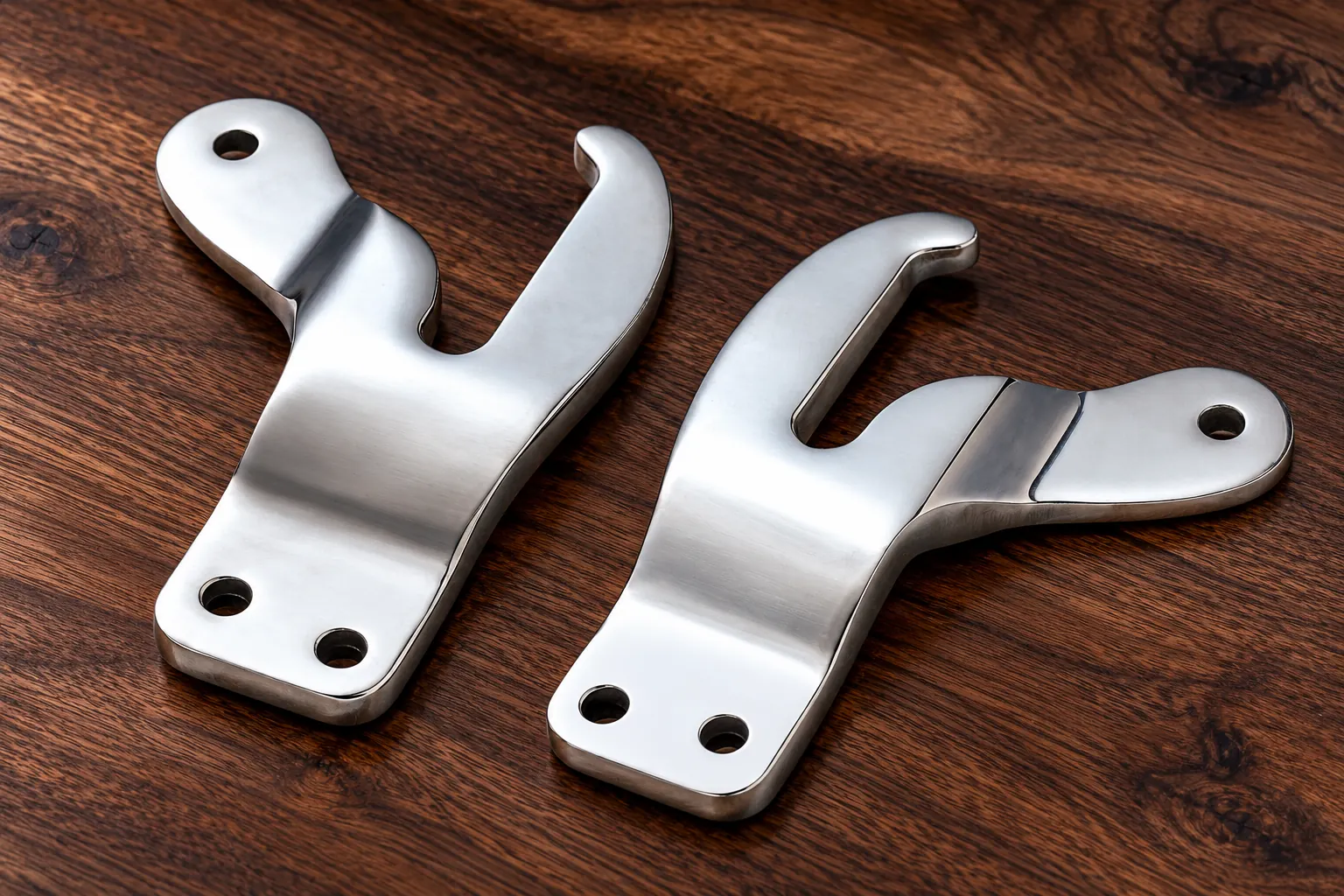
- Keep the connectionInclude the strap or fixing area.
- Separate wearDistinguish damage from intended shape.
- Choose the routeCompare a replacement or a redesign.
Choose for your application
Bring the mating assembly with the old fitting
Relia can discuss current buckle or mounted-bar references against the old connection. Include an unworn counterpart where possible: a bent frame or elongated hole may show damage rather than the geometry your replacement needs.
Recover the useful original shape
- Surviving partPhotograph the whole component and damaged areas.
- Mating assemblyShow the strap or mounting surface it connects to.
- Unworn comparisonUse a counterpart to distinguish wear from design.
Read the design and specification notes
Relia can compare current roller and single-prong buckle options with an existing strap, while the stainless mounted-bar range takes the discussion towards its fixing area. A bent frame or elongated hole may describe damage rather than the intended design. An unworn counterpart, the surrounding strap or a clear mounting view can help distinguish the geometry to retain from the features the repair must replace.
A closer product look
Choose a closure construction before a finish
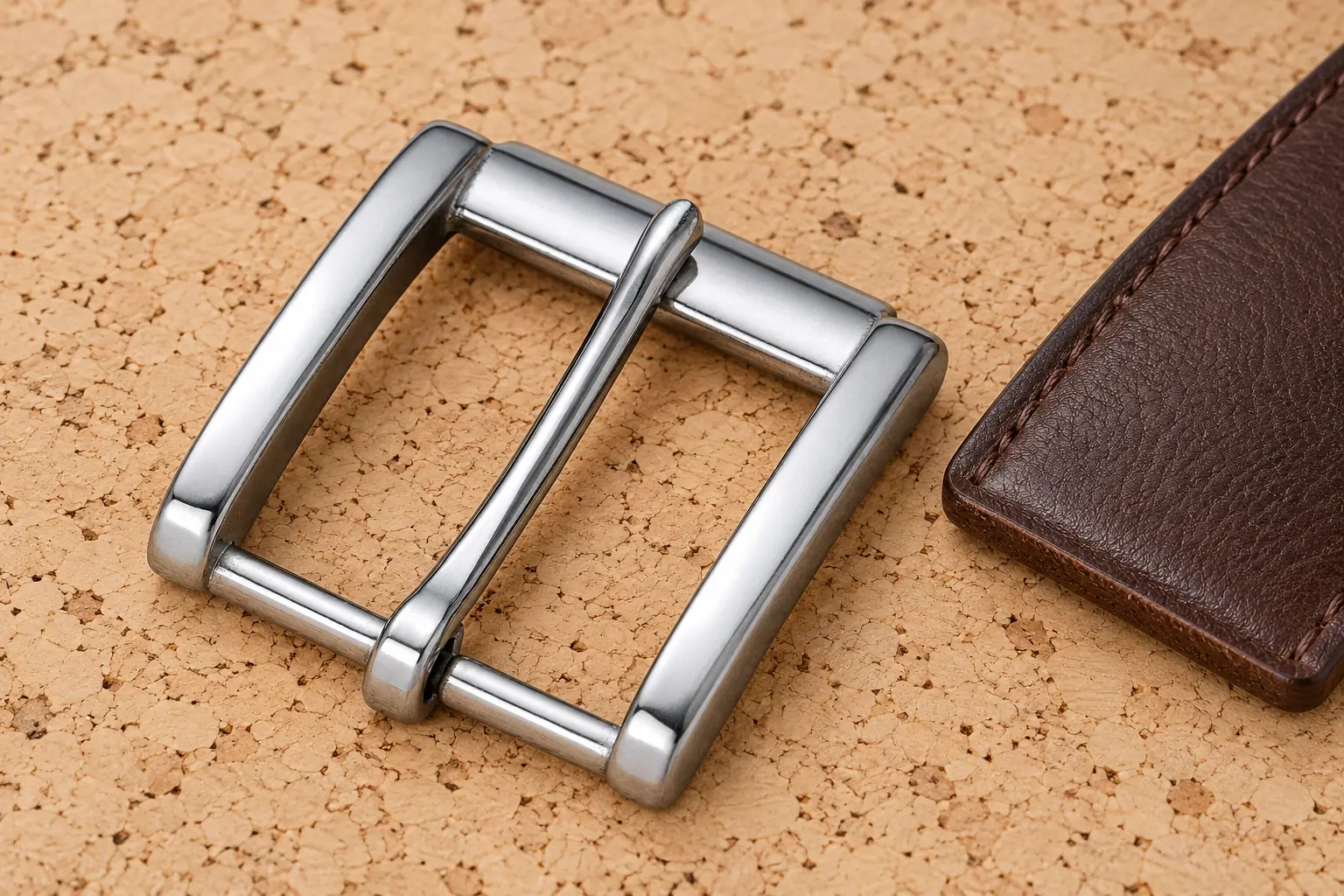
The nominal 1-inch stainless roller and wider stainless single-prong buckle offer different strap routes. Compare the frame, tongue and folded attachment together, rather than selecting the nearest outline or a matching surface colour.
Confirm actual openings and mounting dimensions on the selected replacement drawing.
Compare two strap-closure constructions
- YF103022SS
- Nominal 1-inch stainless roller reference.
- YF103181SS
- Stainless single-prong reference labelled 38 mm and 1-1/2 inch.
- Mating end
- Keep the original fold and hole arrangement beside each.
Read the design and specification notes
YF103022SS provides a Stainless Steel roller-buckle reference with a 1-inch option. YF103181SS provides a Stainless Steel single-prong reference with 38 mm and 1-1/2-inch labels. Compare their frame, tongue and attachment arrangement against the old strap rather than choosing the closest overall outline.
Choose for your application
Keep strap closures separate from mounted bars
The Black 38 mm zinc buckle is a strap-closure candidate; the stainless mounted bar is a fixing-area project. Separating those routes helps you shortlist by installation task before comparing nominal sizes or appearance.
Follow the installation route
- Strap replacementCompare buckle opening, tongue and folded attachment.
- Mounted replacementCompare mounting area and exact supplied bar.
- Surrounding constructionIdentify whether it must stay unchanged.
Read the design and specification notes
The Black 38 mm YF103119DC zinc buckle belongs to the strap-closure comparison. The YF111032SS mounted bar is a different task, with a Stainless Steel material description and a 3-3/8-inch size label. Keep those families separate when shortlisting parts for an old saddle or strap product.
| Route | Current reference | Assembly to provide |
|---|---|---|
| Roller buckle | YF103022SS · 1 inch | Strap fold and holes |
| Single prong | YF103181SS · 38 mm | Strap and pin position |
| Black buckle | YF103119DC · 38 mm | Closure and attachment |
| Mounted bar | YF111032SS · 3-3/8 inch | Mounting geometry |
A closer product look
Measure the feature that controls installation
A useful dimension belongs to a marked feature: strap opening, tongue position or fixing pattern. Keep its axis and unit beside the sample comparison; converting a product range label cannot turn it into a finished-part measurement.
Use measured features and agreed acceptance limits for the replacement comparison.
Make each measurement answer a fit question
- Opening
- Show the usable passage at the relevant position.
- Tongue
- Mark the relationship with the strap holes.
- Fixing pattern
- Mark the mounting locations and reference plane.
Read the design and specification notes
Measure the feature that controls installation: usable strap opening, pin position or mounting pattern. Exact unit conversion is helpful, but it does not turn a product range label into a finished-part measurement. Keep the drawing axes and their units visible when comparing an existing sample with a candidate.
Construction and making
Compare finished edges and the mounting plane
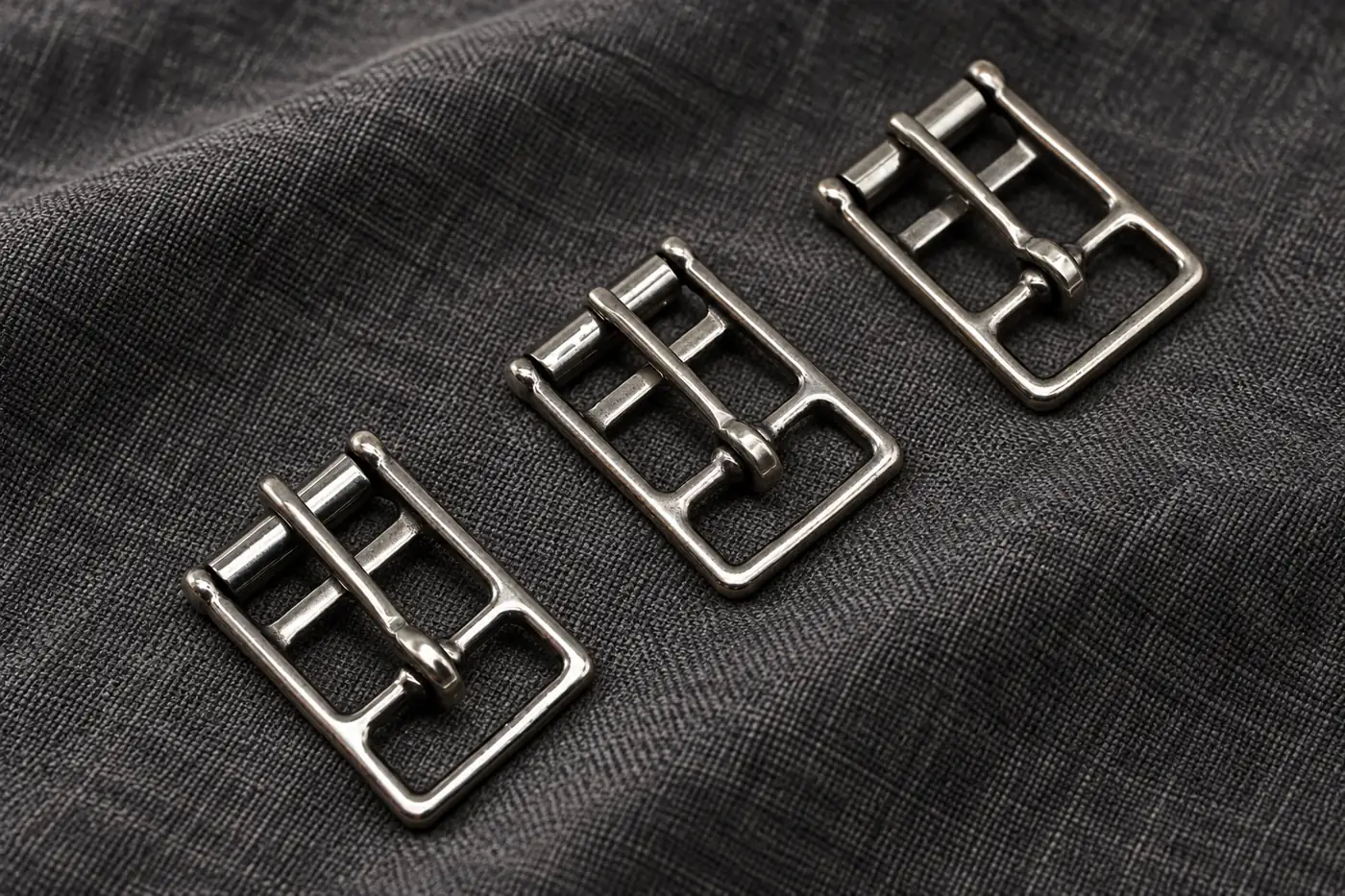
Cutting can leave burrs, and bending can change an angle through springback. Those features affect holes and leather-contact areas. Compare the completed shape and edge condition; the selected part may use another forming route that still needs agreement.
Agree the selected fitting's forming route and completed edge condition.
Link forming features to replacement fit
- Cut or formOpenings and angles establish the installation geometry.
- Finish the edgesHole and strap-contact boundaries need a defined condition.
- Compare the completed partInclude final mounting plane and surface treatment.
Read the design and specification notes
A sheet-formed component can acquire cut-edge burrs and a different angle after bending and springback. Those effects matter at fixing holes and at surfaces touching leather. Other parts may follow a casting route with different trimming features, so the process for the selected replacement must be aligned rather than inferred from its flat appearance. Compare the completed mounting plane, openings and contact edges, with any finishing included.
Share the product link and your intended use, with these details:
- Old fitting photos, unworn counterpart if available and damaged areas
- Mating strap construction or mounted fixing-area view
- Candidate model and marked dimensions that must remain unchanged
A closer product look
Use the black buckle as a closure comparison
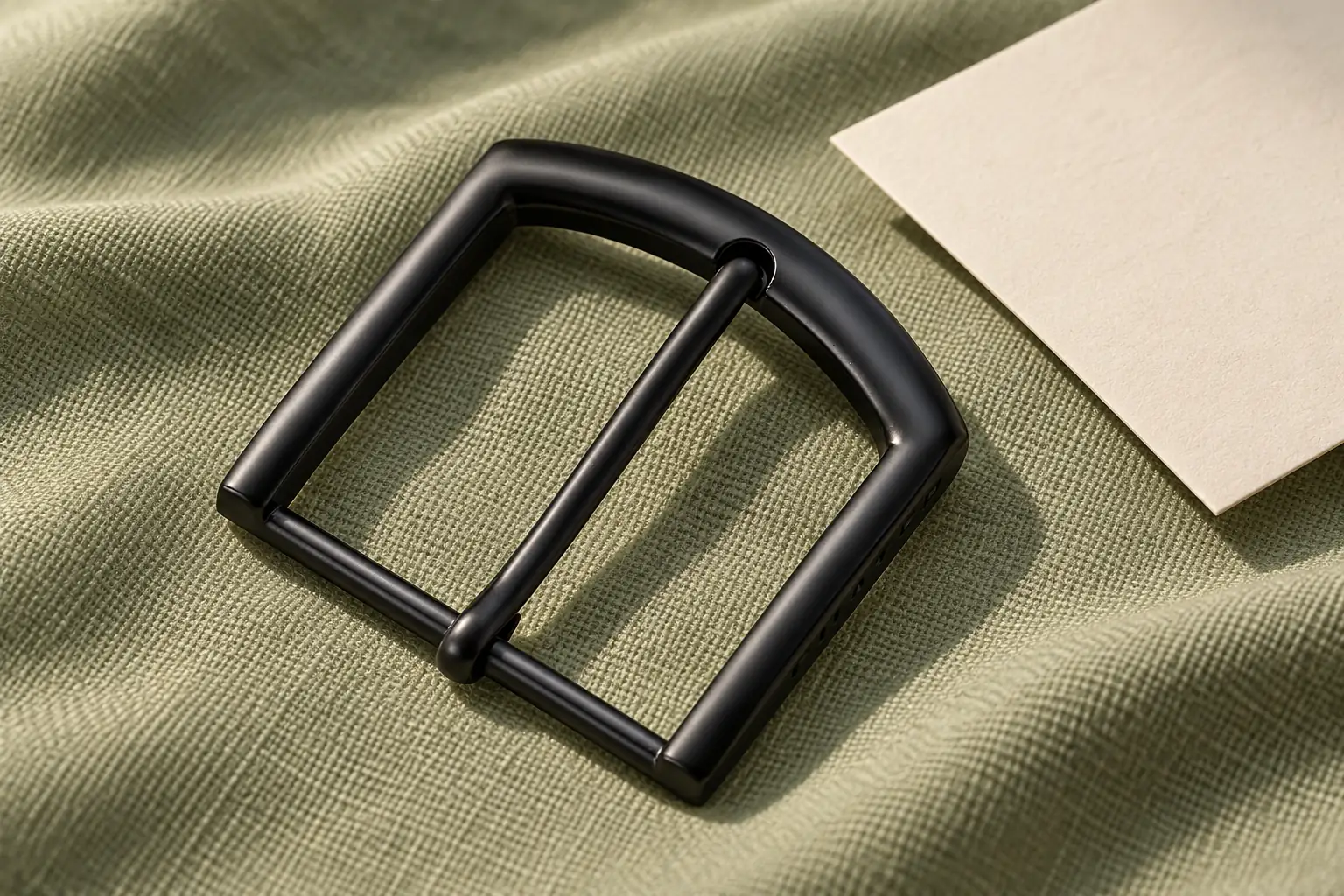
YF103119DC combines a Black appearance with a nominal 38 mm zinc pin-buckle construction. Compare its tongue and attachment with the old strap first; the surface preference should follow a suitable structural choice.
Build the candidate from connection to appearance
- AttachmentCompare the folded strap and frame relationship.
- ClosureCompare pin position and hole travel.
- AppearanceSelect Black after the construction is appropriate.
Read the design and specification notes
YF103119DC is listed with Zinc and a Black finish option at 38 mm. It can be discussed alongside the stainless references when its pin-buckle construction suits the brief. Treat finish preference after the closure and attachment details, so appearance does not drive an unsuitable structural choice.
Choose for your application
Identify the mounted bar beyond its family code
For a mounted-bar replacement, keep the exact selected product with a drawing of its mounting face, fixing positions and complete dimensions. Compare the supplied component with the existing saddle arrangement so the quotation identifies the bar you actually need.
Use the exact linked mounted bar with its confirmed code and dimension drawing in the quotation.
Keep the bar identifiable
- Product modelThe model is YF111032SS.
- Family notationConfirm the 3-3/8-inch mounted bar against your drawing.
- Marked componentUse the exact link and dimensioned bar to resolve identity.
Read the design and specification notes
Use the exact linked bar and its full code to identify the part you want quoted. If you specify YF111032SS or YF11032SS, attach the chosen code to a marked mounting drawing and confirm whether the 3-3/8 nominal size matches your required measured span. Keep the supplied component and assembly drawing together for later reordering.
| Buying detail | Include | Reason |
|---|---|---|
| Identity | Link and exact model | Avoid a similar-code mix-up |
| Geometry | Marked installation dimensions | Preserve the connection |
| Supply | Loose part or assembly | Describe what arrives |
Products behind these choices
Stainless Steel Roller Buckle, Bright Nickel, Nominal 1 Inch
Compare a nominal 1-inch stainless roller with the old strap end.
View this product →YF103181SS Polished Stainless-Steel Single-Prong Replacement Buckle for Luggage/Bag/Belt Straps
Compare a wider stainless single-prong frame and tongue.
View this product →YF103119DC Zinc Pin-Adjustable Belt Buckle, Black 38mm Reference
Compare a Black 38 mm zinc strap-closure candidate.
View this product →Stainless Steel Saddle Stirrup Bar | Duckbill Toggle Latch Hardware Reference
Start a mounted-bar discussion from the exact component and fixing area.
View this product →Start a product discussion
Discuss the complete repair arrangement
Send the old part, a view of the mating strap or mounting and any dimensions affected by wear. Identify what must remain unchanged and the loose component you need. We can discuss a replacement comparison; the completed repair should be assessed in its actual saddle or strap assembly.
Installation and repair suitability require assessment in the actual saddle or strap assembly.
Qingdao Relia Saddlery Co., Ltd.Changjiang Road, Qingdao, Shandong, ChinaProduct discussion details
Prepare an old-part replacement brief
- Show the connectionInclude old fitting and mating strap or mount.
- Mark uncertaintyIdentify wear and dimensions needing resolution.
- Choose the candidateName the reference and any surrounding changes.