

BUCKLES AND STRAP HARDWARE
Buckle and Strap Hardware for Finished Assemblies
Choose strap hardware around the assembly you want to finish. A halter junction, leather roller buckle and side-release closure solve different jobs. Follow the relevant guide to compare the finished strap path, mating components and supplied pieces, then narrow the size and appearance for your project.
- Follow the strapInclude width, thickness and the folded return.
- Identify mating partsA closure is more than one similar-looking half.
- Choose a defined versionKeep the model and size label together.
A closer product look
Let the Leather Construction Guide the Roller Choice
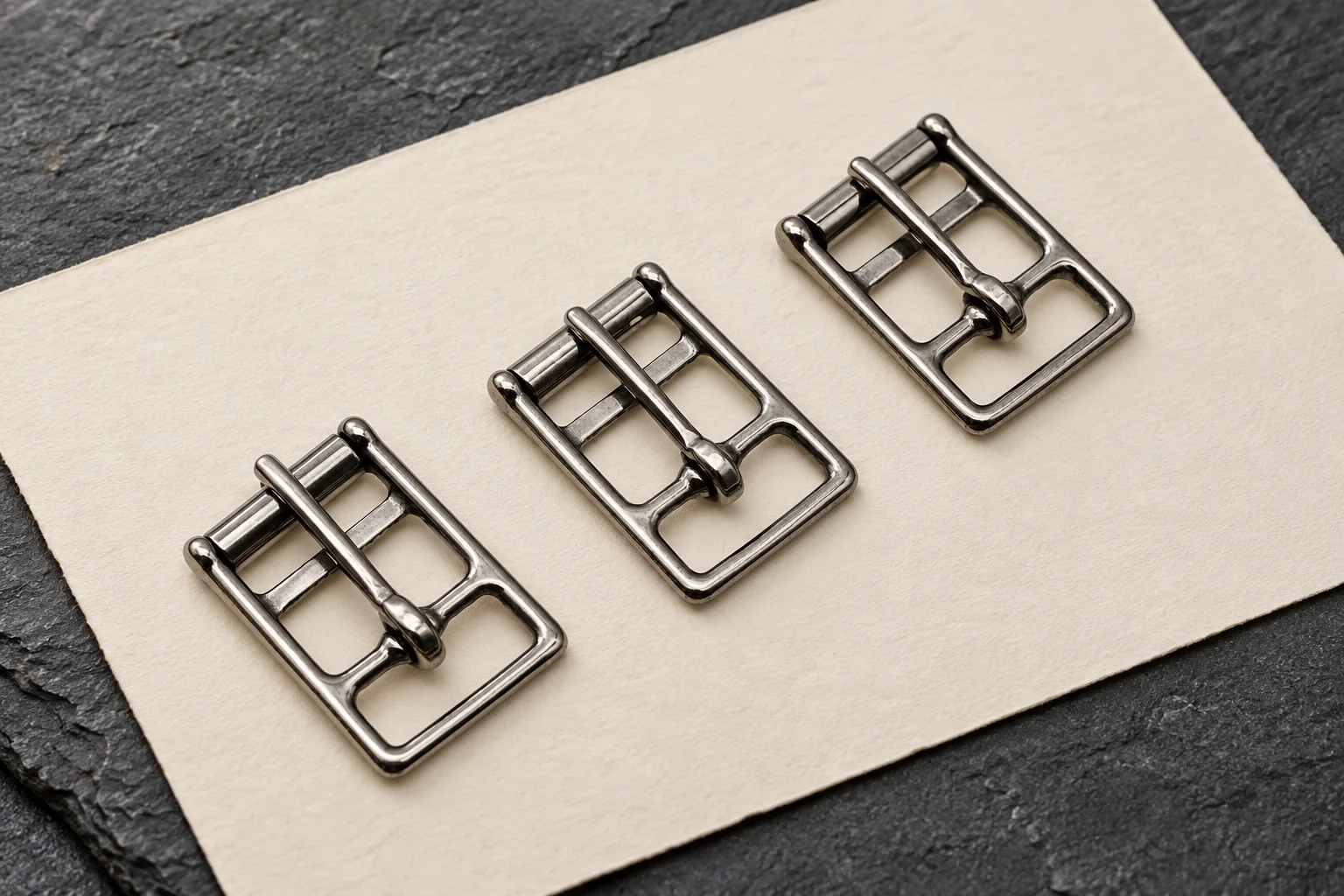
Relia’s roller-buckle reference gives you a practical starting point for a leather strap. Compare how the finished leather passes the roller and pin, including its folded return, before choosing appearance.
Read the folded leather path
- EntryCompare the strap width with the usable passage.
- Folded returnInclude the thickness where leather doubles back.
- Pin movementCheck the fastening arrangement against the intended strap.
Read the design and specification notes
Relia’s roller-buckle range includes the nominal 1-inch YF103022SS starting point. The roller and pin have to work with the finished strap, including its thickness and folded return. A wider-looking frame does not by itself make a better fit. Compare the actual strap passage and pin movement with your leather construction, then keep the chosen model and finish together when discussing a sample.
Choose for your application
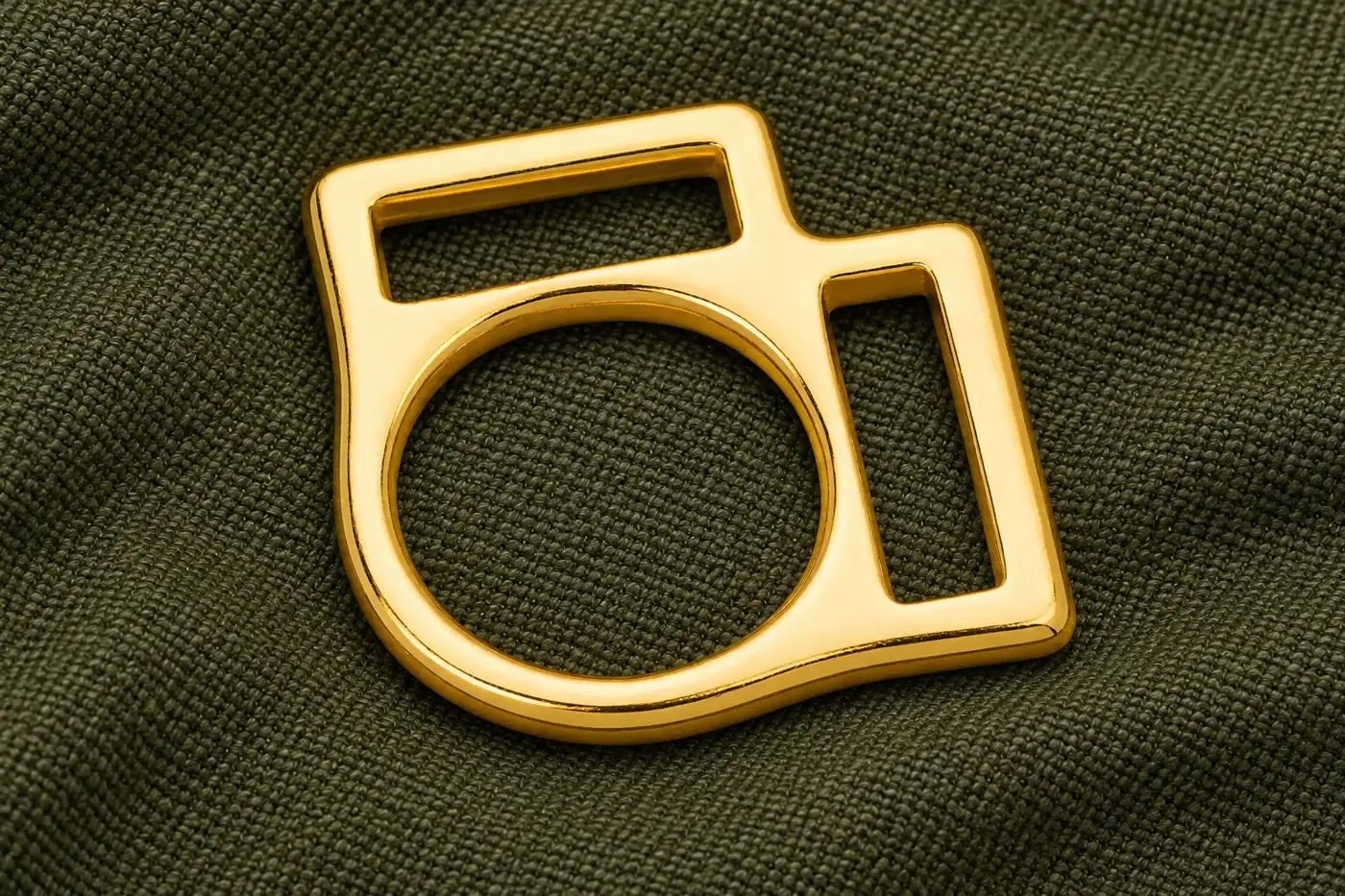
Halter Junctions Need More Than One Matching Opening
A halter junction guides several strap directions. Map each opening and closure separately so two different size references are not mistaken for a matched hardware set.
Choose and measure each halter junction and closure separately before defining the matched set.
Halter Junctions Need More Than One Matching Opening
- ClosureBuckle and fastening arrangement
- JunctionEach strap opening and direction
- AssemblyThe complete halter parts list
Read the design and specification notes
YF10145B is a brass three-slot fitting with a 1-inch reference; YF10118B offers a 3/4-inch halter-buckle version. Treat them as different references, not an automatically matched set. Sketch which strap reaches each opening before selecting a junction and closure combination.
A closer product look
Side-Release Buckles Need Their Mating Halves
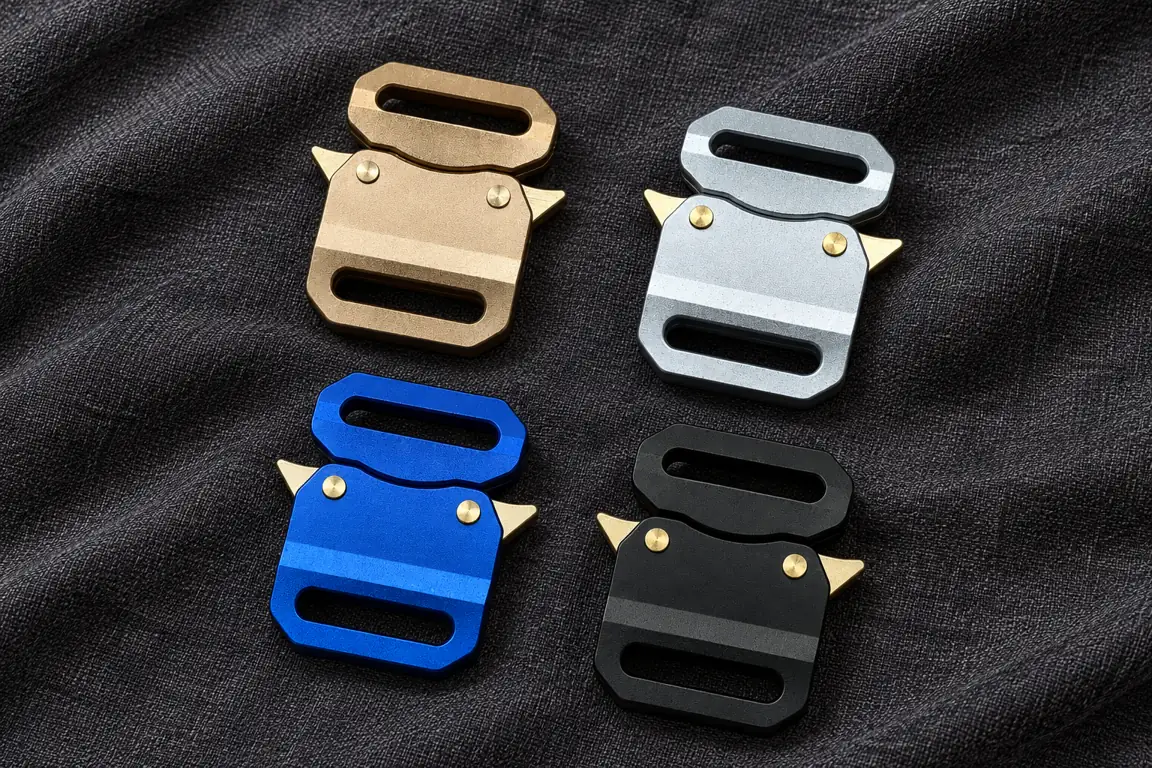
Choose a side-release closure as a mating pair. Comparing its webbing attachment and release form helps avoid selecting one half simply because its nominal width resembles another.
Compare the complete closure
- Mating halves
- Identify the pair intended to work together.
- Webbing attachment
- Show the strap route and thickness.
- Release form
- Compare the operation of the selected model.
Read the design and specification notes
YF10348AL is an aluminium-alloy side-release reference labelled 20mm. Another aluminium-alloy model offers 20mm and 25mm versions. The collar guide helps you compare the complete mating pair, webbing attachment and release form, rather than treating every similarly sized half as interchangeable.
Construction and making
Forming and Finishing Affect the Usable Openings
Forming establishes the frame and openings; edge preparation changes the surfaces touching the strap. Comparing those finished features helps you discuss geometry, material and appearance as separate choices for the selected model.
Forming and Finishing Affect the Usable Openings
- Shape the frameDefine each functional window and crossbar
- Prepare the edgesDescribe the surfaces touching the strap
- Compare the assemblyCheck the intended strap path and closure action
Read the design and specification notes
A slider guides the strap through several contact surfaces, whereas a closure also has to engage or release. For a cast-frame design, the tool and its parting surfaces influence the as-formed openings; trimming and polishing address the edges the strap touches. A stamped design has cut edges that need their own finish requirements. Bring Relia the strap path and the finished opening you need, so material, forming route and appearance can be discussed as separate choices for the selected model.
Share the product link and your intended use, with these details:
- Finished strap assembly
- Actual strap dimensions
- Selected hardware and contents
A closer product look
A Width Range Helps Narrow the Slider Shortlist
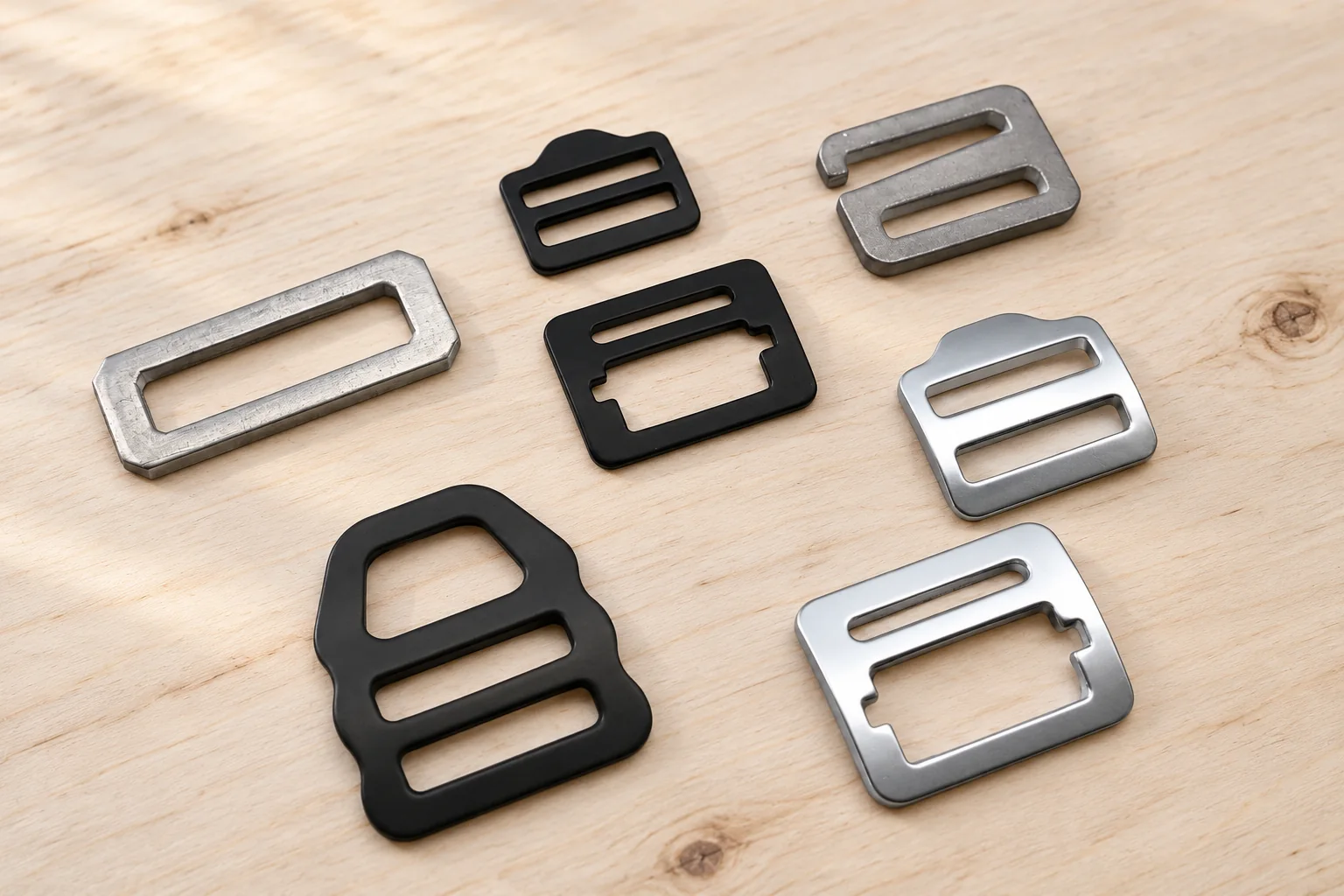
A slider’s nominal size narrows the shortlist but does not describe every internal passage. Compare the actual webbing and folded thickness with the bars and openings of the intended version.
Compare every slider passage with the actual webbing and folded thickness.
Narrow the slider choice
- Starting size
- Use the listed nominal size for the shortlist.
- Webbing
- Bring actual width and folded thickness.
- Internal path
- Compare passage and crossbar geometry on the drawing.
Read the design and specification notes
YF11251DC lists five nominal inch-size references from 5/8 to 1 1/2 inch. Choose a relevant starting size, then compare the actual webbing width and folded thickness with the drawing. A nominal width does not describe every passage or bar clearance inside the fitting.
Choose for your application
Find the Guide for the Finished Assembly
Choose the detailed route for the assembly being built. Halters, collars, rugs and belts share hardware vocabulary, but their connection tasks lead to different useful product comparisons.
Find the Guide for the Finished Assembly
- HalterBuckles and strap junctions
- Thick leather tackRoller buckles
- Pet collarSide-release closures
- Adjustable leashTri-glides and sliders
Read the design and specification notes
The eight routes divide the range by the decision the hardware has to solve. Use the specific article for its model examples and comparisons rather than apply one universal checklist to halters, rugs and belts.
| Finished product | Guide route |
|---|---|
| Halter | Buckles and strap junctions |
| Thick leather tack | Roller buckles |
| Pet collar | Side-release closures |
| Adjustable leash | Tri-glides and sliders |
| Horse rug | Front and surcingle hardware |
| Girth or stirrup leather | Buckle interface |
| Webbing belt | Automatic buckle construction |
| Double-sided belt | Reversible buckle construction |
Choose for your application
Keep Rug and Riding-Strap Assemblies Distinct
A rug front, underside surcingle and riding strap each need their own interface. Begin with the retained strap and fastening arrangement, then coordinate finish after the connection is defined.
Keep Rug and Riding-Strap Assemblies Distinct
- Rug closuresFront and underside arrangements
- GirthSelected strap and buckle interface
- Stirrup leatherActual leather and fastening construction
Read the design and specification notes
A rug front closure, a surcingle connection and a girth buckle sit in different assemblies. Start with the retained straps and fastening arrangement, then follow the relevant guide. Their shared metal finish can help coordinate appearance, but the actual connection determines the useful shortlist.
Choose for your application
Automatic and Reversible Describe Different Decisions
Automatic-style and reversible buckles answer different belt questions. Identify the chosen operating mechanism for the first; examine attachment and reversal for the second before selecting the belt construction.
Confirm the selected automatic-style buckle's retaining and release arrangement with the belt sample.
Automatic and Reversible Describe Different Decisions
- Automatic route
- Selected mechanism and intended belt
- Reversible route
- Rotation and belt attachment
- Shared input
- Actual belt width and thickness
Read the design and specification notes
An automatic-buckle enquiry starts with how the selected model secures or adjusts the intended belt. An Auto Lock product range label does not identify a clamp or track mechanism. A reversible-buckle enquiry instead examines attachment and reversal; YF00316DC supplies a 35mm reversible reference with its own construction to review.
Products behind these choices
3/4 Inch Brass Horse Halter Buckle - Antique Brass Finish
Use the 3/4-inch brass halter buckle as a distinct closure reference.
View this product →Stainless Steel Roller Buckle, Bright Nickel, Nominal 1 Inch
Use the nominal 1-inch roller buckle to compare strap passage, folded leather and pin movement.
View this product →YF10145B Antique Brass Finish Three-Slot Webbing Fitting with 1-Inch Label for Horse Halter Enquiries
Compare all three strap openings rather than assuming this fitting matches another buckle.
View this product →YF10348AL Aluminium Alloy Side Release Buckle, 20 mm, Four Colours
Review the 20mm aluminium-alloy side-release model as a complete mating closure.
View this product →Aluminum Alloy Side-Release Buckle, 20mm or 25mm
Compare the selected 20mm or 25mm reference with its own mating halves.
View this product →AAZ015/020 Aluminum-Alloy Tri-Glide Adjuster, Bright/Black Nickel 15mm and 20mm
Review the tri-glide bars and strap path for the intended webbing construction.
View this product →YF11251DC Zinc Tri-Glide Slide Buckle for Dog-Collar/Bag Webbing Projects
Use the listed slider sizes to narrow the shortlist before comparing actual passage clearance.
View this product →YF00316DC Zinc Reversible Clip Belt Buckle, Light Grey 35mm Reference
Review this reversible buckle around the belt end and reversal arrangement.
View this product →Start a product discussion
Agree One Version of the Complete Assembly
Send the finished strap route with the selected fittings, actual strap dimensions and the pieces you need supplied. Identify the connection or adjustment you want to resolve. We can discuss a focused sample and quotation for that complete assembly.
Qingdao Relia Saddlery Co., Ltd.Changjiang Road, Qingdao, Shandong, ChinaProduct discussion details
Three details for a useful enquiry
- Finished strap assemblyShow whether this is a halter, collar, rug or belt.
- Actual strap dimensionsInclude width, thickness and folded construction.
- Selected hardware and contentsIdentify every mating or coordinated component.