
Material and contact selection
Spur Materials and Boot-Contact Options
Choose spur materials around the complete product and its contact with your boot. We manufacture spurs and can compare the base, terminal, covering and finish as separate choices. Start with the band shape you need, then agree the material and appearance on a sample. Your quotation and retail description can then follow the same defined construction.
Covered Bands Add Another Component Layer
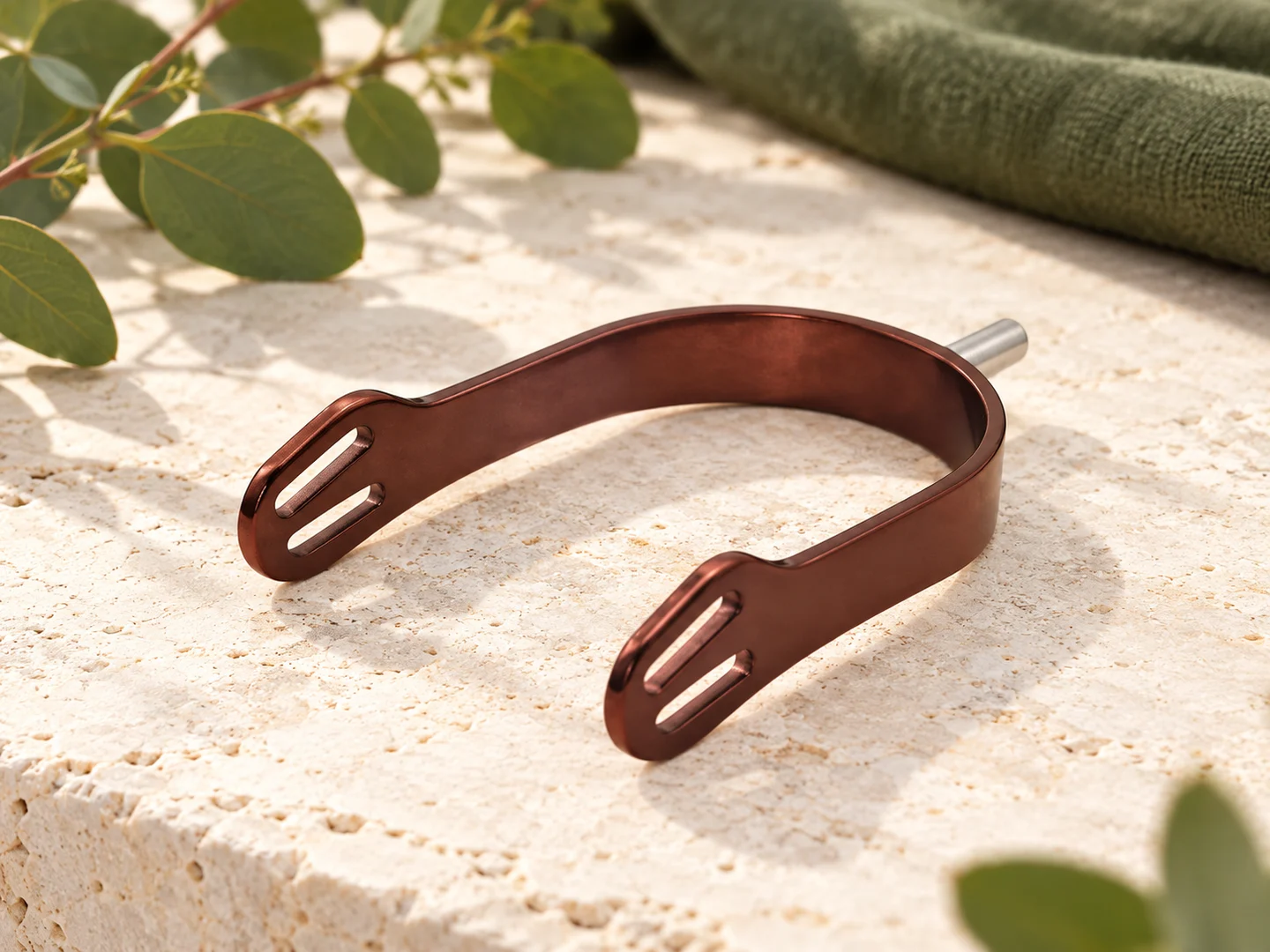
Keep the underlying band and contact layer distinct. Relia manufactures its own spurs and checks materials, dimensions, appearance and assembled fit. We can review an aluminum model or a covered construction against your boot, with the selected terminal and strap arrangement retained in the same sample.
Relia’s range includes the aluminum-declared YF11022AL and rubber-covered YF11014DC and YF11013DC references. These are useful starting points for different material briefs. The covering needs its own specification alongside the base, exposed ends, terminal and any supplied strap.
Name Materials by Component
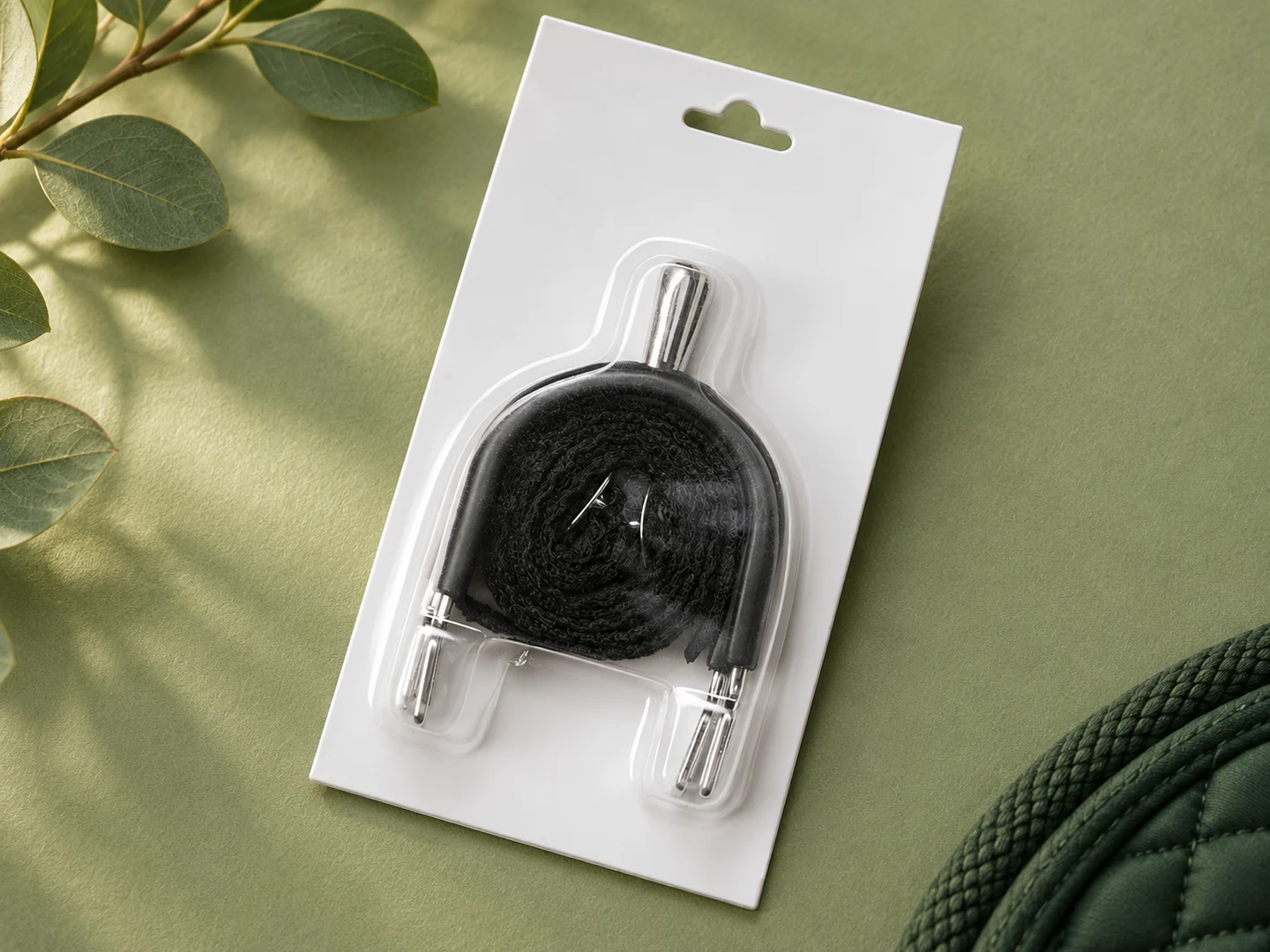
A single material in a product name may not describe every part. Keep the band, neck, terminal, wheel, fasteners and covering in separate rows. This is especially useful when two visually similar samples use different base constructions.
| Part | Specify | Keep separate |
|---|---|---|
| Band and neck | Actual alloy or material declaration | Surface colour and process |
| Terminal or rowel | Material and attachment version | Band material |
| Fasteners | Material and fixing arrangement | Decorative appearance |
| Covering | Composition, extent and attachment | Underlying metal |
| Strap, if supplied | Material and finished dimensions | Photographed accessories |
Compare Weight with the Fit Held Constant
A weight comparison is useful only when it describes comparable products. Use the same fit group and terminal configuration, state whether straps are included, and distinguish one spur from a pair. Keep actual sample readings beside the model instead of publishing a generic lightness percentage.
Match the intended heel-band size and terminal.
Include or exclude straps in both readings.
Use one component or one complete pair consistently.
Covering Boundaries Matter at the Finished Interface
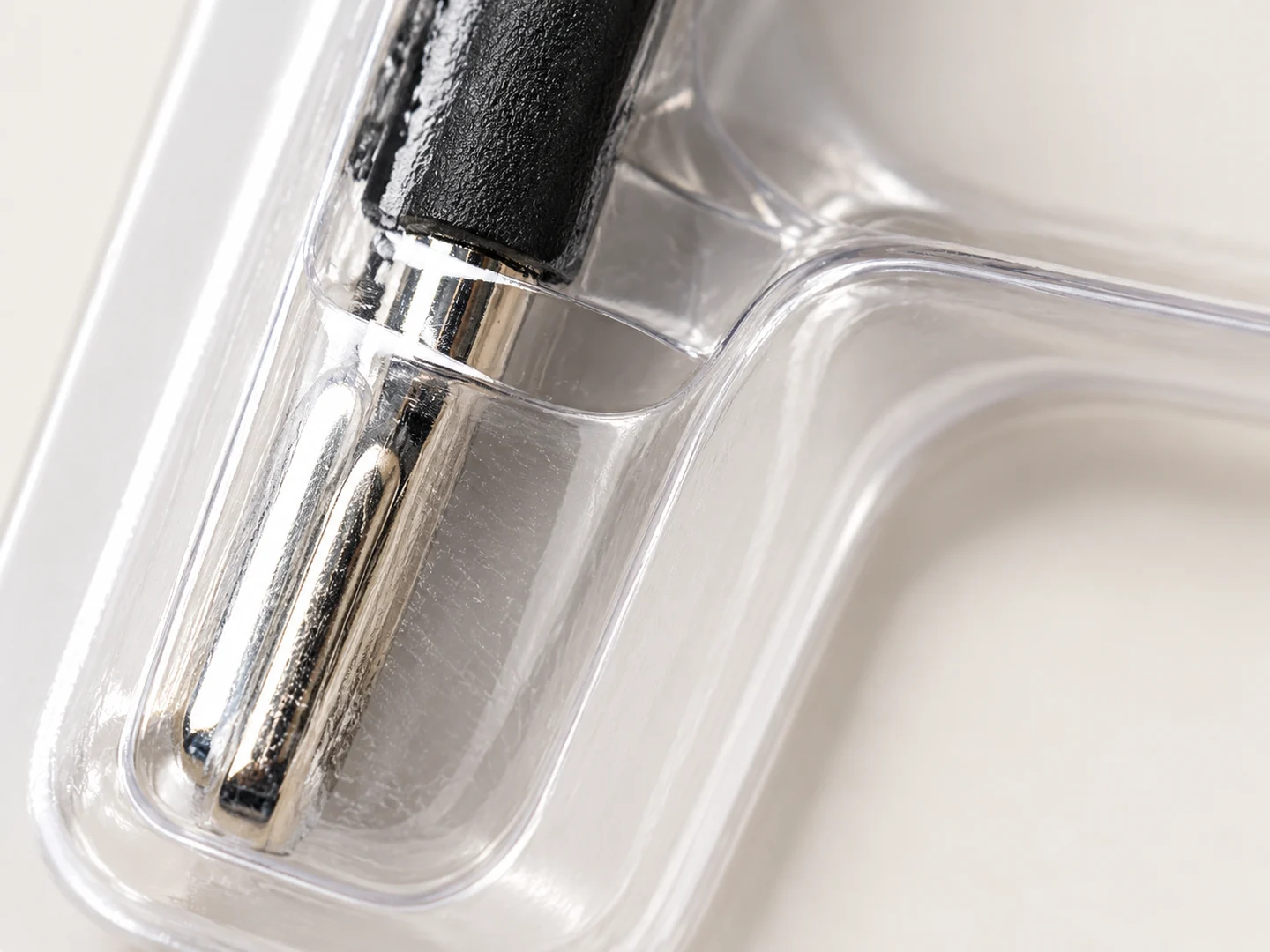
Look at where the covering stops, how it follows the band and which metal edges remain exposed. The completed boot interface includes those transitions as well as the band’s shape. A covered surface alone does not establish how every boot material will respond during use.
Separate Metal Preparation from Covering Work
Base making establishes the band and terminal geometry. We select the forming route and any required machining or welding for the model, then complete the exposed surfaces through polishing and the specified treatment. Where a covering is part of the design, its material, extent and attachment remain a separate production requirement.
We verify materials and dimensions, inspect appearance and check moving parts or assembly fit. The useful review includes the finished band, the transitions into exposed ends and the actual strap route. Keep the covering and base descriptions separate, with the accepted sample defining fit and appearance rather than a general promise about every boot material.
- Base construction
Identify band material and the finished fit profile.
- Surface preparation
Review accessible edges and the specified exposed finish.
- Covering
Define coverage, transitions and attachment details.
- Complete assembly
Review fastening, terminal and all supplied parts.
Approve Appearance and Fit Independently
Use one physical sample to set the finish and covering appearance, and a marked fit record to define the boot interface. That separation helps when a buyer wants an existing fit with a new colour or contact layer.
| Review | Compare against | Retain |
|---|---|---|
| Fit | Boot and strap arrangement | Marked dimensions and installed sample |
| Appearance | Physical colour and covering sample | Finish name and sample revision |
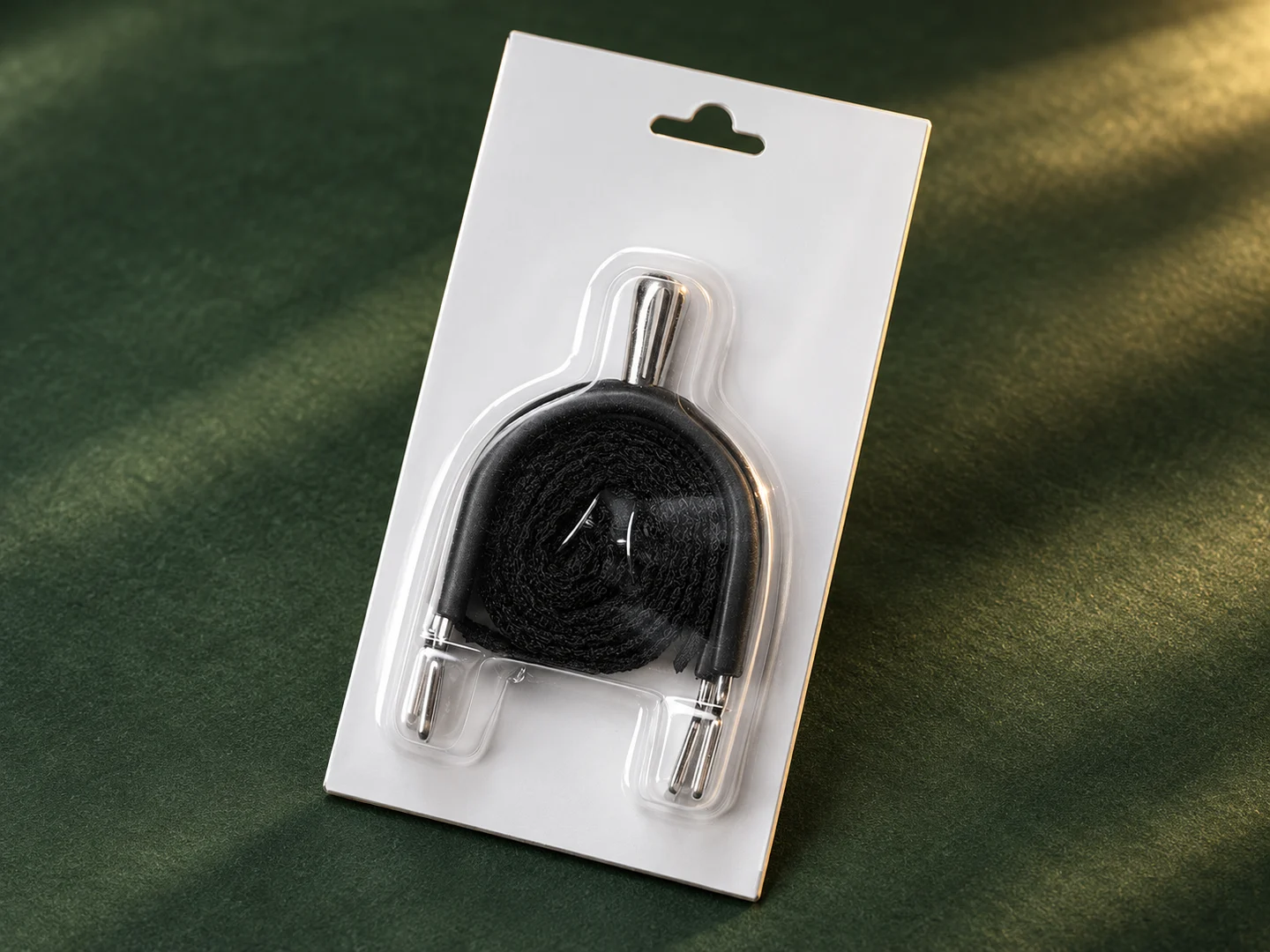
| Contents | Agreed itemised supply | Spur count, straps and packaging scope |
Compare a Defined Material and Fit Combination
Send the model code, preferred base and covering, boot reference and required sample unit. Include the finish you want to match and whether the enquiry includes straps or only spur hardware. Send your reference and required quantity to info@reliasaddlery.com, call +86 18561762631, or use WhatsApp +1 404 203 0971. Qingdao Relia Saddlery Co., Ltd., Changjiang Road, Qingdao, Shandong, China. You can also send a product enquiry.
- Choose the productSend the model code, product link or your drawing.
- Describe your versionInclude the size, construction or appearance you need to discuss.
- Plan the next stepAdd quantity and destination, then agree the sample and quotation scope with us.