

Repair channels · useful stock choices
Saddlery Repair Hardware for a Replenishable Spare-Parts Range
Build repair stock around the connections your customers regularly replace: buckles, snaps, rings and mounted fittings. Give each model, complete size option and counting unit its own line. A clear spare-parts schedule makes it easier to buy the first assortment and replenish the same item later.
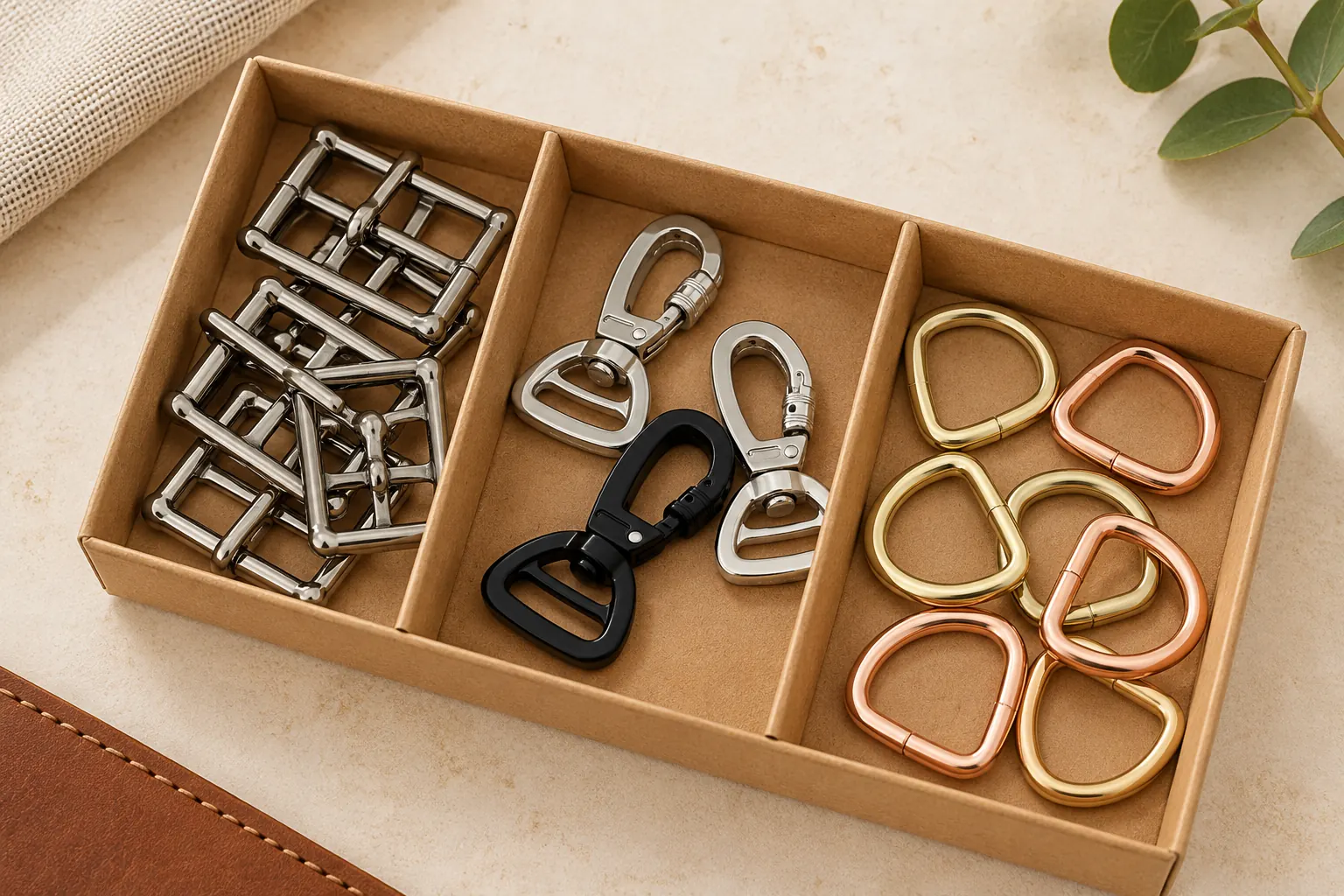
- Stock by repairGroup parts by their connection.
- Keep full sizesRetain multi-axis dimension labels.
- Replenish clearlyCount pieces or defined sets.
Choose for your application
Give each repair branch its own identity
Relia offers the YF103022SS roller, YF102312DC snaps, YF11404ST rings and a separate mounted-bar reference. Group them by the repair connection so you can select useful stock lines without treating the assortment as one fixed kit.
Separate the buying branches
- Loose strap fittingsKeep buckle, snap and ring models distinct.
- Mounted componentsStart from the fixing area and supplied bar.
- Stock lineAttach size, finish and counting unit to each.
Read the design and specification notes
Relia's YF103022SS roller, YF102312DC snaps and YF11404ST D-rings offer distinct starting lines for dealer stock. The mounted stainless bar belongs in a separate branch because its fixing area and repair context differ from loose strap hardware. Grouping the range this way lets you discuss the pieces customers actually need while keeping individual options available as clearly identified purchase lines.
A closer product look
Keep every axis of the D-ring size
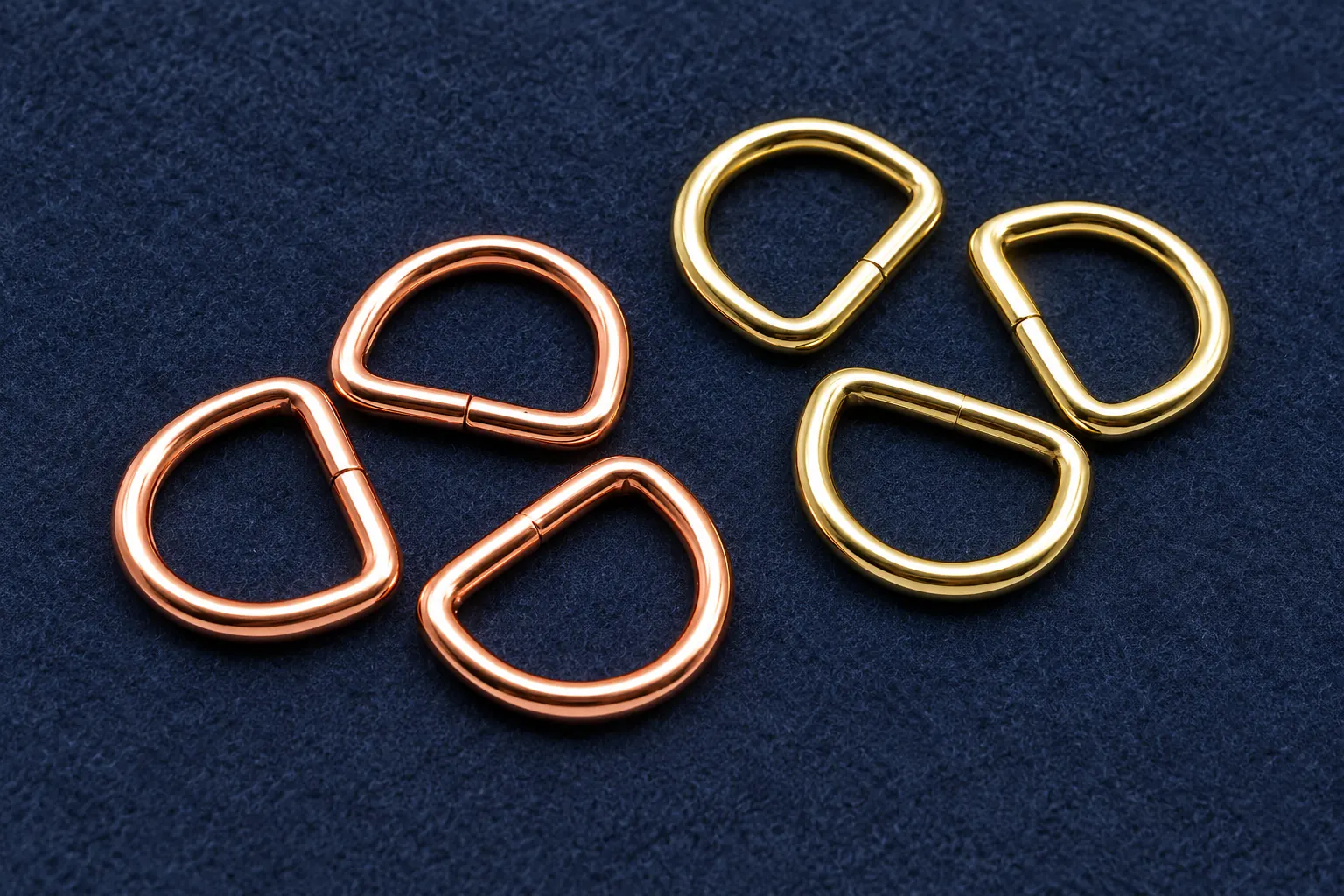
YF11404ST has five multi-axis size options. Keep the entire selected string, such as 4.0 × 25 × 20 mm, beside a marked drawing; a bare width cannot explain the section and opening together.
Mark the selected ring's section and opening axes before comparing it with the repair assembly.
Read the ring as a complete shape
- Full option
- Retain every number and its unit.
- Marked axes
- Show which feature each dimension describes.
- Strap connection
- Compare the ring with the folded attachment.
Read the design and specification notes
YF11404ST is listed as Steel, with five option strings from 3.0×16×12.5 mm to 6.0×38×25 mm. Keep the complete selected dimensions on the stock card. The section and opening geometry matter together when a dealer compares the ring with an existing folded strap.
Choose for your application
Make stock cards distinguish the actual parts
Use a separate identity for the nominal 1-inch roller, each snap size, each ring option and the mounted bar. This keeps purchase quantities attached to identifiable spares instead of spreading them across a pictured family.
Turn the assortment into purchase lines
- Buckle
- YF103022SS: nominal 1-inch stainless roller.
- Snap
- YF102312DC: selected 16, 20 or 25 mm option.
- Ring or bar
- Keep the full ring label or exact mounted component.
Read the design and specification notes
Use the model, nominal size and supplied unit as separate columns. YF103022SS is the 1-inch Stainless Steel roller buckle. YF102312DC is the zinc swivel-snap line with 16,20 and 25 mm references. YF11404ST supplies the D-ring comparison, while the mounted bar remains a different repair task.
| Stock branch | Reference | Description to retain |
|---|---|---|
| Buckle | YF103022SS | 1 inch;roller |
| Snap | YF102312DC | 16/20/25 mm selection |
| Ring | YF11404ST | Complete size string |
| Mounted part | YF111032SS component | Mounting drawing |
Construction and making
Specify the contact feature for each repair
A buckle tongue, snap opening and ring joint meet the assembly differently. Trimming, deburring or joint finishing can change those areas. Describe the finished contact condition for each selected model rather than assigning one manufacturing process to the entire range.
Agree the actual forming route and finished contact condition for each selected spare.
Match finishing questions to the connection
- Buckle contactCompare tongue and strap-hole contact edges.
- Snap connectionCompare gate access and the swivel area.
- Ring jointKeep joint appearance beside the finished opening.
Read the design and specification notes
A snap's hook opening, a buckle's tongue contact and a ring's joint are different finished features. Casting trim, cut-edge deburring or joint finishing may affect those areas, depending on how the chosen part is made. The selected route needs aligning by model; a mixed repair range should not inherit one universal process claim. Describe the contact edges and joint appearance that matter to each repair, alongside its final dimensions.
Share the product link and your intended use, with these details:
- Repair connections and selected models needed in the range
- Full size and appearance options with mating strap or mount details
- Quantities by piece or an explicitly counted set
A closer product look
Choose the snap with its complete termination
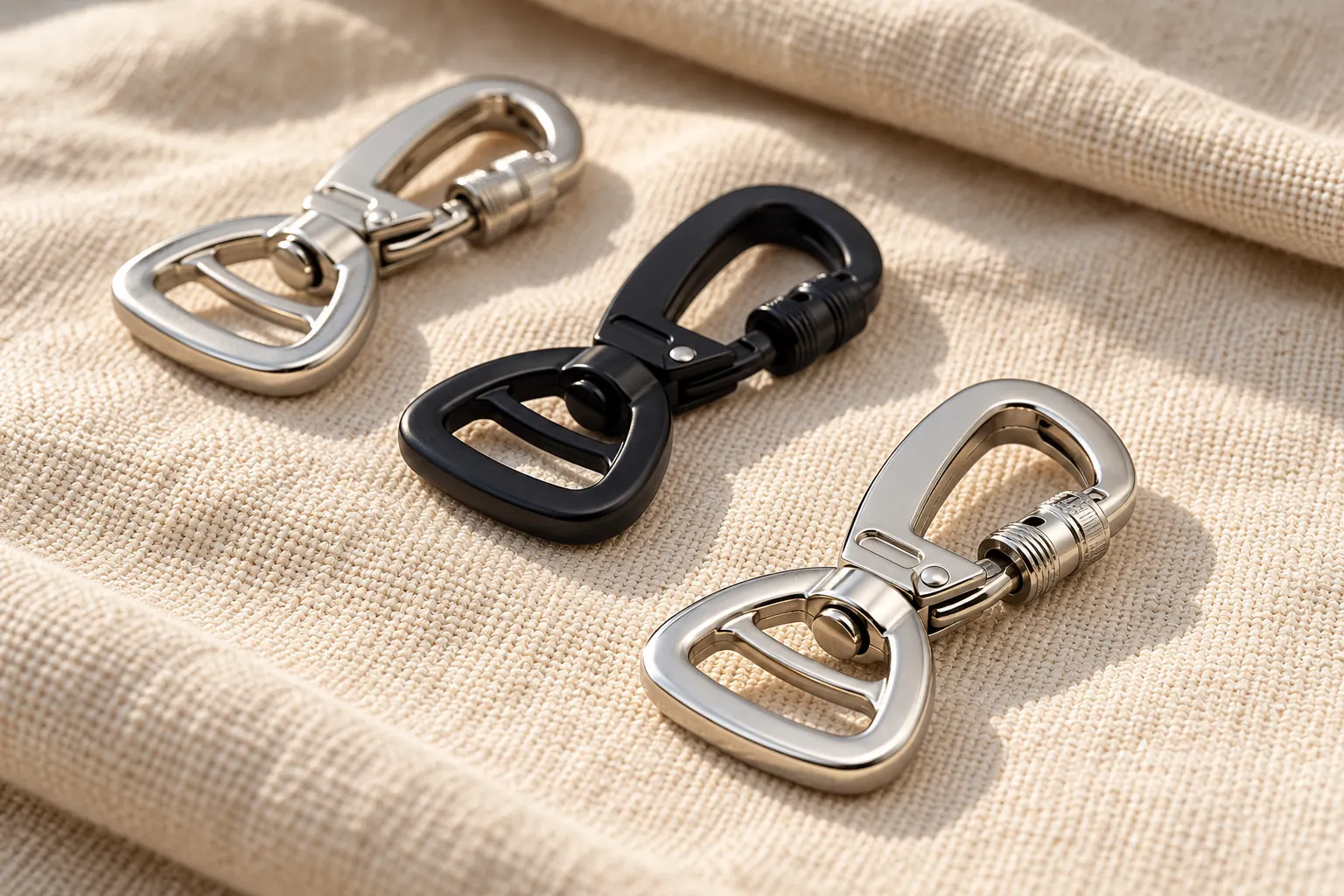
YF102312DC offers 16, 20 and 25 mm labels with Bright Nickel or Black Nickel appearance. Include the intended rope or strap end, gate access and swivel space so the selected spare describes the whole detachable connection.
Compare the chosen snap eye, gate and swivel with the completed termination.
Check three parts of the snap assembly
- Attachment eyeMatch its usable shape with the intended termination.
- Gate accessInclude the object the hook must attach to.
- Swivel areaShow the space needed around the completed end.
Read the design and specification notes
YF102312DC offers Bright Nickel and Black Nickel appearance options with 16,20 and 25 mm size labels. Keep the chosen label beside the intended strap or rope termination. The attachment eye, gate access and swivel area should be reviewed together so a replacement matches the complete connection.
Choose for your application
Keep useful size information on the stock card
A full ring label and an exact snap option make replacements easier to identify at the counter. Retain units and the corresponding marked feature; product range notation is a selection aid, not an installation instruction.
Make the counter label useful
- D-ringRetain the full 4.0 × 25 × 20 mm example string.
- SnapName the selected 16, 20 or 25 mm option.
- AppearanceKeep the chosen colour beside that exact part.
Read the design and specification notes
For the D-ring, the option 4.0×25×20 mm is more useful than a bare 25 label. For the snap, retain the selected 16/20/25 mm option and colour. Make the measured feature clear on a part drawing; the product range notation alone is not an installation instruction.
| Item | Useful stock label | Include in your brief |
|---|---|---|
| D-ring | 4.0×25×20 mm | Dimension axes |
| Snap | Selected size and finish | Eye and gate drawing |
| Buckle | 1 inch model reference | Strap opening and pin |
A closer product look
Keep mounted fittings in a separate repair branch
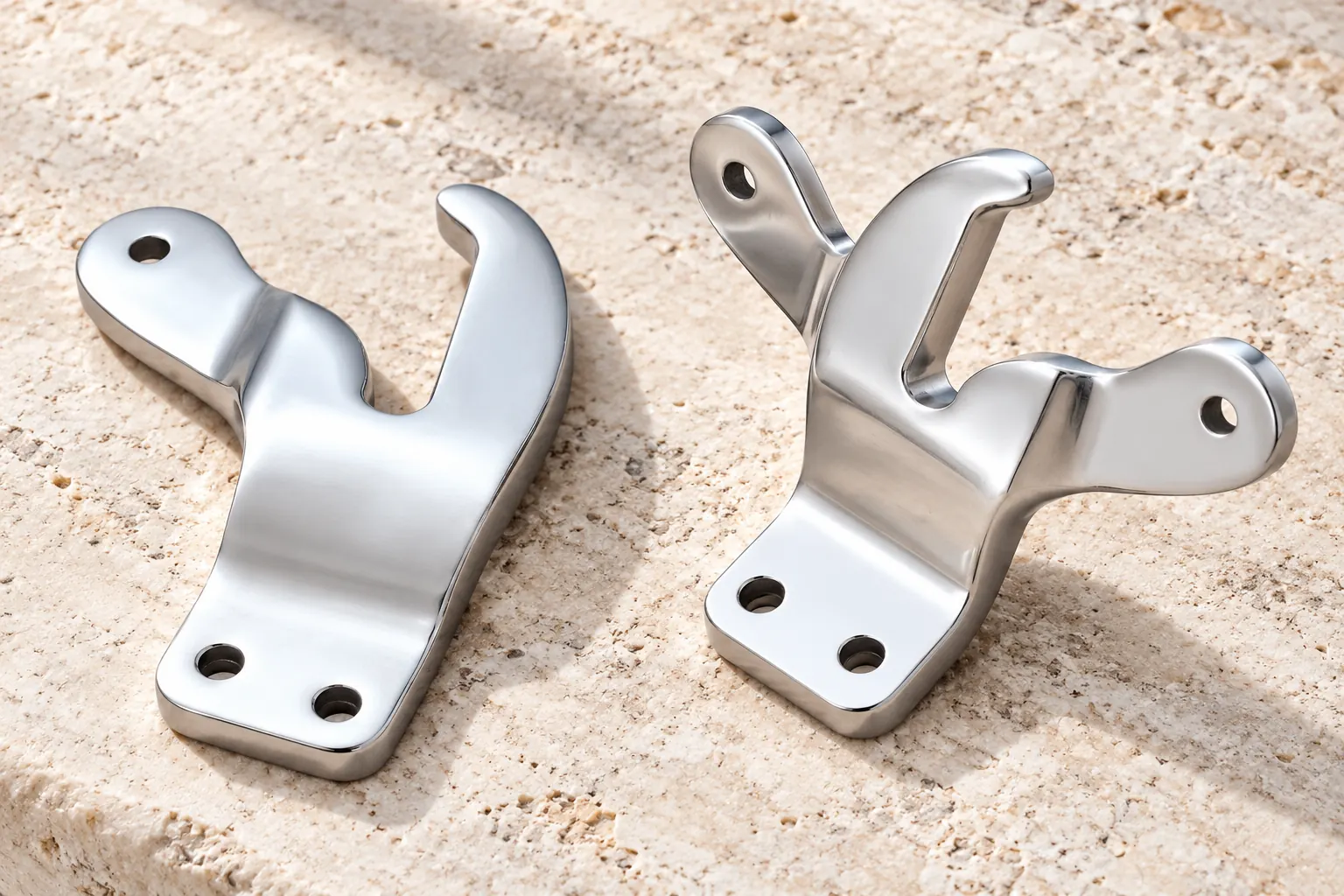
The stainless YF111032SS mounted bar has a 3-3/8-inch label, but its purchase brief also needs the fixing area. Separate it from loose strap hardware and assess the supplied component in the actual saddle-repair context.
Confirm the mounted bar against the actual saddle mounting drawing and repair requirements.
Separate mounting from loose attachment
- Loose fittingCompare the strap and opening relationship.
- Mounted barShow the fixing surface and exact component.
- Completed repairKeep installation suitability with the responsible repair professional.
Read the design and specification notes
The YF111032SS mounted bar has a Stainless Steel material description and a 3-3/8-inch size label. Keep it apart from loose strap hardware in the assortment. Its purchasing brief should show the mounting area and exact supplied component, with installation and repair suitability assessed in the actual saddle context.
Choose for your application
Start with the repairs your customers repeat
Allocate the first assortment to the parts and sizes customers regularly replace. Add less frequent options as separate lines, and state whether quantities mean individual pieces or an explicitly counted set before comparing packing.
Allocate stock deliberately
- Regular repairIdentify the connection customers replace most often.
- Selected optionsChoose sizes and finishes for that branch.
- Counting unitState pieces or a clearly enumerated set.
Read the design and specification notes
A dealer can begin with the parts it replaces regularly, then add less frequent sizes as separate lines. Record whether the requested quantity means pieces or an explicitly counted set. That choice is more useful than spreading an unallocated total across every pictured finish and size.
Products behind these choices
Stainless Steel Roller Buckle, Bright Nickel, Nominal 1 Inch
Keep the nominal 1-inch stainless roller as a distinct buckle line.
View this product →YF102312DC Zinc Alloy Swivel Snap Hook 16 20 25mm for Dog Leash Keychains
Build snap stock lines by selected size, appearance and termination.
View this product →YF11404ST Metal D Rings for Dog Leash and Equestrian Tack with Full mm/inch Size Labels
Identify D-ring lines with complete multi-axis size labels.
View this product →Stainless Steel Saddle Stirrup Bar | Duckbill Toggle Latch Hardware Reference
Create a separate mounted-component repair branch.
View this product →Start a product discussion
Send a replenishable repair-parts brief
Send the repair jobs you want to cover, exact size and appearance options and quantities by piece or defined set. Add a strap-end or mounting view wherever fit controls the choice. We can discuss stock lines that remain identifiable for later replenishment.
Qingdao Relia Saddlery Co., Ltd.Changjiang Road, Qingdao, Shandong, ChinaProduct discussion details
Build clear replacement-stock lines
- Choose the repairName the connection and model needed.
- Identify the optionKeep full size, finish and mating details.
- Count the unitsAllocate pieces or explicitly counted sets.