

For independent tack shops
Wholesale English Horse Bits for a First Retail Range
Build an English-bit range your staff can explain and your customers can reorder. Start with the cheek and mouthpiece combinations they already request, then choose a useful size spread and sample quantities. We manufacture the bits and help you compare complete configurations, so your first wholesale order has clear differences between its stock lines.
Give Each Stock Line a Clear Role
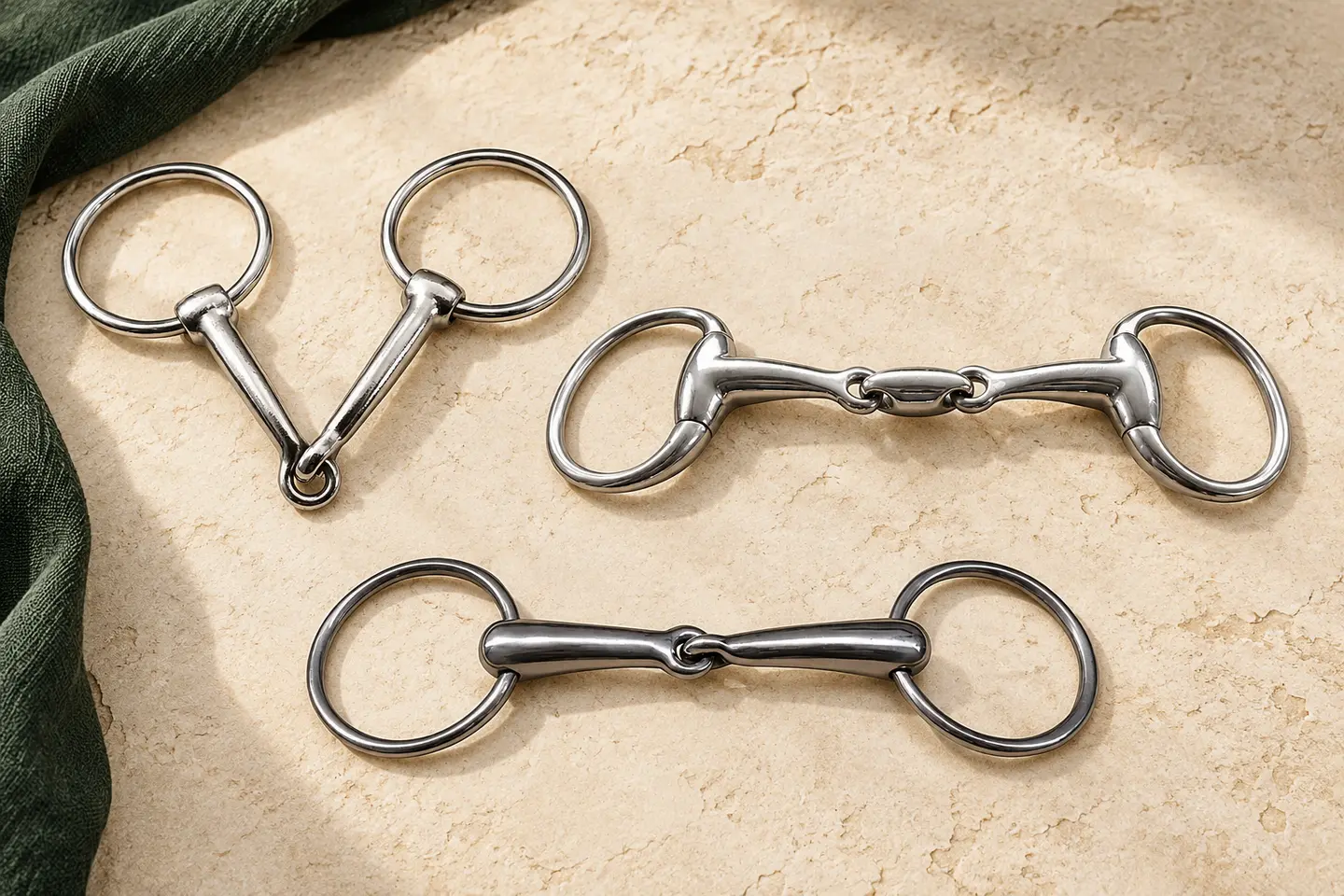
Give every shelf position a distinct purpose. Relia manufactures its own horse bits in China and checks materials, dimensions, appearance and assembled fit. We can compare your chosen cheek and mouthpiece combinations together, helping you decide where a new construction adds value and where more sizes of an established model are enough.
Choose your core cheek families first. Add a specialist construction when it answers a customer request your store already understands, and build depth in the accepted core sizes before introducing near-duplicate stock lines.
Compare starting configurations
Round-ring 5035-14S/70-135, single-jointed 25559 models and D-ring 25544-125 give the range distinct mouthpiece and cheek dimensions to compare.
Use a defined mouthpiece, ring size and measured size for each line.
Compare D-ring and eggbutt constructions as complete assemblies.
Keep full-cheek, Baucher and Pelham projects separate from the core selection.
Keep Cheek and Mouthpiece Together
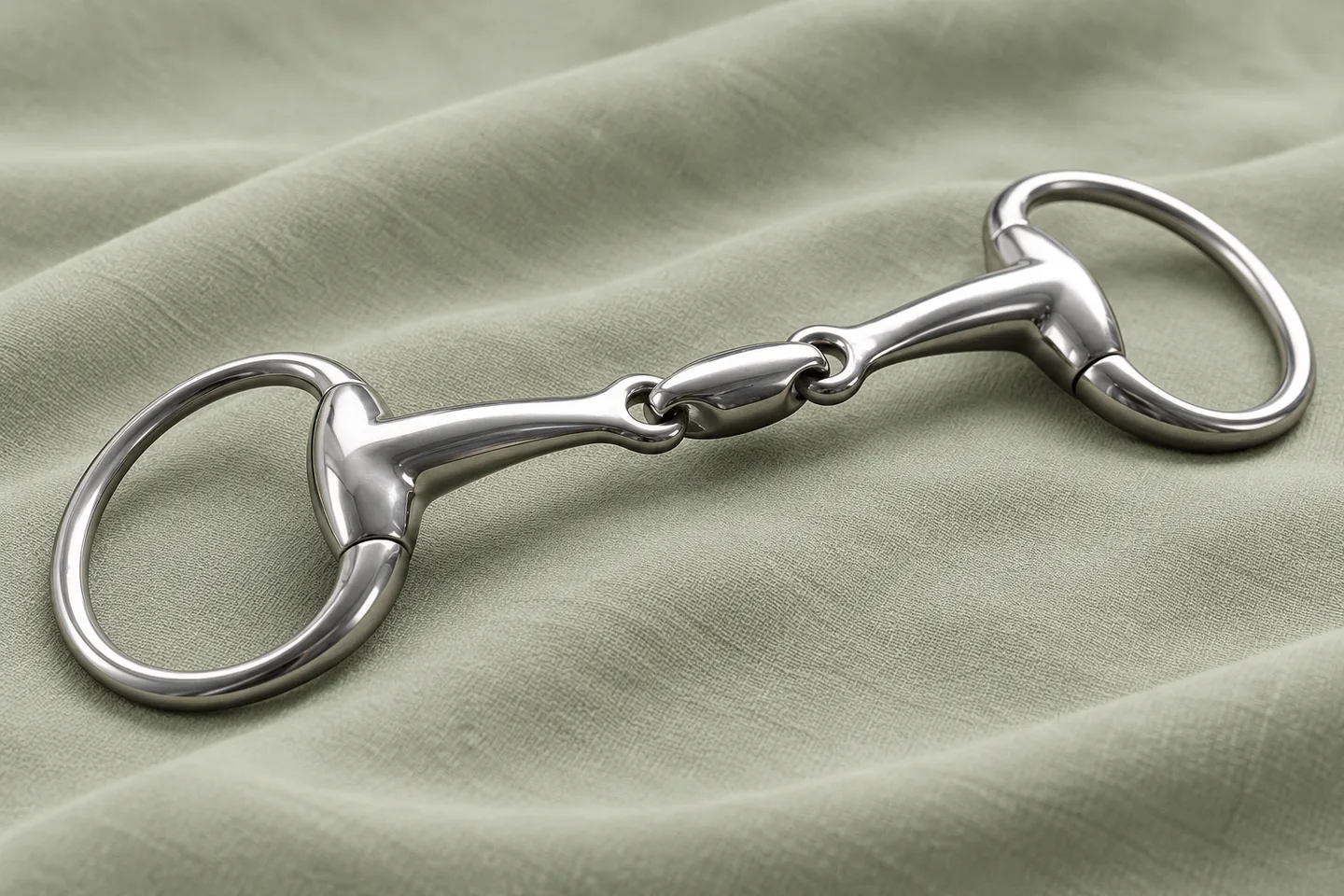
BT0502NP is a round-ring reference with a linked-looking centre. BT0319 shows an oval centre and D-shaped rings. Their visible differences help you build a purposeful shortlist, but each sample still needs its own complete description. An oval link, a jointed centre and a ring outline are separate configuration details.
Compare the round-ring reference with the oval-link D-ring reference before choosing duplicate-looking lines.
Choose Sizes from Real Demand
Use your enquiry history, existing fitted equipment and customer requests to set the first size spread. Keep the customer-facing size label beside its measurement definition. The listed 135MM, 127MM and 145MM options on BT0519HO are nominal labels; the measured feature must be established before they become shelf-ready size descriptions.
- Collect demandGroup actual requests by cheek family and nominal size.
- Select samplesChoose the smallest useful set covering those requests.
- Record dimensionsKeep mouthpiece width, thickness and ring dimensions in separate fields.
- Allocate quantitiesIncrease depth only after the sample and replenishment unit are agreed.
Read the Whole Mouthpiece
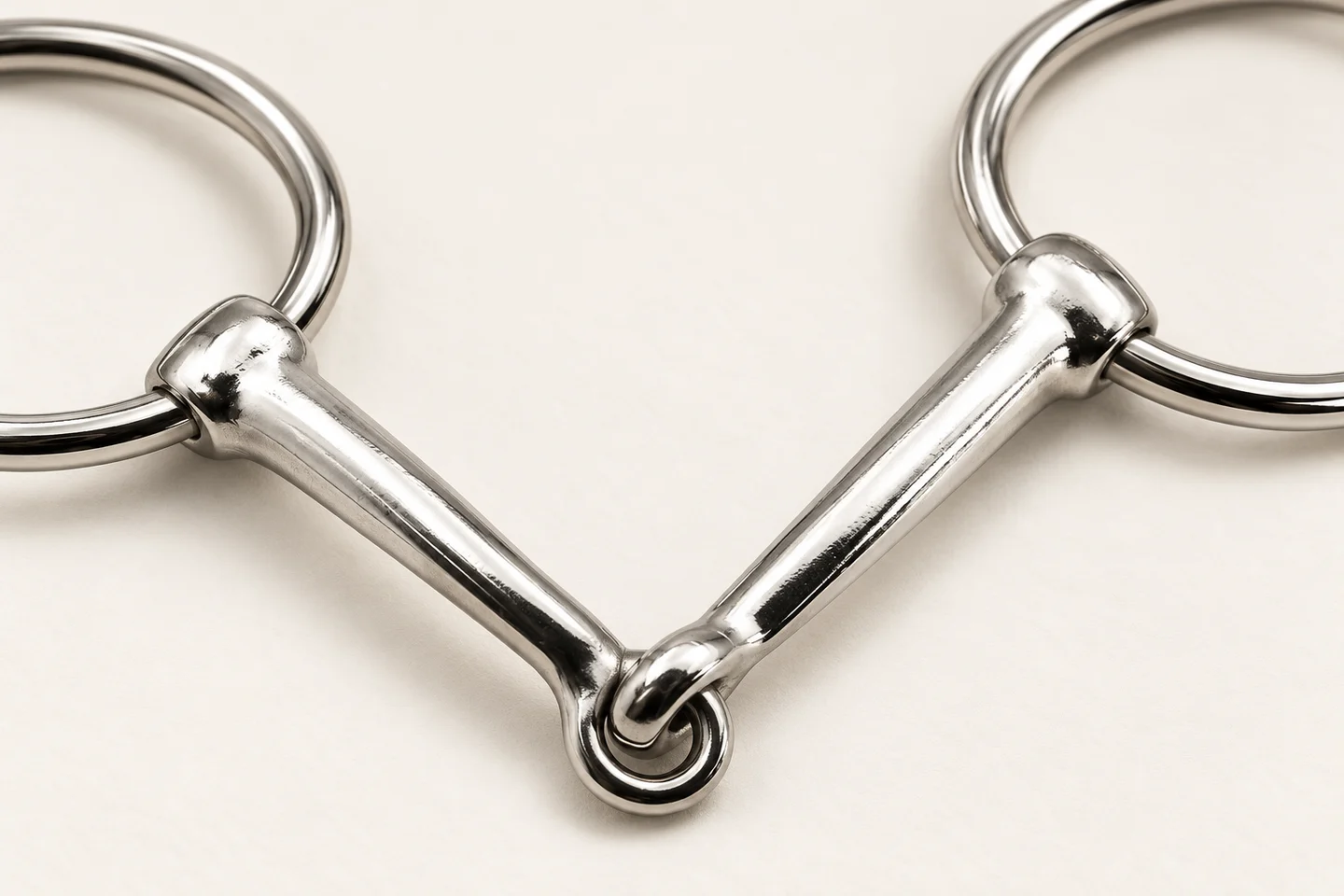
Compare mouthpieces beyond the ring outline. The range includes 14 mm and 16 mm sections, different ring diameters and curved double-jointed constructions. Keep width, thickness and centre-link shape separate in the comparison so a similar-looking cheek does not hide a different product.
Describe Materials by Component
Make the material comparison useful to both purchasing and retail. Specify the cheeks, mouthpiece, centre link and any covering or trim separately, then keep solid or hollow construction as another field. Your team can compare quotations component by component and describe the selected bit without transferring one part’s material to the whole assembly.
| Part | Keep in the specification |
|---|---|
| Cheeks and rings | Material description, surface finish and dimensions |
| Mouthpiece | Material, width reference, thickness and curvature |
| Centre | Link geometry, material and assembled movement |
| Construction | Solid, hollow or covered only as agreed for the selected model |
Make Finish Part of Sample Approval
We make the selected bit through the forming and connection route appropriate to its construction, followed by polishing, the specified surface treatment and assembly. The useful outputs are concrete: the mouthpiece profile, ring outline, joint positions and finished contact surfaces of the configuration you selected.
Our checks cover component materials, dimensions, appearance and the movement and fit of the assembled parts. For your range, put the mouthpiece width and thickness, ring geometry and joint review beside the accepted sample. That gives your team a clear basis for distinguishing a new construction from a finish or size variation.
- ShapeCompare arm profile, cheek outline and joint location.
- FinishReview contact surfaces, edges and visible junctions.
- AssembleCheck the specified movements and complete inventory.
- RetainKeep the accepted version for repeat-order comparison.
Build Depth Before Adding More Styles
Once the core sample range is settled, decide whether the next purchase needs a new cheek family or more depth in an established configuration. Reordering the same accepted sample is a different task from introducing another mouthpiece. Treat it that way in your SKU structure.
The BT0519HO nominal size options are a useful starting point for a size-based discussion; the size-assortment guide explains how to keep labels and measured sizes aligned.
Turn the Shortlist into Order Lines
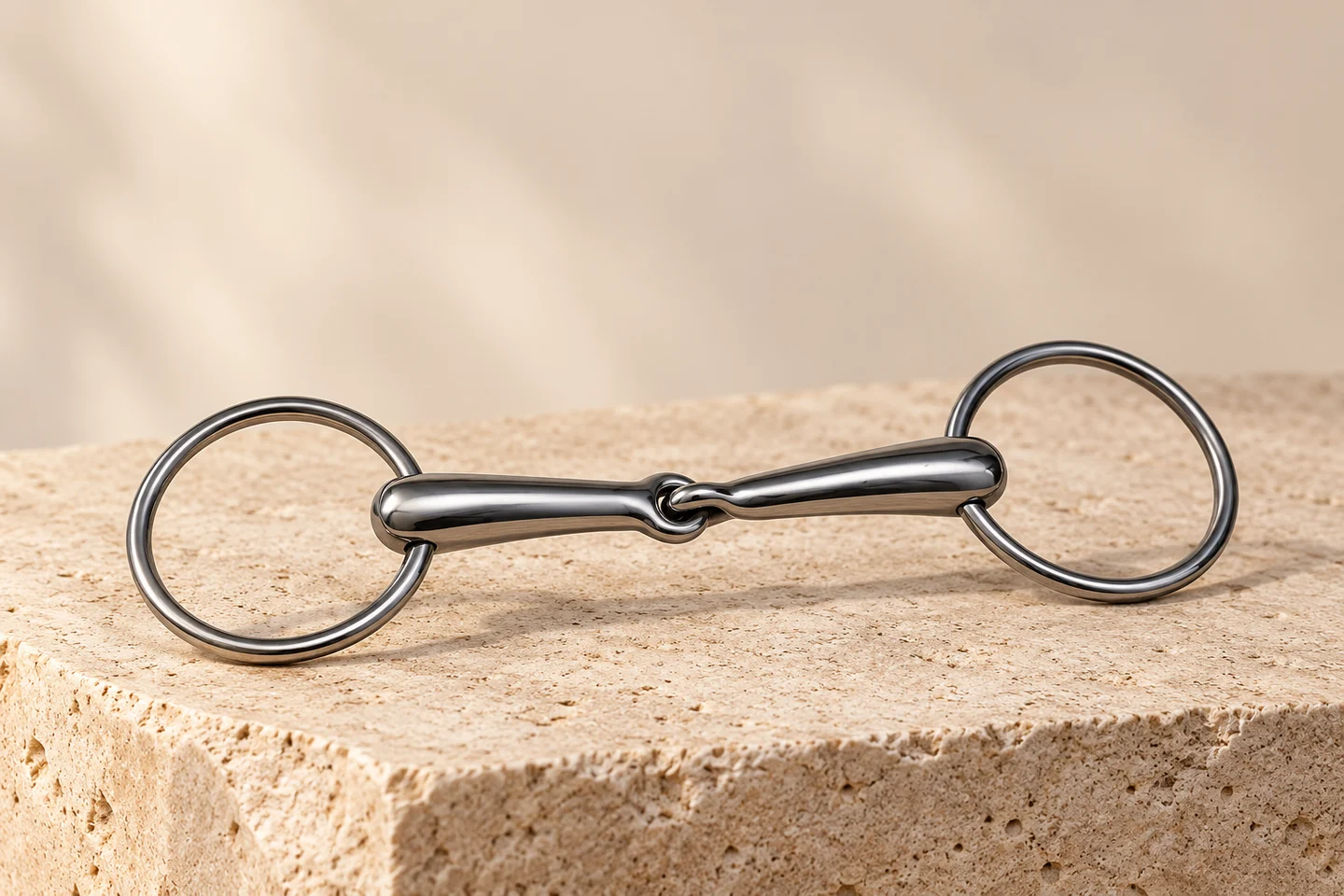
Send one line per complete configuration, with quantity expressed as individual bits. Add the sample reference, size definition and packing request to that line. If a project includes other tack categories, use the consolidated wholesale sourcing guide to keep each category identifiable in the same enquiry.
| Order field | Buyer input |
|---|---|
| Product | Model code, drawing or product link |
| Version | Cheek, mouthpiece, material and finish |
| Size | Nominal label plus accepted measurement record |
| Quantity | Individual bits per configuration |
| Packing | Retail label and protection requested for review |
Start a Retail Range Sample Discussion
Send your target cheek families, current size demand and the product links you would like to compare. We can use that shortlist to discuss an English-bit sample range before you commit to shelf quantities.
We will review the model and configuration with you before a quotation is agreed. Include quantities and destination so sample, packing and delivery terms can be considered together.
Qingdao Relia Saddlery Co., Ltd.
info@reliasaddlery.com · +86 18561762631
Changjiang Road, Qingdao, Shandong, China
- Choose the productSend the model code, product link or your drawing.
- Describe your versionInclude the size, construction or appearance you need to discuss.
- Plan the next stepAdd quantity and destination, then agree the sample and quotation scope with us.