

For trade sample selection
Horse Bit Mouthpiece Selection for Trade Sample Ranges
Build a mouthpiece sample tray your buying and sales teams can compare with confidence. We manufacture jointed and other defined bit constructions, including customer-drawing projects. Choose the joint, centre or profile you want to examine, while keeping the cheek arrangement and measured size comparable. A focused set makes each difference easier to explain before you expand the range.
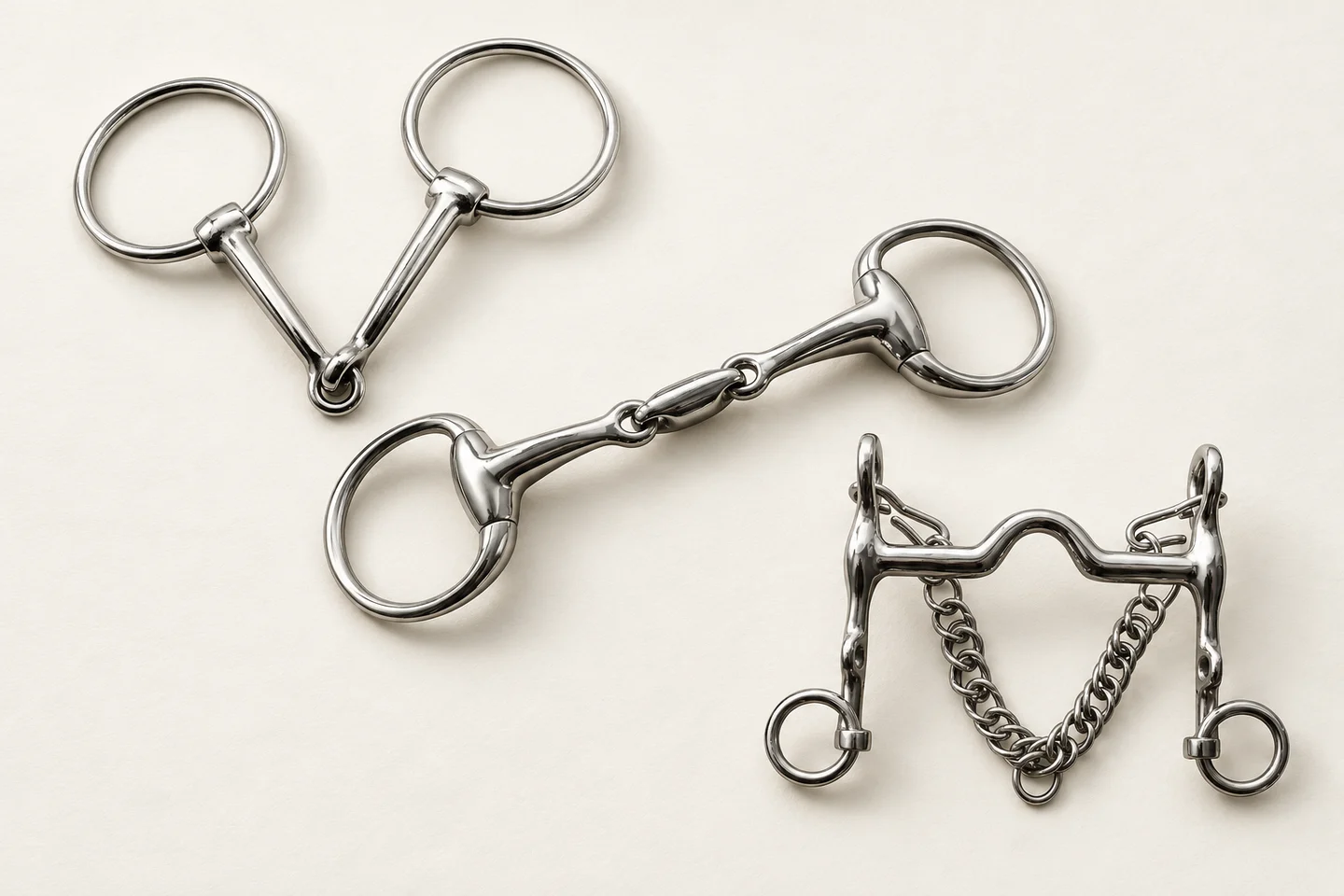
Name the Construction Before the Material
Make the construction difference visible before choosing more materials or finishes. Relia manufactures its own horse bits and checks the components and assembled movement. We can keep the mouthpiece, centre and cheeks together in the sample brief so your team compares a defined change rather than several unrelated products.
At Relia, we keep the mouthpiece construction visible in the sample description. A single joint has a different connection layout from a centre-link assembly; a continuous-looking bar needs its own construction confirmation. Material and finish are additional fields rather than substitutes for those structural details.
Two main arms with an identified central connection.
Arms, centre piece and their connecting joints described separately.
Curvature, centre profile and actual continuity established on the sample.
Make the Centre Piece Recognizable
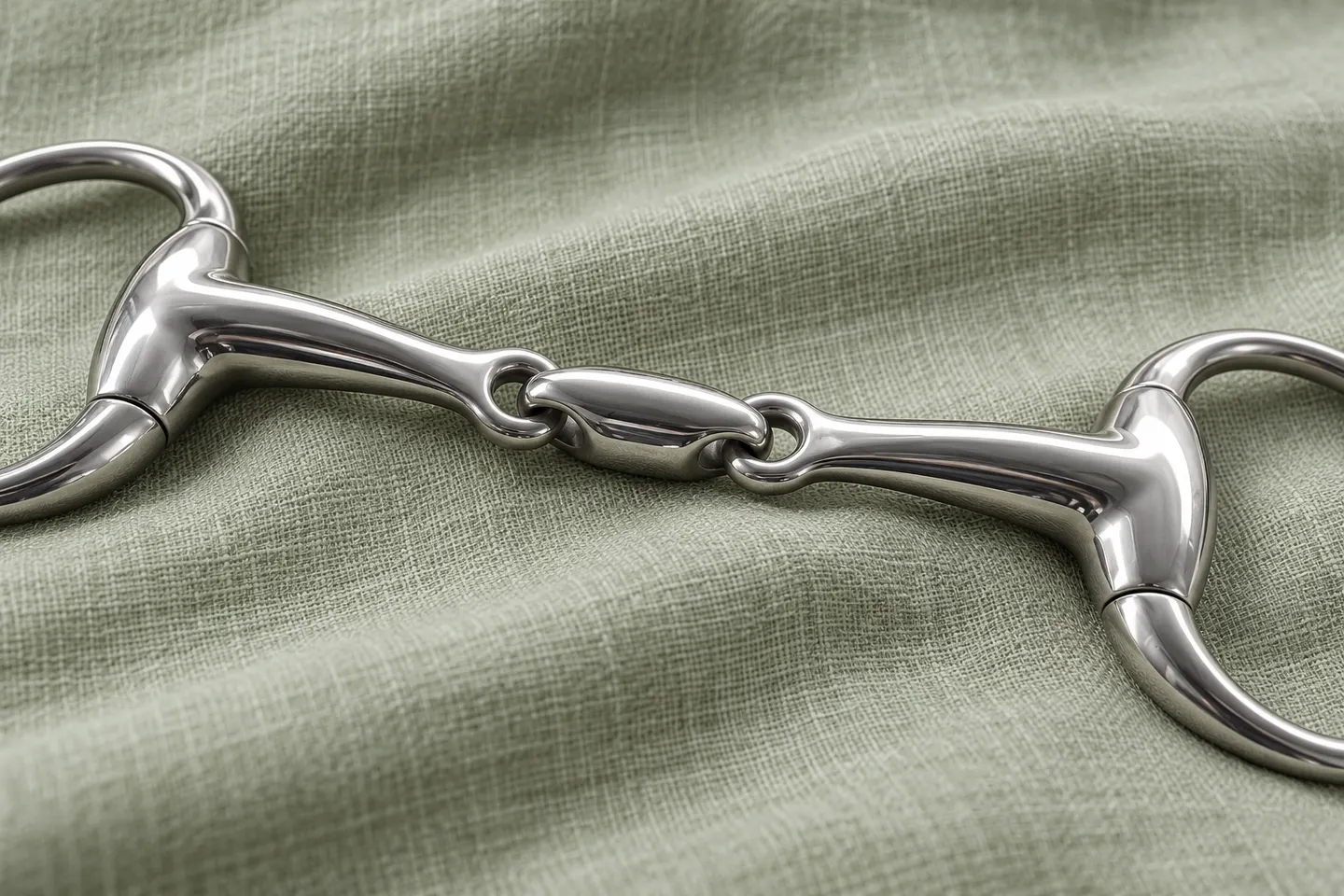
The current BT0319 image shows an oval centre and adjacent loops, while the product range includes a bronze oval-link double-jointed mouth on 25700-427CL. These are separate references. Shape, link orientation and the connections around it belong in your sample specification; the word lozenge by itself is too broad for repeat supply.
See the oval-link product reference for an identifiable starting point.
Control the Variables in Your Sample Tray
A controlled set avoids changing cheek, size, material and mouthpiece at the same time. Hold the shared fields steady where available, then record any unavoidable differences. This makes the comparison useful to your buyer and to the sales team who will explain the range.
| Keep comparable | Record the intended difference |
|---|---|
| Cheek layout and attachment reference | Single joint, centre link or bar construction |
| Agreed width and measurement pose | Centre-piece length, shape and orientation |
| Material and surface description | Curvature and arm-thickness profile |
| Supplied accessories | Documented movement of the selected assembly |
Measure More Than the Overall Width
A mouthpiece can share a nominal width with another model and still have a different centre length, arm profile or curve. Mark the arm thickness at a named location and record the centre piece independently. The product range, for example, lists a 38 mm link on several 125 mm mouth references; that centre dimension remains meaningful alongside the overall width.
- SpanAgreed mouthpiece endpoints and pose.
- ArmsThickness positions and curvature.
- CentreLink or port dimensions and orientation.
- ConnectionsJoint geometry and documented movement.
Read the Raised Centre as Geometry
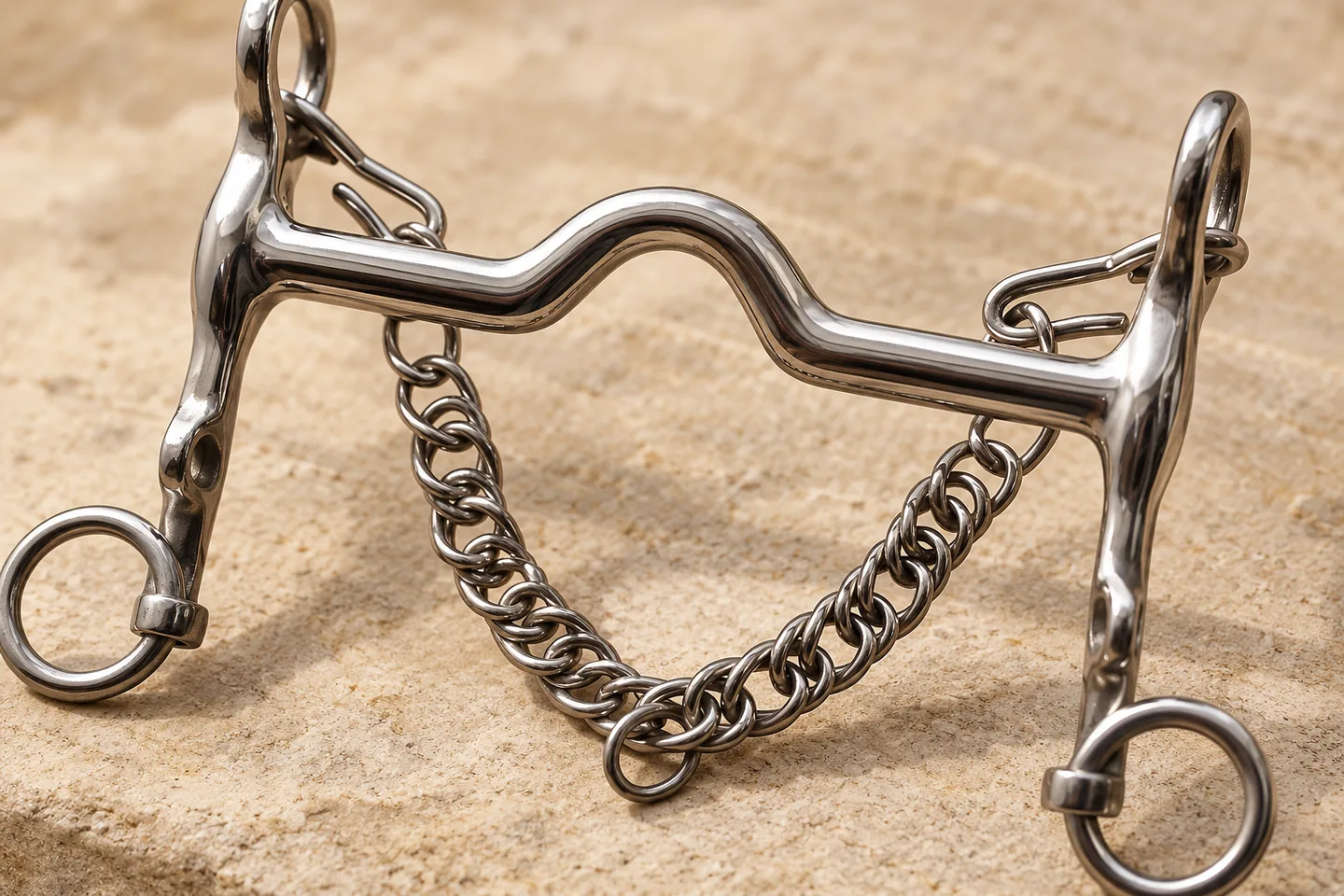
The BT0801 photograph provides a raised-centre reference with long cheeks and a chain. Use that image to identify the proposed product, then establish its actual bar construction, cheek dimensions and complete inventory. A high-looking centre is a geometric feature, not a conclusion about pressure or suitability.
Keep this configuration separate from the jointed samples in both your buying notes and model descriptions.
Review Joints After Final Assembly
The making route follows the mouthpiece construction. A jointed design needs its arms, connecting regions and centre defined before the components are brought together; a bar reference needs its continuous profile and cheek junctions resolved. Forming, any required connection work and finishing are selected for that model.
We verify component materials and dimensions, inspect appearance and check moving parts and assembly fit. Your sample review should name the joint positions, centre orientation, accessible edges and complete geometry being compared. Keep the cheek and size basis steady where possible, then record the construction difference your buying team actually needs to decide.
| Construction | Focus of review |
|---|---|
| Single joint | Connection form, accessible edges and actual range of movement |
| Centre-link assembly | Link orientation, adjacent joints and component dimensions |
| Bar construction | Confirmed build, profile and connection to cheeks |
| Every model | Finished surface, full parts inventory and retained sample identity |
Keep a Physical Identity for Each Sample
A numbered sample card should connect the product code, complete photograph, drawing and material description. Keep measurements in the same record so the comparison can be repeated after the samples have moved between buying, fitting and sales teams. These identifiers should describe the actual product, not a presumed horse response.
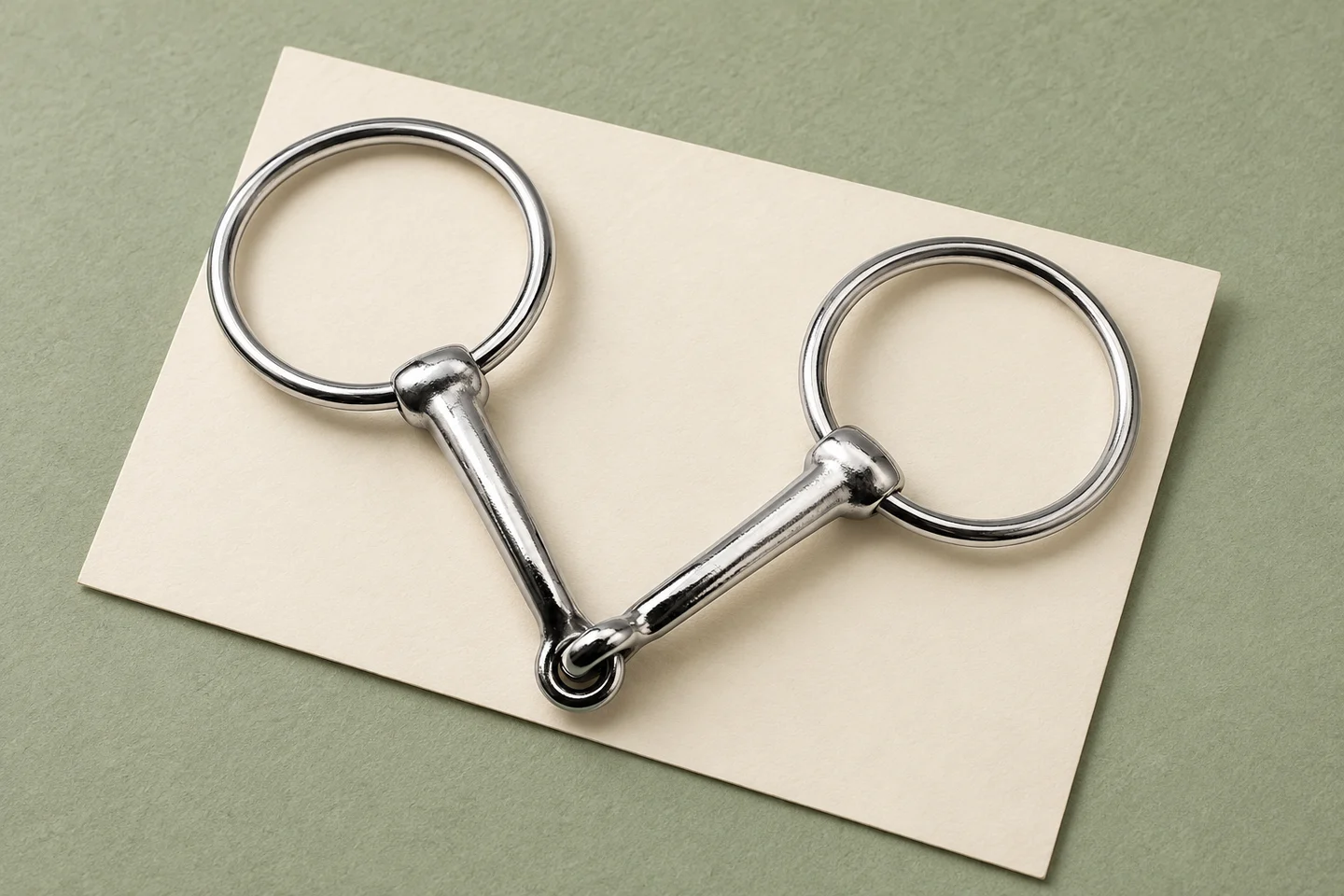
The BT0502NP round-ring reference is a starting point for a jointed-centre enquiry.
Take the Remaining Decision to the Right Guide
Once the mouthpiece structure is clear, the remaining decision is often material or measured size. Move that issue into a focused discussion rather than adding more unrelated samples. Qualified fitting assessment for the actual horse and equipment remains part of the final product selection.
Compare steel, copper components and hollow or solid builds.
Start a Mouthpiece Sample Discussion
Send the mouthpiece constructions you want to compare and the cheek arrangement you would like to keep. Include an existing product link or sample reference so we can discuss a controlled trade sample set.
We will review the model and configuration with you before a quotation is agreed. Include quantities and destination so sample, packing and delivery terms can be considered together.
Qingdao Relia Saddlery Co., Ltd.
info@reliasaddlery.com · +86 18561762631
Changjiang Road, Qingdao, Shandong, China
- Choose the productSend the model code, product link or your drawing.
- Describe your versionInclude the size, construction or appearance you need to discuss.
- Plan the next stepAdd quantity and destination, then agree the sample and quotation scope with us.