

For Western tack brands and sourcing teams
Custom Western Horse Bits from Your Drawings
Develop a Western bit around your own shank, mouthpiece and attachment geometry. We manufacture from customer drawings and support your logo, with the complete assembly and sample scope reviewed together. Define the functional design first, then place the artwork and trim on its actual surfaces. Your team can approve one clear version for both construction and appearance.
Develop the Functional Design and Your Brand Together
Keep the functional design and brand identity connected. Relia manufactures its own Western bits and accepts your drawings and logo. We review the mouthpiece, shank attachments and supplied parts with material, dimensional, appearance and assembly checks, while the artwork identifies the surfaces your design will change.
Model configurations and dimensions
Choose the mouthpiece and cheek together before adapting the design. The range includes a 6¾-inch single-jointed assembly, a 7¾-inch ported-roller assembly and two distinct 7-inch shank configurations. Keep the complete construction with your drawing so the new version has clear functional differences.
The 2634SI-FCT-M01 and 2734SI-FCT-M05 use the material name “Chromic Steel”; 10789LB-FD2-133WCR uses “Light Blackening Steel.” Confirm the material of each component in the project quotation and sample; these names do not specify an alloy grade.
Decorative bit development connects a chosen assembly with your artwork. Keep the functional drawing, supplied parts and branding layer on the same approved revision.
| Model reference | Cheek specification | Mouthpiece specification |
|---|---|---|
| 2634SI-FCT-M01 | 6¾-inch shanks; German Silver floral trim and copper bars | 5-inch sweet iron single-jointed mouth |
| 2734SI-FCT-M05 | 7¾-inch shanks; German Silver floral trim and copper bars | 5-inch sweet iron ported mouth with copper roller |
| 10789LB-FD2-133WCR | 7-inch shank, 9 mm thick; German Silver floral trim and copper leaf decoration | 5-inch sweet iron cricket port mouth with copper rings |
| 10789SI-CF-35CR | 7-inch shank, 9 mm thick; copper floral trim | 5-inch sweet iron short spoon mouth with copper inlay |
Locate Every Attachment on the Shank Drawing
Record the mouthpiece location and the upper and lower attachment positions from named datums. Include opening sizes, section profiles and any offset or bend that affects the complete assembly. The chain or strap arrangement also belongs in the component schedule.
Discuss the actual fitting and operating requirements for the intended configuration. The cheek outline alone does not define the action. Our Western-bit selection guide explains the configuration differences.
| Feature | Drawing detail | Sample checkpoint |
|---|---|---|
| Upper attachment | Position, opening and section from named datums | Measured location and intended routing |
| Mouthpiece junction | Height, orientation and connection detail | Complete assembly alignment |
| Lower attachment | Opening, offset and end shape | Required connection and clearance |
| Accessories | Chain, hooks, rings or other specified parts | Supplied count, dimensions and attachment arrangement |
Make the Port a Measured Profile
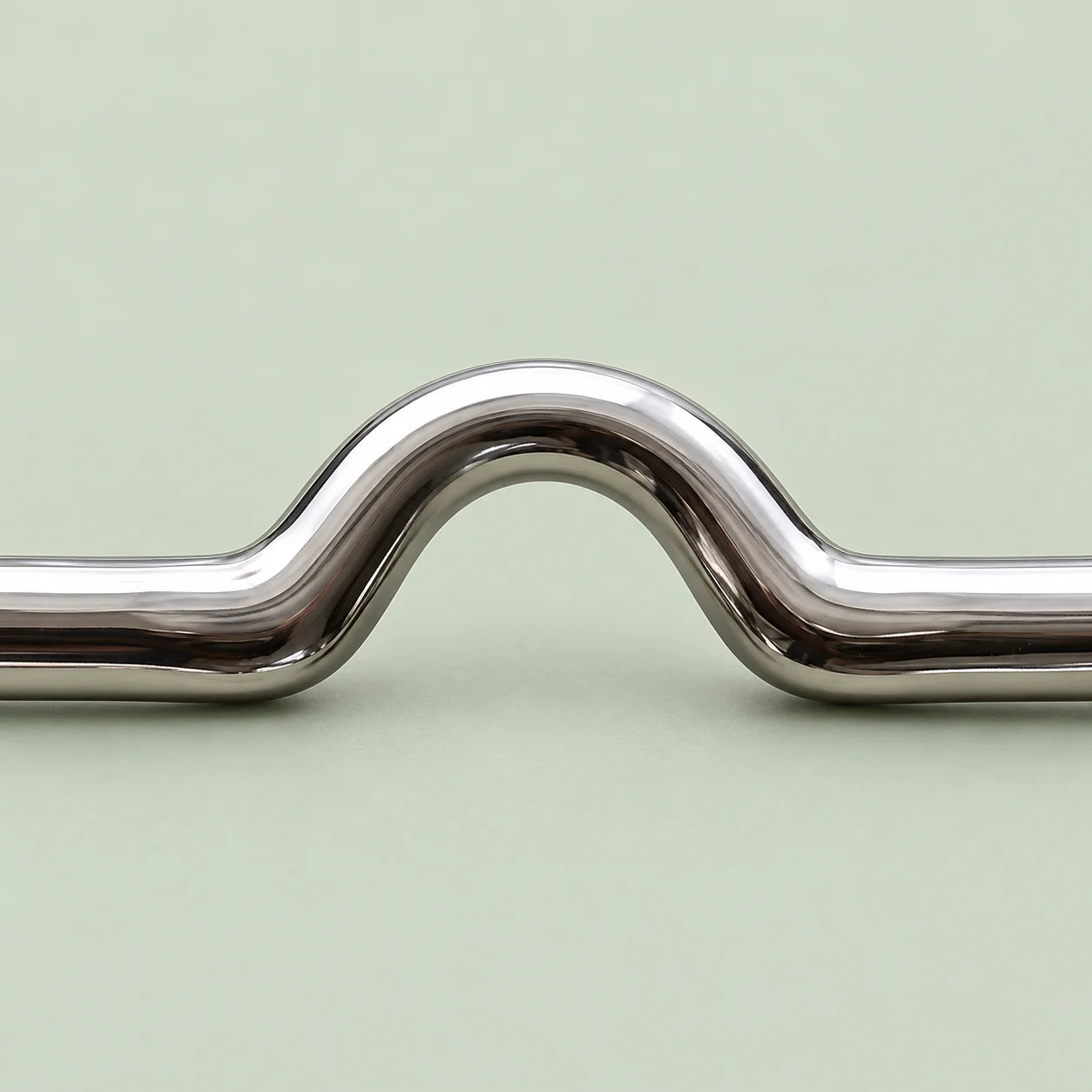
A raised centre needs more than a silhouette. Define the port height and width, surrounding profile and section dimensions in the drawing. Identify the measuring orientation so the sample can be compared consistently.
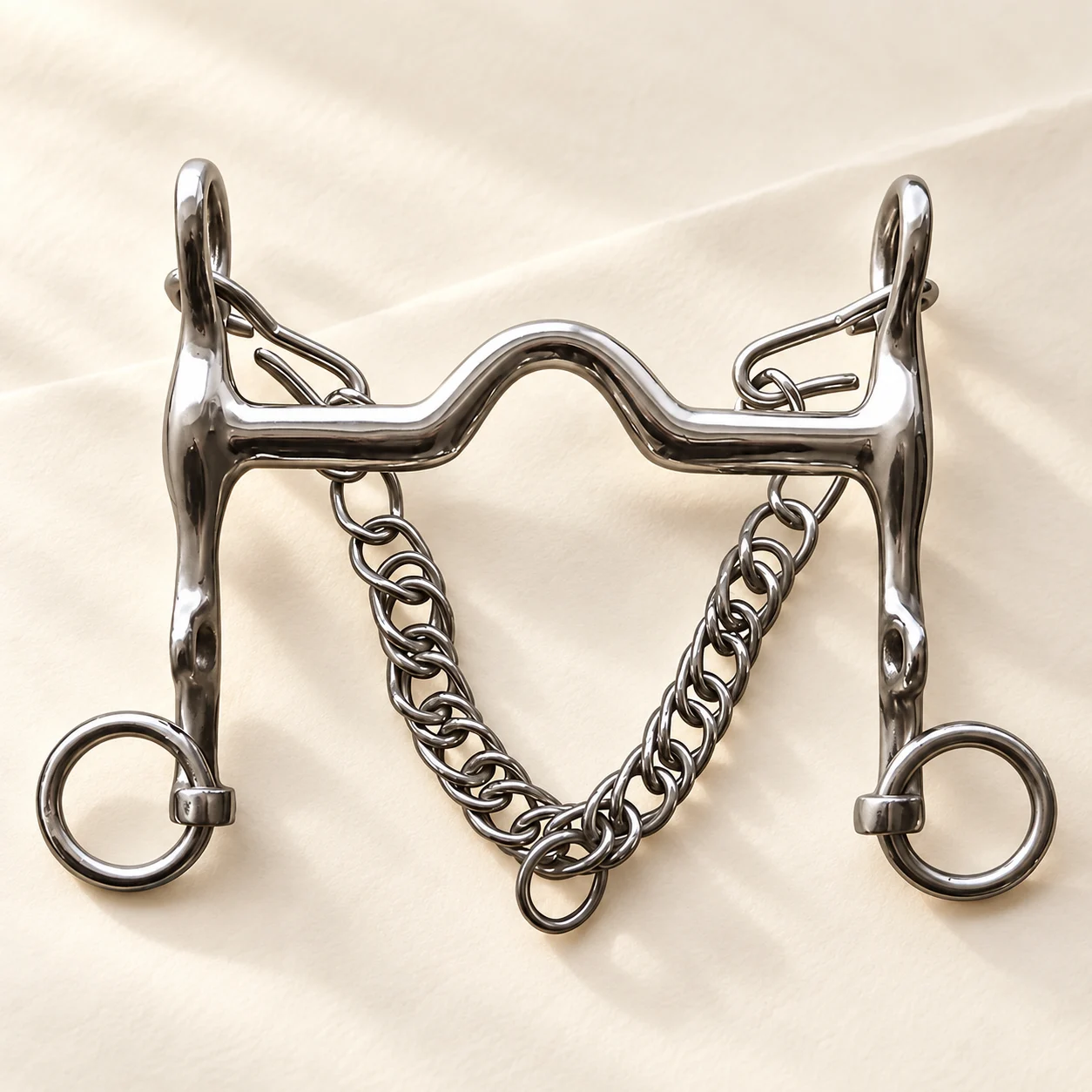
The BT0801 reference has a visibly raised central arch. Your custom drawing must specify the proposed geometry directly, with intended-use requirements reviewed for the actual configuration.
Keep the Material Schedule with the Assembly
The complete material schedule matters because a model bit can combine a stated steel base, a sweet iron mouthpiece, copper rings or inlay and decorative trim. Our 2634SI-FCT-M01 and 2734SI-FCT-M05 references both list German Silver floral trim and copper bars, yet their mouthpieces and shank lengths differ. A shared decoration does not make them the same assembly.
For your drawing, identify the required material and finish of each mouthpiece, cheek, ring, hook and chain. Specify whether a copper feature is a roller, ring or inlay, then keep the component schedule, connection details and appearance sample tied to one revision. Quote each linked model separately unless you are developing one agreed replacement drawing.
| Record | Information to agree | Avoids ambiguity in |
|---|---|---|
| Mouthpiece | Profile, sections, component material requirements | Port or joint construction |
| Cheeks and rings | Geometry, material and connection requirements | Assembly alignment and attachment clearances |
| Accessories | Each supplied component and its identified version | Contents and sample comparison |
| Appearance | Finish reference, logo artwork and location | The released branded version |
Set the Checkpoints before Making the Sample
For your Western-bit drawing, we select the forming route and any machining or welding needed to make the cheek, mouthpiece and connections. Polishing, the specified surface treatment, decorative work and assembly complete that defined construction. The model's copper roller, rings and inlay remain different component features, not interchangeable trim descriptions.
Our checks cover materials, dimensions, appearance and moving parts or assembly fit. Review the mouthpiece profile, shank datums, attachment openings, connection spaces and agreed accessories together. Keep trim and logo placement on the same accepted version while preserving the functional geometry, giving your brand a specific assembly to approve rather than an attractive cheek outline alone.
- Component reviewResolve profiles, sections, materials and attachment details.
- Route reviewAgree component-making, connection and finishing steps.
- Feature inspectionCompare the specified port, shank and attachment dimensions.
- Assembly approvalReview surface condition, required movement and complete contents.
Keep Each Attachment with Its Product Version
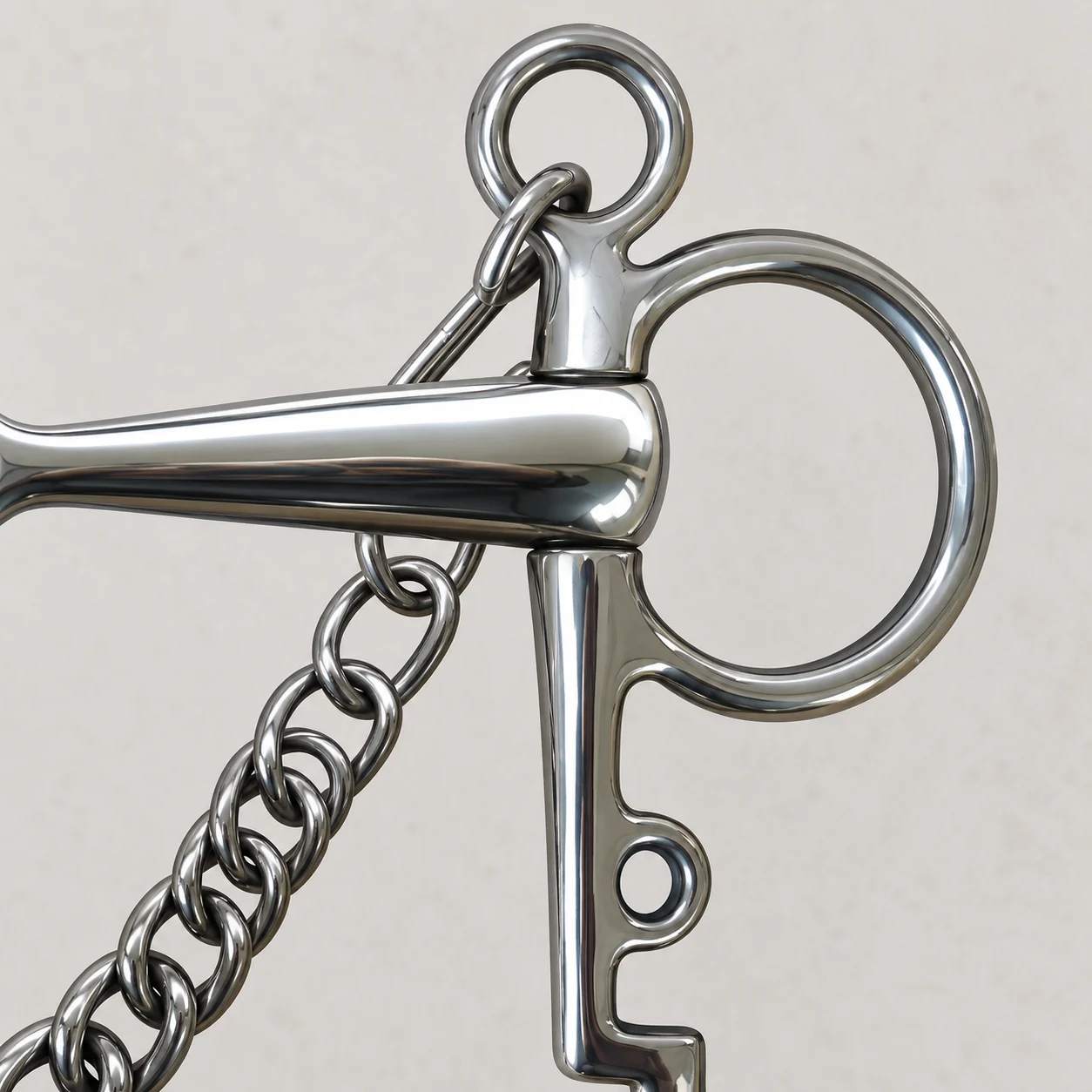
The BT0712 reference has upper loops, lateral D-shaped rings, lower attachment openings and a chain arrangement. Give each connection its own place in the drawing and component list. The outer cheek detail below makes that assembly discussion concrete without treating different bit designs as interchangeable.
Record the specified dimensions, supplied parts and intended routing for that version. If the mouthpiece joint also changes, use the jointed assembly development guide alongside the shank drawing.
Preserve Functional Geometry beneath the Decoration
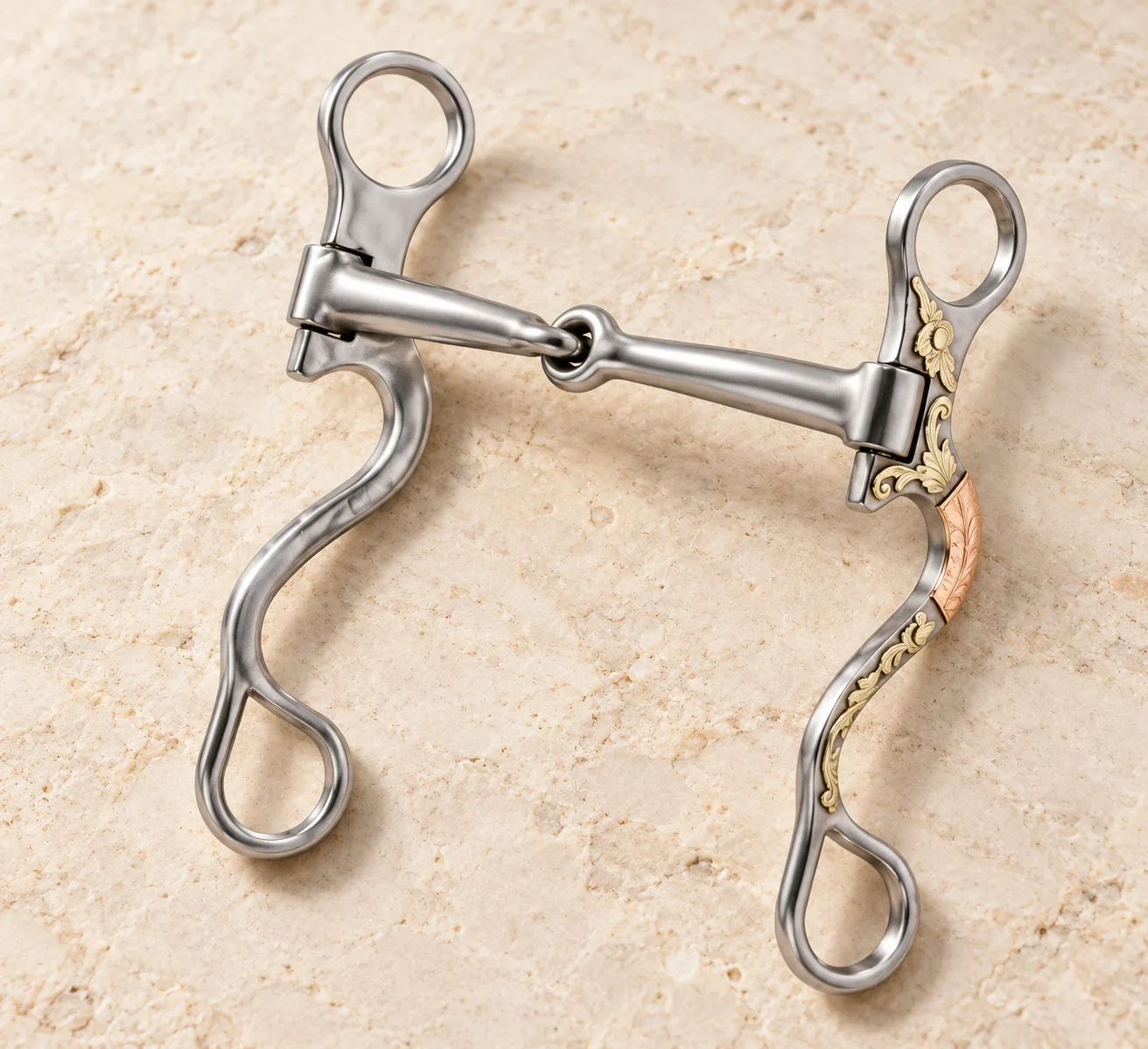
The 2634SI-FCT-M01 shown here is the product range’s 6¾-inch shank reference with a 5-inch sweet iron single-jointed mouth, German Silver floral trim and copper bars. It provides a concrete starting point for discussing functional geometry and decoration as separate drawing layers.
When adding your logo, mark the chosen face, artwork size and orientation without shifting the mouthpiece location, shank section or attachment openings. Agree the marking or decoration method for the actual material and available area. Your released drawing and accepted sample define the custom product.
Release One Drawing and One Accepted Sample
For a new design or authorized source transfer, bring the drawing revision, component schedule, artwork and agreed sample results into one release record. List differences explicitly and resolve them before production approval. Quantities, packing, tooling responsibilities and current supply terms then refer to that accepted version.
The second-source sample guide gives more detail on comparison work. The shared OEM guide connects design development with the wider project agreement.
Assembly and detail drawings with a clear revision.
Identified complete sample and documented differences.
Artwork and finish reference matched to that sample.
Accepted quantity, packing, tooling scope and current terms.
Turn a Decorative Direction into a Defined Product
Use the 2634SI-FCT-M01 to discuss the base and artwork as separate choices. It combines 6¾-inch shanks, a 5-inch Sweet Iron single-jointed mouth, German Silver floral trim and copper bars. Show the geometry and decorated surfaces your design retains, then mark the changes on the drawing.
Separate the Working Geometry from the Ornament
Keep shank and mouthpiece geometry together in the drawing.
Name the surfaces and trim you want to coordinate.
Review material choices, artwork and assembly as one version.
Send Your Shank and Mouthpiece Drawings
Send your assembly drawing, shank and mouthpiece detail views, component materials and logo artwork. Add the intended accessory arrangement, planned quantity and destination. If you are transferring an authorized design, include the accepted sample reference and known differences.
Start your product discussion · Learn about our product range
Qingdao Relia Saddlery Co., Ltd.
info@reliasaddlery.com · +86 18561762631
Changjiang Road, Qingdao, Shandong, China
- Choose the productSend the model code, product link or your drawing.
- Describe your versionInclude the size, construction or appearance you need to discuss.
- Plan the next stepAdd quantity and destination, then agree the sample and quotation scope with us.