

SEASONAL SHEDDING TOOL RANGES
Ring Curry Combs and Shedding Blades for Seasonal Ranges
Build a seasonal grooming display with genuinely different working forms: nested rings, a block edge and a handled loop. Compare how each tool is held and where its working edges sit. Select the forms your customers need, then allocate quantities by model with the relevant use and care requirements.
- Choose the formRing, block and loop differ.
- Keep the edgeWorking teeth and unwanted burrs differ.
- Stay model-specificDo not transfer sizes or materials.
A closer product look
Keep the wooden-block tool in its own branch
Relia offers the Brown SC-411 wooden-block tool alongside nested-ring and handled-loop designs. Compare its working edge and grip as one tool. Ask for confirmed size units and tool mass for the selected SC-411 version when preparing the quotation and packing plan.
Confirm SC-411's dimensions and the unit for its nominal 650 weight specification.
Read the block tool as one construction
- Wooden blockShow the actual body and hand-contact region.
- Working edgeDescribe the exposed short edge.
- Selected sizeRetain the label while resolving its missing unit.
Read the design and specification notes
Compare the SC-411 wooden block, working edge and grip as one selected tool. Confirm its actual dimensions and the unit for the nominal 650 weight specification in the quotation. Keep those details with the Brown option and sample you want to compare.

Choose for your application
Different edge layouts deserve different use descriptions
Nested rings, a short straight edge and a loop distribute working edges differently. Show intended orientation and grip for each; a general curry task does not assign every exposed metal-edge tool the same application or technique.
Include the intended use and care requirements for each working-edge form.
Give the form a clear role
- Ring head
- Compare the nested contact layout.
- Short edge
- Compare the block and exposed working boundary.
- Loop
- Compare the longer handled-edge arrangement.
Read the design and specification notes
Nested rings, a straight block edge and a handled loop distribute working edges differently. Compare the intended orientation and grip for each tool, then describe the task and care requirements it should serve. Keep each working form as its own range choice.
Choose for your application
Keep the three product descriptions separate
Relia-10 has a Metal description, SC-411 is the wooden-block route and SC-Y01 has Stainless Steel and ABS with 30.5 × 4.5 cm. Retain those facts on their own lines rather than sharing one material or dimension across the assortment.
Keep SC-Y01's 30.5 × 4.5 cm size with that model and confirm the required material specification for Relia-10.
Use one line for each form
- Relia-10
- Nested-ring form with a Metal description.
- SC-411
- Wooden-block design; confirm the measured dimensions for your version.
- SC-Y01
- Stainless Steel and ABS; 30.5 × 4.5 cm.
Read the design and specification notes
Relia-10 has a Metal material description for its ring-comb form. SC-411 is the wooden-block tool, while SC-Y01 has Stainless Steel and ABS descriptions with a 30.5×4.5 cm size. Keep those material and geometry choices attached to their own tool when specifying the assortment.
| Reference | Working form | Product detail |
|---|---|---|
| Relia-10 | Nested-ring comb | Metal |
| SC-411 | Wooden-block edge | Brown;confirm size units |
| SC-Y01 | Handled loop | Stainless Steel/ABS;30.5×4.5 cm |
Construction and making
Preserve working teeth while specifying finished boundaries
For cut or formed strip, tooth formation and bending establish the working shape. Edge preparation must distinguish intended teeth from unwanted burrs elsewhere; a blanket polish-every-edge request could obscure the feature you are choosing. Align the actual route for the selected tool.
Agree the selected tool's working-tooth profile, surrounding edge finish and actual making route.
Separate the useful edge from unwanted features
- Working profileRetain the intended tooth or blade form.
- Non-working boundariesDescribe the finished condition away from those teeth.
- Backing connectionKeep the edge and supporting handle or block together.
Read the design and specification notes
If a selected blade uses cut or formed strip, its tooth profile and bending establish the working shape. Edge preparation must then distinguish the intended working teeth from unwanted burrs on non-working boundaries. This matters because a blanket instruction to polish every edge could obscure the feature being chosen. Align the actual route for the ring, block or loop version, and retain its edge profile and backing connection in the finished-tool comparison.
Share the product link and your intended use, with these details:
- Selected ring, block or loop models and appearance options
- Working-edge profile, grip and component material requirements
- Individual quantities, SC-411 unit questions and tool-specific use/care needs
A closer product look
Keep the SC-Y01 loop version identifiable
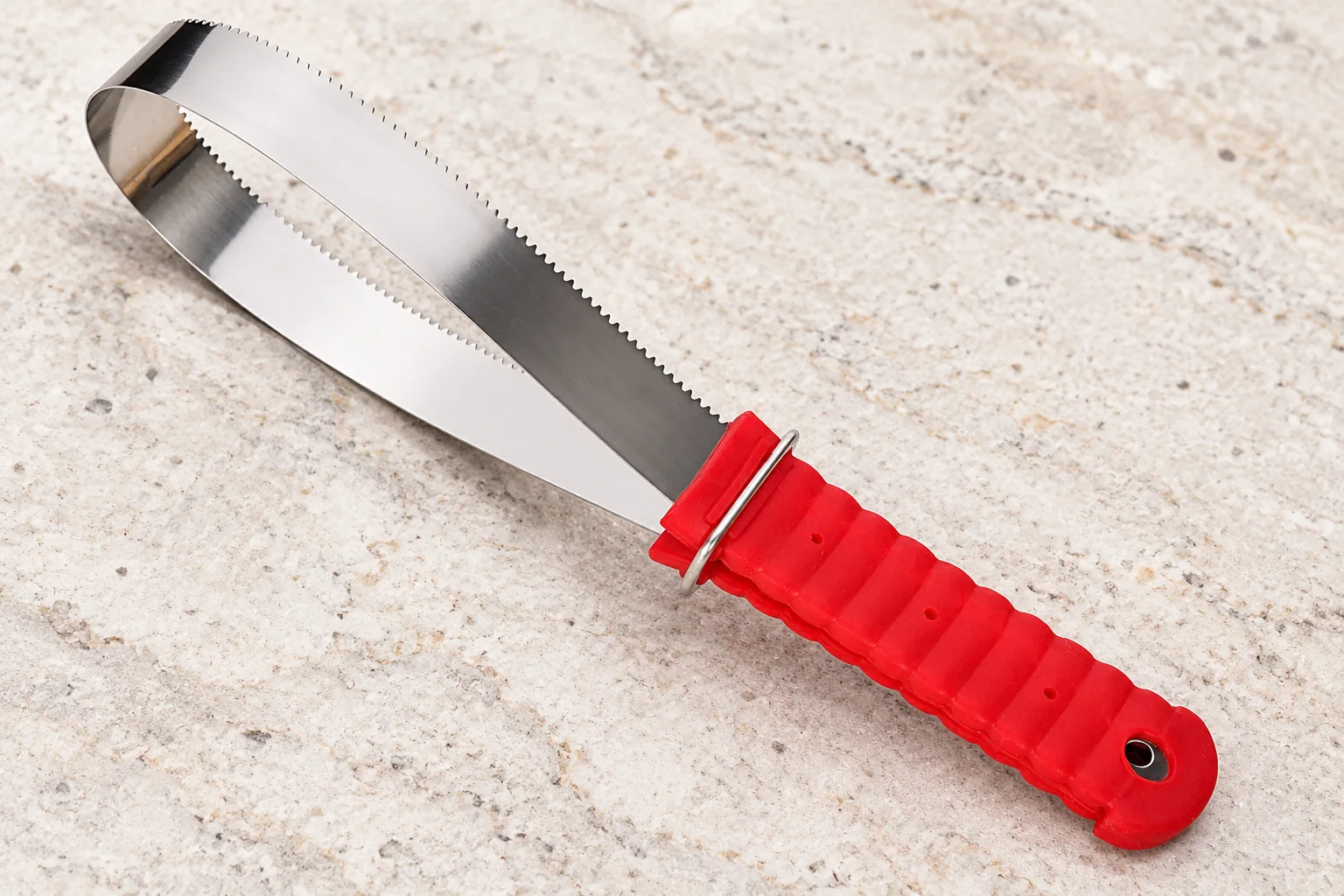
SC-Y01 has seven stated colour options and a 30.5 × 4.5 cm description. Allocate Stainless Steel and ABS to the actual blade and handle components, then keep that selected colour and size separate from the shorter wooden-block products.
Identify the stainless-steel and ABS components on your selected SC-Y01 version.
Describe the complete loop tool
- Blade formCompare the handled-loop working geometry.
- HandleIdentify the actual component and grip.
- Selected versionKeep model, colour and 30.5 × 4.5 cm together.
Read the design and specification notes
SC-Y01 offers Blue, Black, Pink, Red, Orange, Purple and Green. Its Stainless Steel and ABS descriptions need allocating to the actual blade and handle. Keep the chosen colour and 30.5×4.5 cm size with this model rather than transferring them to the shorter wooden tools.
Choose for your application
Give each seasonal choice its own supplied unit
A coordinated display can group ring, block and loop forms while keeping model and option visible. Count each tool separately so the assortment offers different constructions rather than presenting every colour as the same generic metal brush.
Organise the display by meaningful differences
- Ring formIdentify its model and complete head-and-handle unit.
- Block formKeep selected size and unit explicit.
- Loop formRetain its separate dimensions and colour choice.
Read the design and specification notes
Present the nested-ring comb, wooden-block tool and loop tool as distinct choices, each with its own supplied unit. A coordinated seasonal display can still keep the model and option visible. This gives buyers a clear reason for each product rather than several colour variants with the same generic description.
A closer product look
Include the ring-comb handle in the comparison
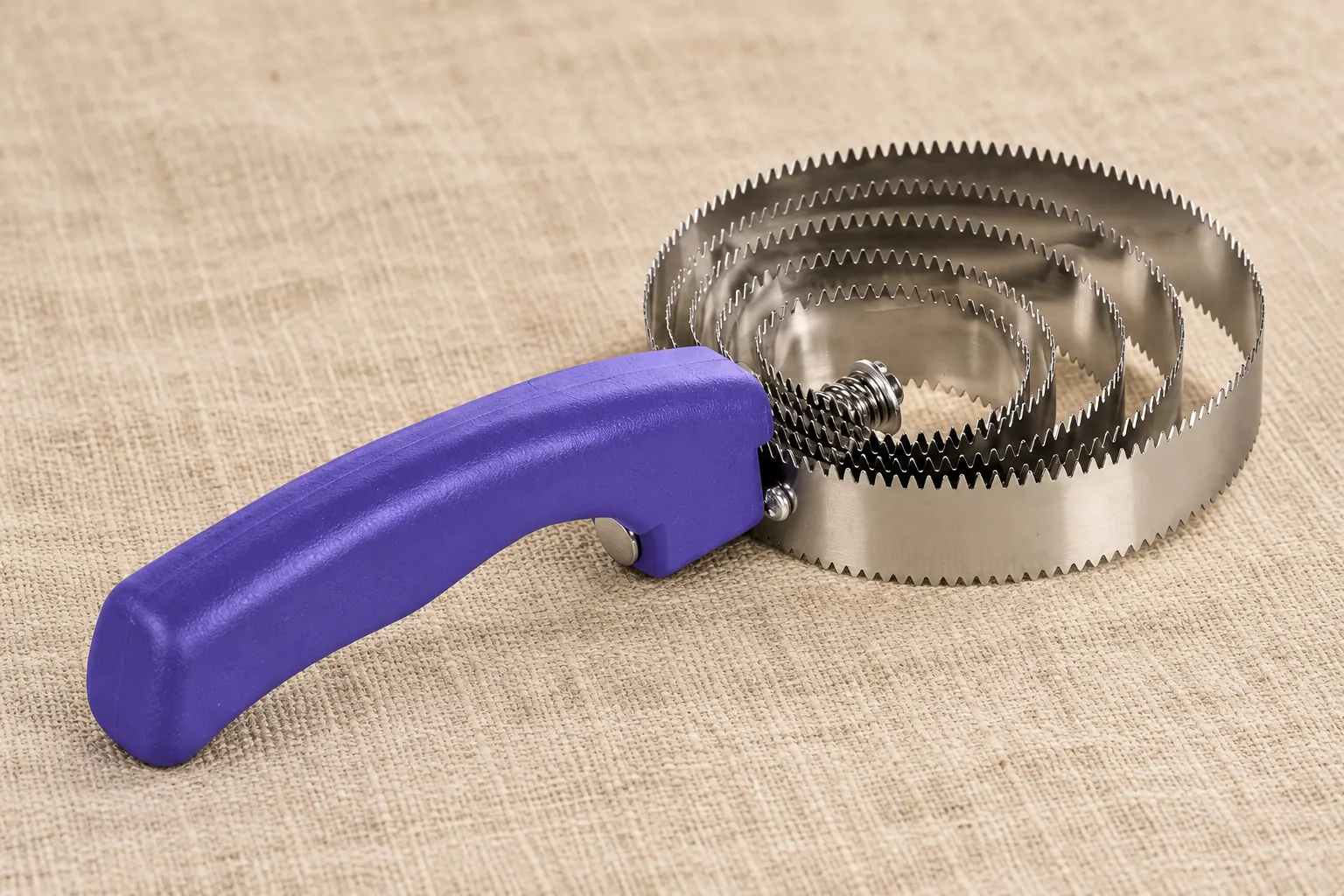
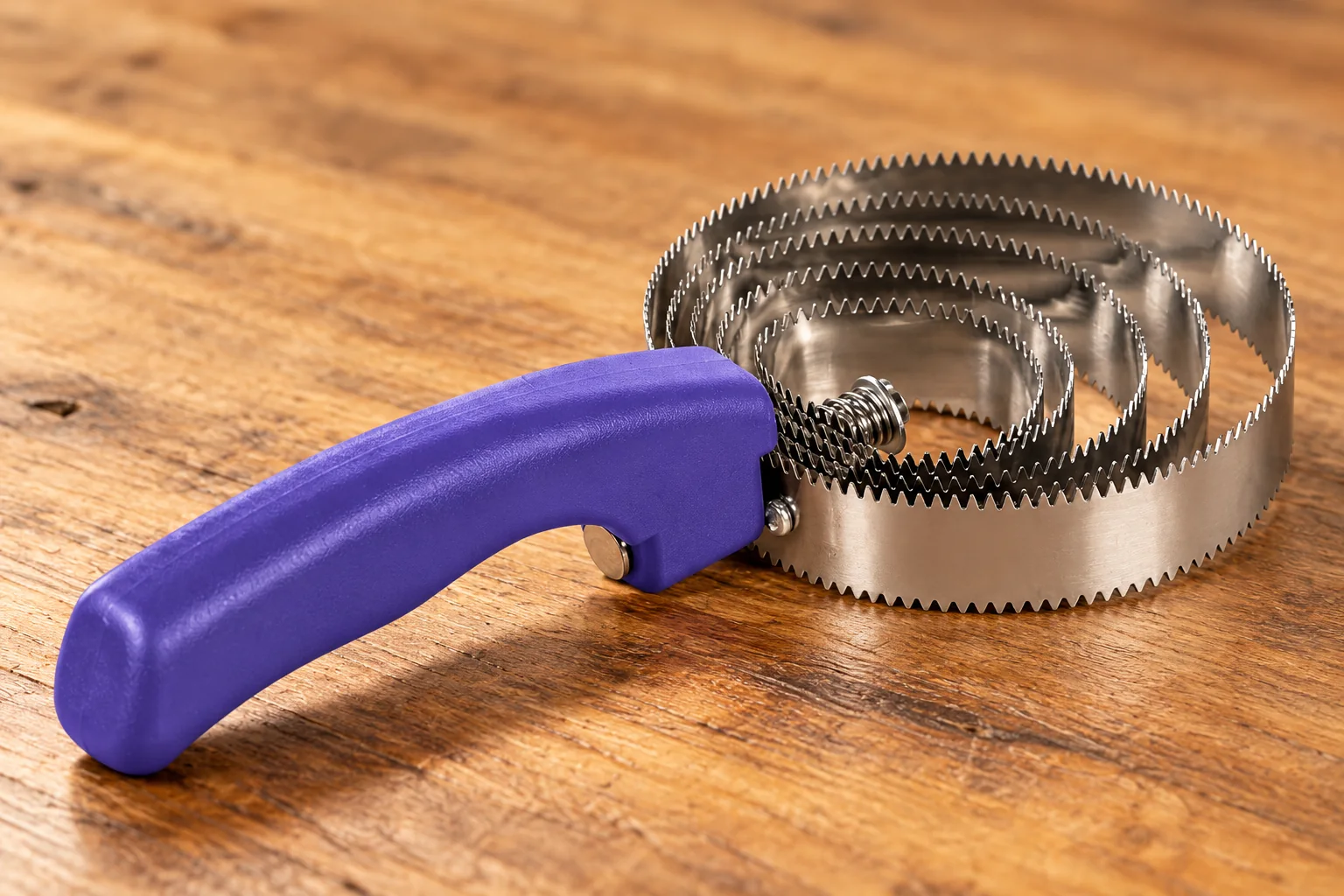
The curved handle and nested metal edges define the Relia-10 tool together. Show the handle attachment with the working head so a grip or colour request remains a construction discussion without implying a measured change in shedding performance.
Connect grip to the ring head
- Nested edgesDescribe the selected head form.
- Curved handleShow the hand-contact shape.
- AttachmentKeep the connection between handle and head visible.
Read the design and specification notes
The Relia-10 ring-comb reference includes a curved handle and nested metal edges. Show the handle shape and attachment alongside the working head. This makes a colour or grip request easier to discuss without implying that a different handle changes the tool’s measured shedding performance.
Choose for your application
Allocate quantities by form and intended use
Choose the forms your customers need, then assign quantities to each actual model and appearance. Keep use and care requirements specific to the selected tool so a seasonal display does not imply one technique or outcome for every metal edge.
Make the seasonal range manageable
- Chosen formName ring, block or loop by model.
- Selected versionKeep appearance and any clarified size together.
- Use and careState requirements for that individual tool.
Read the design and specification notes
Select the forms your customers need, then allocate quantities to the actual model and appearance choices. Keep use and care information specific to each tool. This supports a manageable seasonal range without inventing removal rates, treatment outcomes or a universal operating technique.
Products behind these choices
Relia-10 Horse Ring Curry Comb with Curved Handle
Compare the nested-ring Relia-10 head with its curved handle.
View this product →SC-411 Wooden Horse Shedding Blade in Brown
Explore the Brown SC-411 block form while clarifying size and mass units.
View this product →SC-Y01 Stainless Steel Horse Shedding Blade with Loop Form
Select the SC-Y01 loop form with its own dimensions, colours and component allocation.
View this product →Start a product discussion
Send a form-specific seasonal-tool brief
Send the ring, block or loop tools you want, their working-edge and grip requirements and quantities by version. Keep SC-Y01's size with that model and confirm SC-411's units separately. We can discuss a seasonal assortment with clear individual replenishment lines.
Qingdao Relia Saddlery Co., Ltd.Changjiang Road, Qingdao, Shandong, ChinaProduct discussion details
Prepare the shedding-range enquiry
- ChooseName each actual model and appearance.
- DescribeShow working profile, grip and component materials.
- ClarifyState missing units, individual quantities and use/care needs.