

Wholesale buying guide
Equestrian Product Sourcing for Your Next Range
Build an equestrian range around the jobs your customers need to do. Choose hardware by its connection, grooming tools by their working faces and stable supplies by their everyday use. For bits, spurs and stirrups, choose an existing design or bring your drawing. Follow the relevant guide, compare the products and send us a shortlist for your market.
- Choose the taskStart with the job, not a shared appearance.
- Compare real productsFollow named examples into a relevant guide.
- Make a clear enquirySeparate models, versions and purchase units.
Choose for your application
Turn a Product Idea into a Useful Starting Point
Relia helps you move from a range idea to products worth comparing. We manufacture horse bits, spurs and stirrups and support drawings and logos for those families. Our wider range covers hardware, grooming, horsewear and stable supplies. Choose the route below to compare the fit, contents or construction that matters to your purchase.
Turn a Product Idea into a Useful Starting Point
- Find a familyChoose the product role before individual models
- Compare constructionsUse the detailed guide for the working parts
- Build the enquiryKeep each selected model and version together
Read the design and specification notes
Relia brings tack hardware, grooming, riding equipment, horsewear and stable supplies into one product range. An importer comparing product families needs a different starting point from a brand changing one buckle or a retailer replenishing brushes. Choose the route below for that buying task; each detailed guide connects actual products with the construction, dimensions and supplied pieces that shape the choice.
Choose for your application
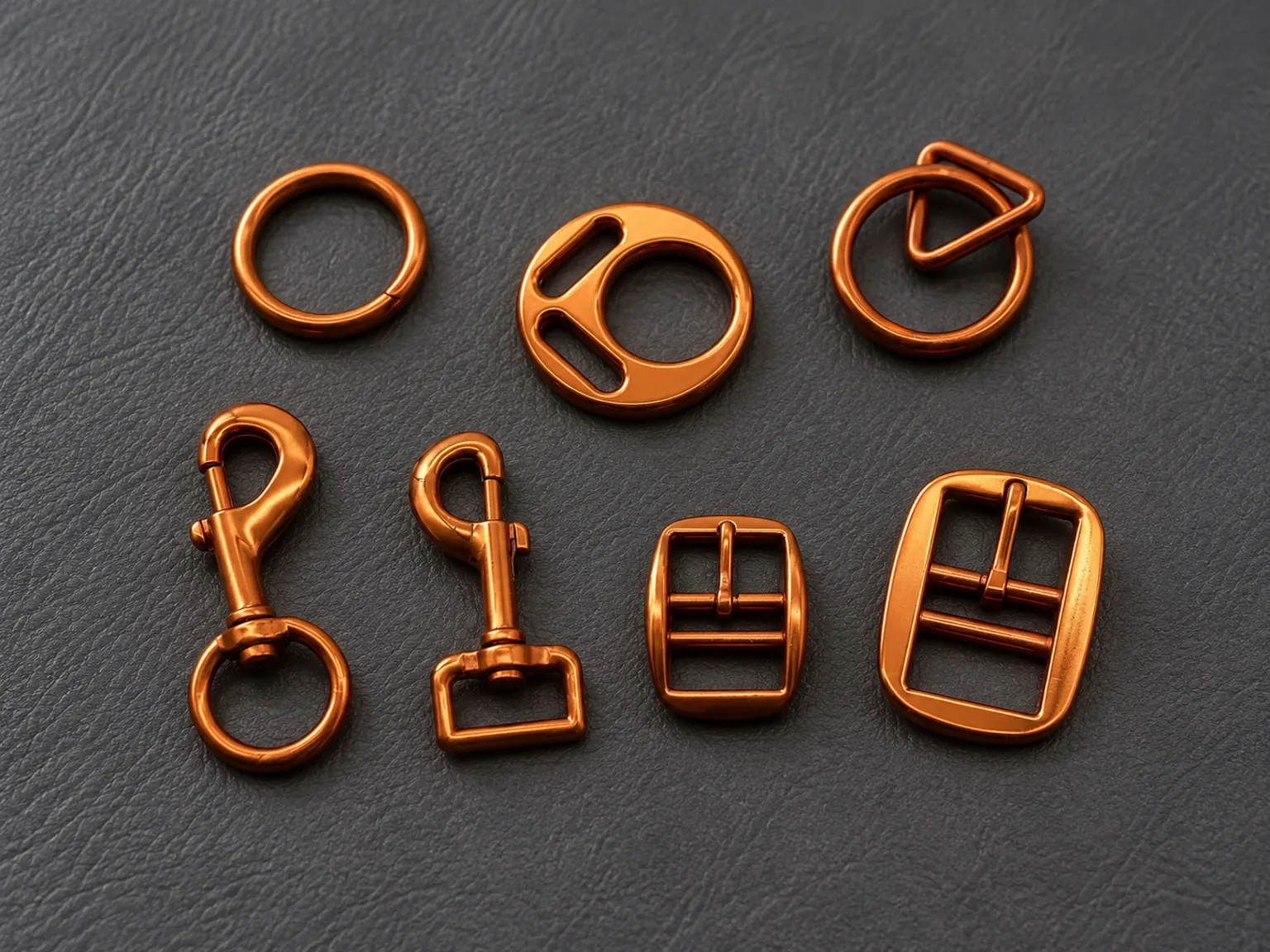
Separate Strap Closures from Detachable Connections
Choose a closure when the strap must fasten or adjust; choose a connector when two parts must detach or turn. This distinction narrows the hardware family before appearance becomes a useful filter.
Separate Strap Closures from Detachable Connections
- Close or adjust a strapBuckles & Strap Hardware · Strap path, thickness and closure
- Detach or rotate a connectionSnaps, Rings & Connectors · Gate, eye and mating part
- Coordinate several partsRelevant set guide · Defined contents and matching interfaces
Read the design and specification notes
A roller buckle closes or adjusts a strap; a swivel snap connects it to another item. YF103022SS carries a 1-inch buckle label, while YF10111DC groups snap-hook, adjuster and D-ring references. Choose by the finished assembly before choosing a common finish.
| Your task | Start with | Main distinction |
|---|---|---|
| Close or adjust a strap | Buckles & Strap Hardware | Strap path, thickness and closure |
| Detach or rotate a connection | Snaps, Rings & Connectors | Gate, eye and mating part |
| Coordinate several parts | Relevant set guide | Defined contents and matching interfaces |
A closer product look
Build Grooming Ranges Around Different Tasks
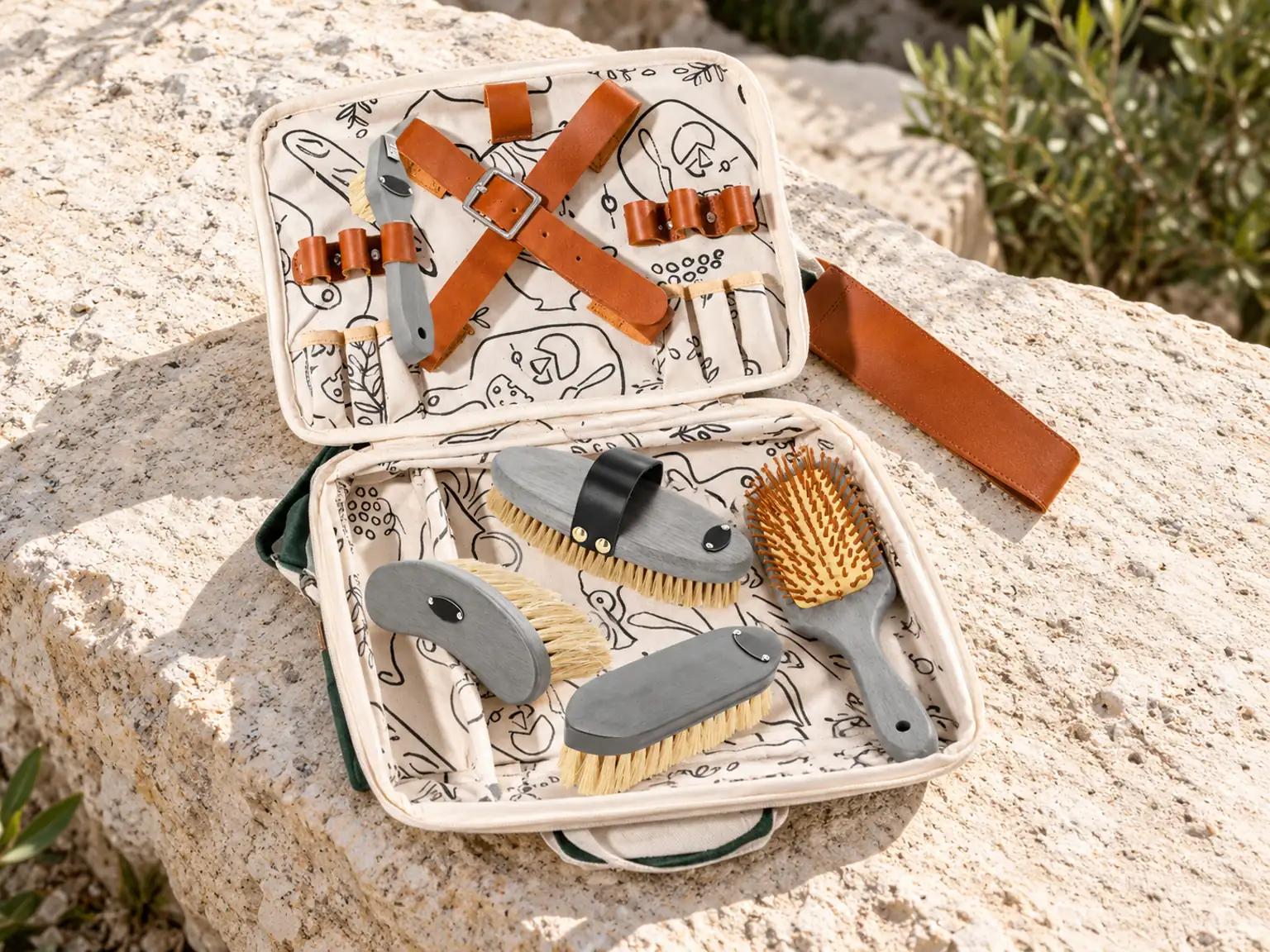
Give each grooming tool a working role. A complete kit supports a different retail offer from an individual hoof pick, so tools, consumables and the carrier need a clear contents list.
Build a useful grooming shelf
- Complete kit
- Define the listed tools and carrying case.
- Loose tool
- Choose the working face for the task.
- Replacement line
- Identify the exact item customers will replenish.
Read the design and specification notes
Use the grooming route for complete kits, individual brushes, shedding tools, washing tools and hoof-related items. The Beech Wood five-piece kit reference is a different purchase from a loose 1010 hoof pick. Tool roles help you build a useful assortment without counting a case, consumables and working tools as interchangeable pieces.
Choose for your application
Choose Horsewear by Product Role
Choose the horsewear family before comparing colours. Rugs, saddle cloths and boots cover different parts of the horse and need their own layer, closure and fit information.
Choose Horsewear by Product Role
- RugsBody coverage and closure arrangement
- PadsOutline, layers and saddle interface
- BootsPosition, dimensions and supplied pieces
Read the design and specification notes
A winter rug, saddle cloth and leg boot answer different buying questions. MAD-0104 provides a named saddle-pad route with Purple, Grey and Green selections; rug and boot pages use their own construction and fitting references. Begin with the role, then use the specific guide for layers, dimensions and fastening options.
A closer product look
Keep Riding Components in Their Own Guides
A stirrup, bit, spur and crop belong to different equipment assemblies. Their attachment geometry and construction help you form a useful range without treating a shared colour as a fit decision.
Colour and product appearance do not establish competition eligibility or performance.
Read the assembly before the colour
- Foot support
- Compare stirrup frame, tread and upper strap opening.
- Bridle component
- Compare the chosen mouthpiece and cheek arrangement.
- Rider aid
- Use the spur or crop’s own fit references.
Read the design and specification notes
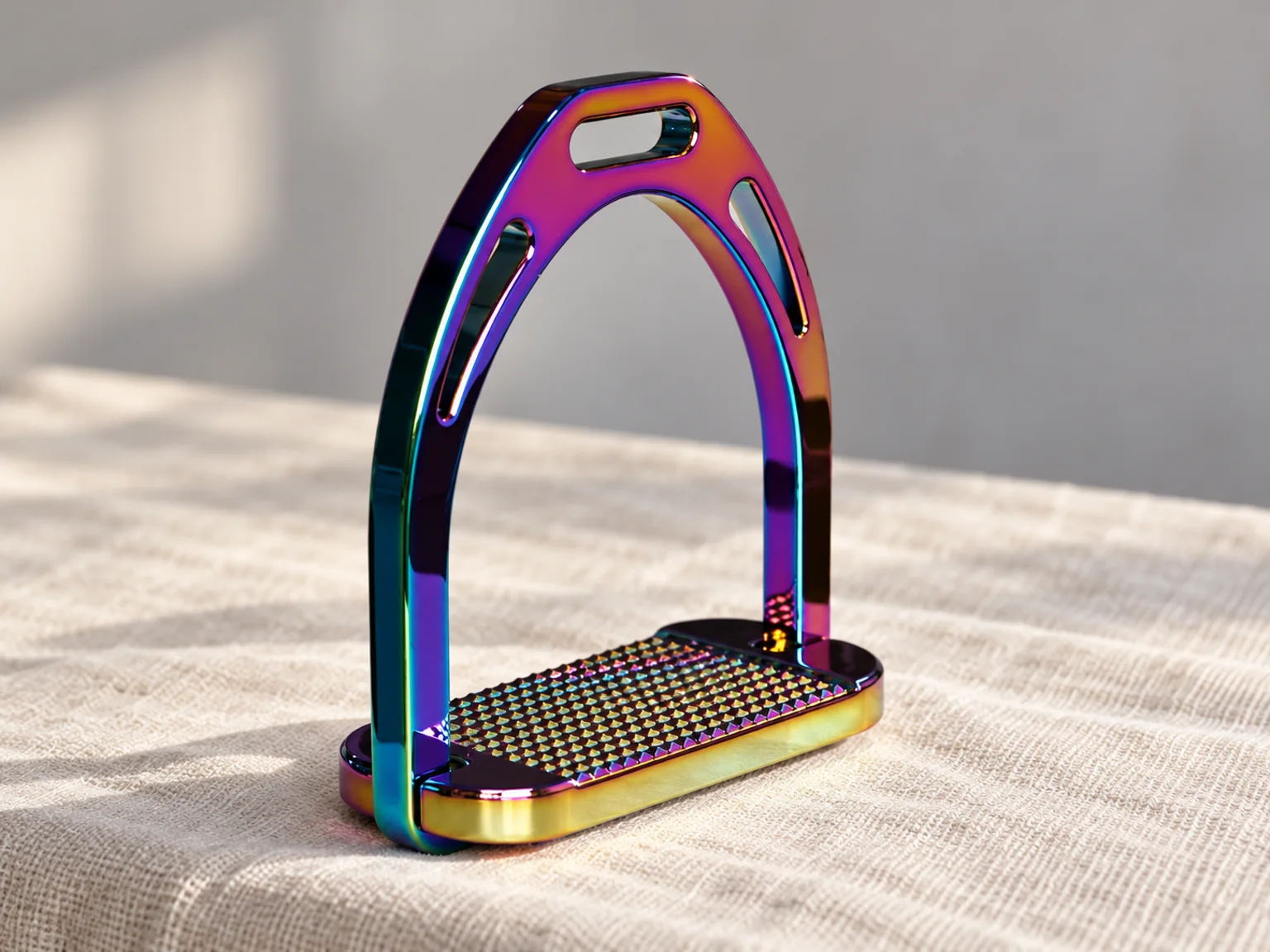
Start with the stirrup family when comparing strap slots and tread geometry; use the bit, spur or crop guide for their own constructions. ST3120 has five named colour options, but colour is only one range choice. Complete interfaces and the selected product information remain separate from competition eligibility or performance claims.
A closer product look
Match Stable Products to Cleaning and Feeding Tasks
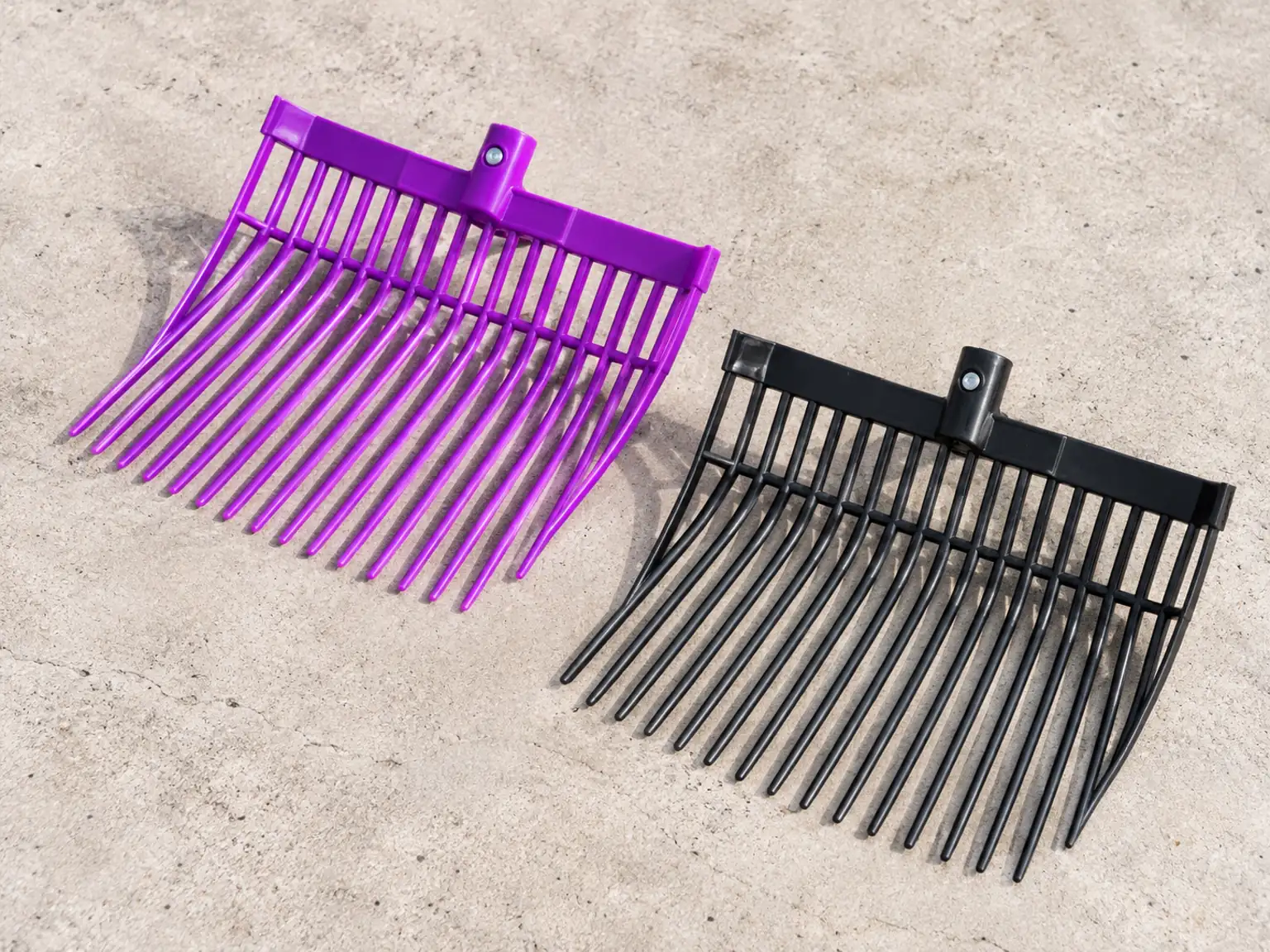
Stable buyers usually compare a task and an interface together. A replacement fork head needs its retained handle considered; a hanging container needs its intended position and mounting arrangement considered.
Start with the stable routine
- Replace a headCompare socket and fixing with the retained handle.
- Collect materialChoose the pan and companion-tool arrangement.
- Position feedCompare the container with its hanging or floor location.
Read the design and specification notes
The 18-tine ABS replacement head carries a 40.5 × 33.5 × 11.8cm size reference; it needs a handle-interface review. SC-1407 is a hanging feeder with a 12L capacity name. The stable routes separate fork heads, collection sets, containers, scoops and hay or play-ball formats so each task has the right starting point.
Choose for your application
Give Hobby Equipment and Gifts a Separate Route
Keep hobby play, equipment storage and equestrian gifts as separate product roles. That makes dimensions, included pieces and the intended customer easier to compare before choosing a coordinated event range.
For children’s play products, define the intended age group and destination-market requirements.
Give Hobby Equipment and Gifts a Separate Route
- Play accessories
- Toy fit and included components
- Jump and storage
- Whole geometry and available space
- Gifts
- Motif, attachments and retail presentation
Read the design and specification notes
A toy halter, a wooden hobby-horse jump, a storage stand and an equestrian keyring are separate product roles. Their dimensions, contents and intended customer determine the comparison. For children’s play ranges, define age and destination-market requirements before discussing the selected item; a horse motif does not make it working tack.
Construction and making
Production Choices Explain Differences Between Products
Production choices explain different finished features. A metal opening needs its final contact edges considered; a brush needs its working face; a textile item needs its layers and joined edge. For the bits, spurs and stirrups we produce, we check materials, dimensions, appearance, moving parts and assembly fit. Use the detailed guide to connect those checks with your selected construction.
Choose the Evidence for the Product
- InterfaceA marked opening, mounting face or strap path.
- ConstructionA selected component, working face or layer plan.
- Supplied unitNamed pieces, pairs, tools or complete set contents.
Read the design and specification notes
A similar outline can hide a different way of making a product. Metal forming establishes a buckle’s geometry, while edge finishing addresses the strap-contact surfaces. Brush tufting and trimming create a working face; moulded comb teeth are a different construction. Cutting, layering and sewing join a pad’s textile components. These distinctions help you compare like with like. Use the relevant guide to discuss the selected route and finished features with Relia, rather than assign one manufacturing process to the whole range.
| Product family | Making stage | What the buyer compares |
|---|---|---|
| Metal fittings | Form and finish | Functional openings and contact edges |
| Tufted brushes | Place and trim fibres | Tuft layout and working profile |
| Textile items | Cut, layer and join | Panel shape, seams and edge finish |
Share the product link and your intended use, with these details:
- Product family and use
- Selected models and versions
- Quantities by purchase unit
Products behind these choices
YF10111DC Metal Snap-Hook, Slide-Adjuster and D-Ring Set for Bag Straps
Compare the snap, slider and D-ring together for a removable bag-strap assembly.
View this product →Stainless Steel Roller Buckle, Bright Nickel, Nominal 1 Inch
Use the nominal 1-inch roller buckle to compare strap passage, folded leather and pin movement.
View this product →Beech Wood Horse Grooming Kit | 5-Piece Reference and Case
Compare the named kit, its tools and carrying case as one retail assortment.
View this product →1010 Stainless Steel Hoof Pick with Slotted Loop Handle
Compare the slotted-loop handle and working end as an individual hoof-tool line.
View this product →MAD-0104 Ruffle Equestrian Jump Dressage Saddle Pad Trim Fit Enquiry
Compare the declared lining, outer fabric and filling for this saddle-pad model.
View this product →ST3120 English Style Stainless Steel Stirrup Colour and Fit Enquiry
Compare the stirrup frame, tread and strap interface before selecting colour.
View this product →18-Tine ABS Horse Manure Pitch Fork Head for Stable and Garden
Review the ABS head, tine arrangement and handle connection for replacement work.
View this product →SC-1407 PP 12L Hanging Horse Feeder Bucket with Hook Mount
Review the hook arrangement and 12L reference for a hanging feed position.
View this product →Choose your next product decision
Explore the Three Core Metal Product Families
For bits, spurs and stirrups, begin with the complete construction and follow the guide that matches your sourcing task. Relia also supports customer drawings and customer logos across these three product families.
Start a product discussion
Keep the Selected Products Together
Send the products you have shortlisted, their selected versions and quantities, plus your destination country. If one choice remains open, tell us what you are comparing: a strap connection, tool assortment, fit or custom design. That gives us a useful starting point for your enquiry.
Qingdao Relia Saddlery Co., Ltd.Changjiang Road, Qingdao, Shandong, ChinaProduct discussion details
Three details for a useful enquiry
- Product family and useDescribe the customer task the range must cover.
- Selected models and versionsLink the actual options you want to compare.
- Quantities by purchase unitSeparate pieces, pairs, kits and complete sets.