

For hanging-cheek bit sourcing
Baucher Horse Bits for Wholesale Sourcing
Choose a Baucher bit that gives your range a clear hanging-cheek and mouthpiece combination. We manufacture the complete construction and can compare the centre-link options with your intended bridle connection. Start with the width, thickness and leather space your product needs, then review a focused sample pair before selecting the wholesale version and quantities.
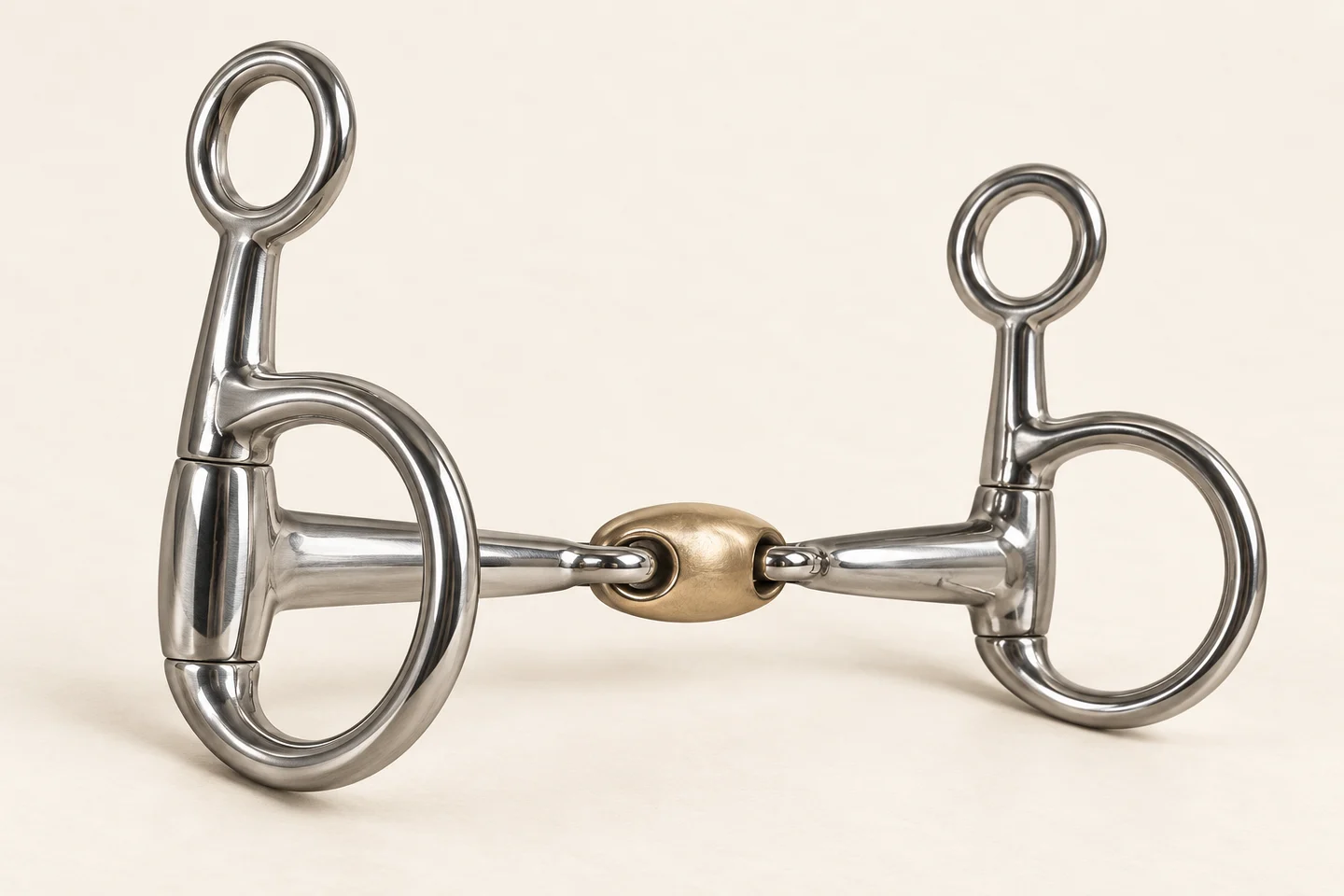
Compare the Two Mouthpiece Constructions
A useful comparison makes the centre-link difference easy to see. Relia produces its own Baucher bits and checks materials, dimensions, appearance and assembled fit. Keep the hanging-cheek arrangement with the chosen mouthpiece, then review the lozenge and half-moon options against the same buying requirements.
Compare a defined centre-link change. The 722-ALCL has a 125 mm mouth reference and 38 × 18 mm copper lozenge. The 72212SN-HM combines a curved mouth, half-moon link, 12 mm thickness and stainless-steel cheeks. Choose the complete sample and agree its dimensions before extending your hanging-cheek range.
Model reference with a 125 mm mouth and 38 × 18 mm copper lozenge.
Curved half-moon-link reference with a listed 12 mm mouthpiece thickness.
Keep cheek geometry, width definition and component materials attached to its code.
Locate the Upper Eye and Main Ring
Show the upper bridle attachment, main ring and mouthpiece junction on the same drawing. Keep their positions, opening sizes and assembled clearances separate. Your leather connection should be reviewed on the actual sample; the Baucher name alone does not define strap space or movement.
When your enquiry includes existing leatherwork, add its width, assembled thickness and closure arrangement.
- Upper eyeBridle connection opening and orientation.
- Main ringRing outline, section and usable attachment space.
- Mouthpiece junctionPosition and documented movement at the cheek.
- Leather assemblyActual strap and closure reviewed with the sample.
See the Link as Part of the Complete Mouthpiece
A copper lozenge and a half-moon link are different centre constructions. Record their shape, dimensions and material description without replacing the full mouthpiece specification. For the sample comparison, keep the cheek arrangement and width reference steady so the link difference remains easy to understand.
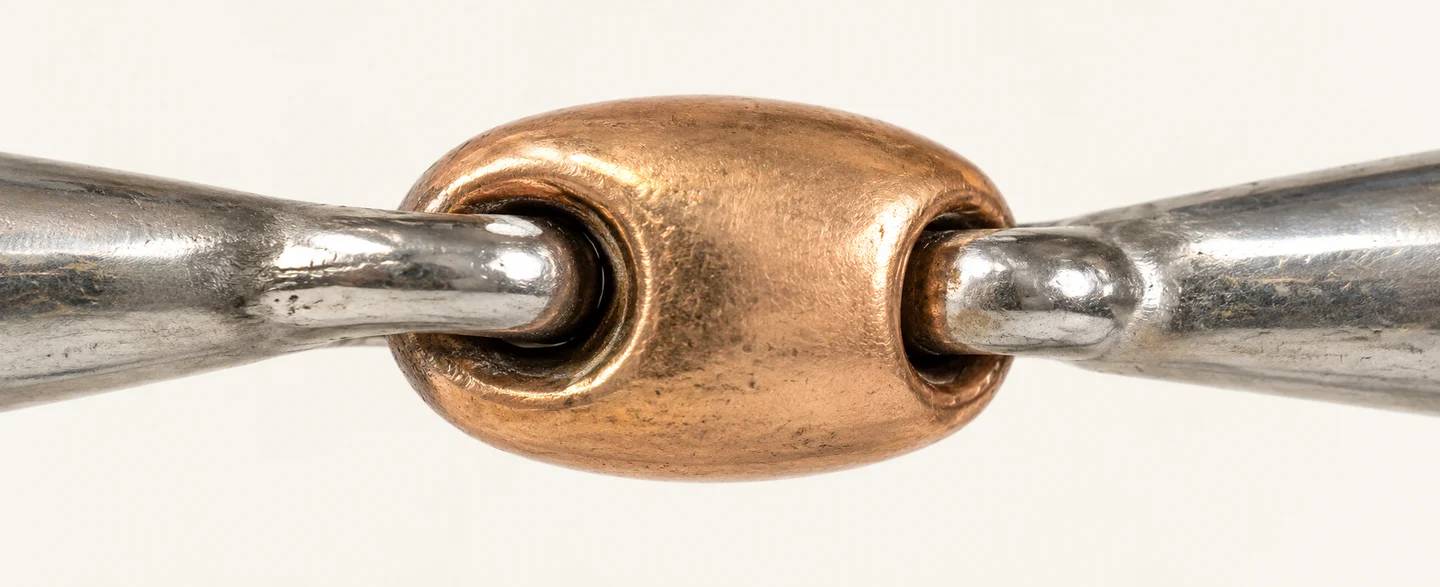
Separate Width, Thickness and Cheek Size
These measurements answer different buying needs. Width identifies the agreed mouthpiece span, thickness describes a stated location on the arm, and cheek dimensions describe the attachment geometry. Keep the measurement endpoints and pose in the sample specification. Model inch descriptions and metric codes should be reconciled on that drawing before final labelling.
| Field | Useful definition |
|---|---|
| Mouthpiece width | Named endpoints and measurement condition |
| Thickness | Measurement position on each mouthpiece arm |
| Centre link | Length, width and connection details |
| Cheek | Upper-eye and main-ring dimensions and spacing |
Connect Joining and Surface Finish
For a Baucher bit, the upper eye, main ring and mouthpiece junction have different roles in the drawing. We use the forming and connection work appropriate to the selected model, then polish, apply the specified finish and assemble the product without losing those positions and openings.
Our checks include materials, finished dimensions, appearance and the fit and movement of the connected parts. Compare the actual centre-link geometry and adjacent joints as well as the cheek. For your sample pair, keep the agreed width and leather arrangement visible so a mouthpiece comparison is not confused with a changed attachment interface.
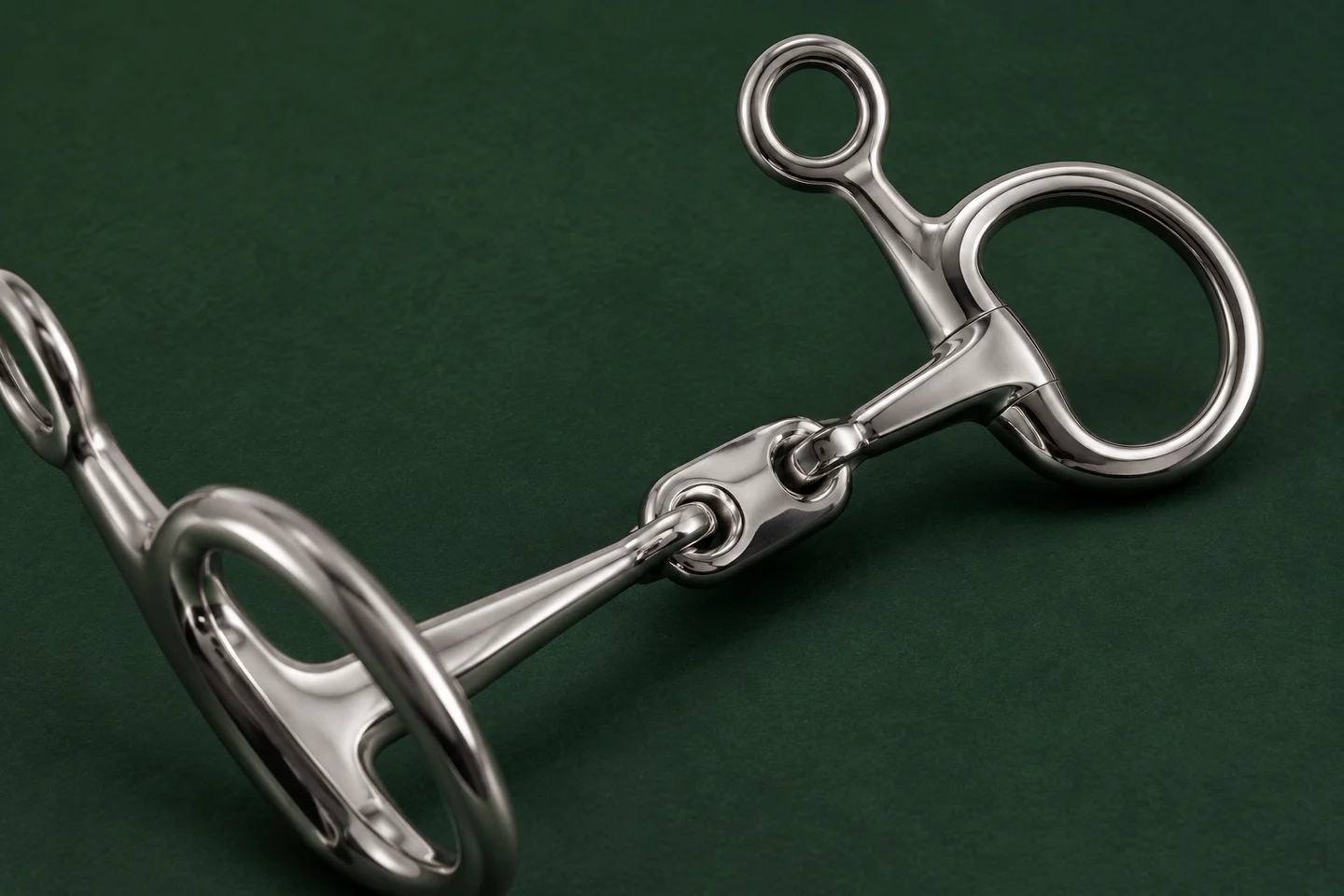
Make a Small Sample Pair Useful
Select a comparison pair around one clear difference, such as centre-link geometry. Keep measured width, cheek arrangement and finish comparable where the available models allow it. If several features change, record them visibly so your buying team does not attribute the whole difference to the link alone.
| Hold steady where available | Compare deliberately |
|---|---|
| Width reference and measurement method | Centre-link geometry |
| Cheek connection arrangement | Mouthpiece curvature |
| Finish and component description | The complete construction selected |
Retain the Accepted Hanging-Cheek Version
Your selected sample becomes the useful bridge between the model description and the purchase order. Keep a complete photograph, a dimensioned drawing and the actual supplied inventory with it. Retail fitting and care information should refer to that same version. No universal effect or horse suitability follows from the cheek name.
Use the mouthpiece sample-range guide for a wider centre-construction comparison.
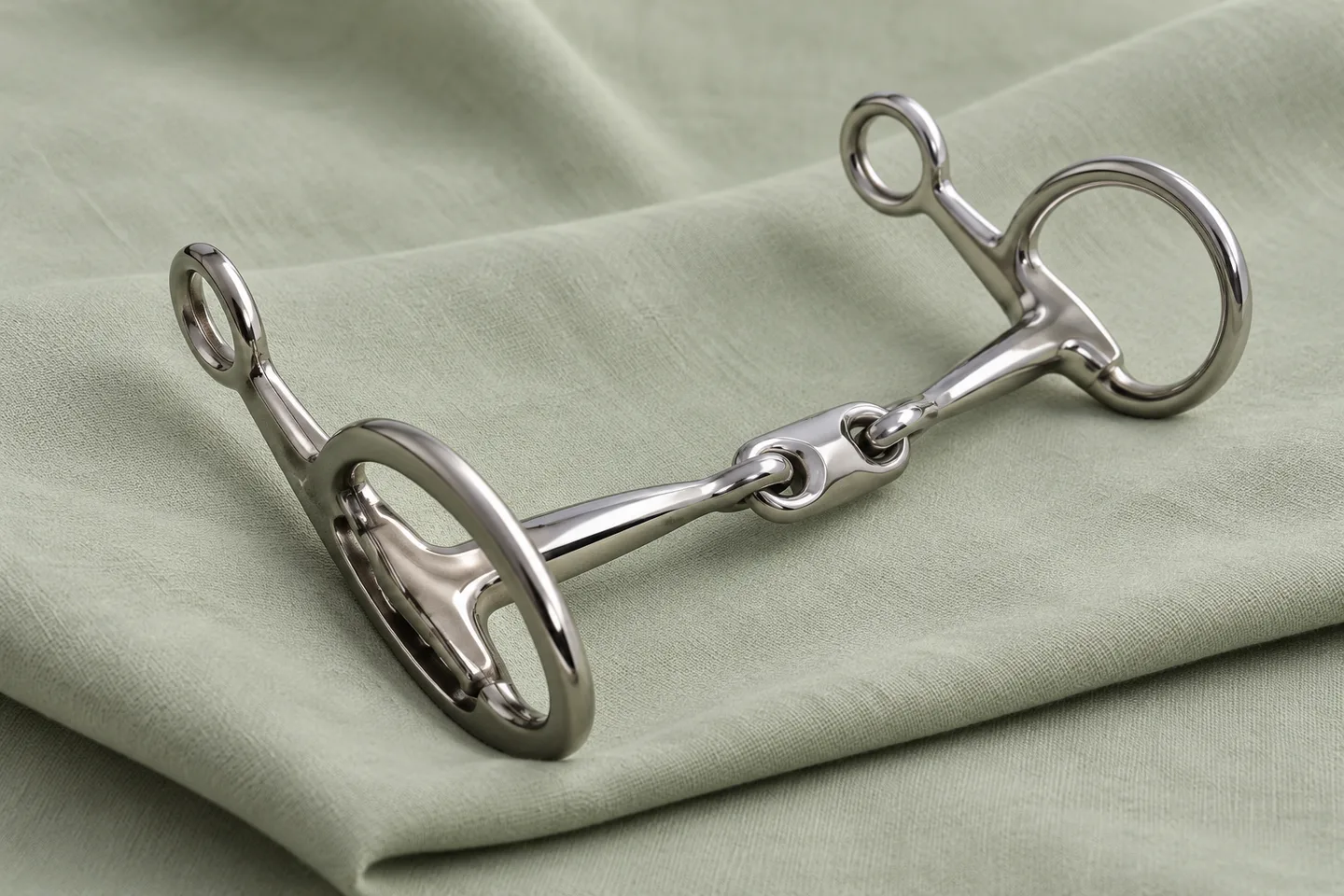
Send a Reference That Can Be Quoted
Send the complete Baucher model code or your drawing, with the required size and the centre feature you want to compare. We can then discuss the sample, quantity and measured bridle connections together. Use the drawing-development route when your project changes the actual geometry.
Complete model code and your selected dimensions.
Mouthpiece, link, material description and measured size.
Sample purpose, quantity, packing request and destination.
Start a Baucher Bit Sample Discussion
Send the Baucher model code and the mouthpiece or link you want to compare. Add the bridle connection dimensions and target size reference, and we can discuss a focused hanging-cheek sample.
We will review the model and configuration with you before a quotation is agreed. Include quantities and destination so sample, packing and delivery terms can be considered together.
Qingdao Relia Saddlery Co., Ltd.
info@reliasaddlery.com · +86 18561762631
Changjiang Road, Qingdao, Shandong, China
- Choose the productSend the model code, product link or your drawing.
- Describe your versionInclude the size, construction or appearance you need to discuss.
- Plan the next stepAdd quantity and destination, then agree the sample and quotation scope with us.