
Decorative range development
Custom Decorative Western Spurs
Give your Western spur collection a distinct visual identity without losing the band, shank and rowel you want to keep. We manufacture from customer drawings and support your logo. Map the artwork and trim onto the chosen base, then compare the physical finish sample. Your brand can approve the appearance alongside the complete product before extending the range.
Choose a Structural Base Before the Trim
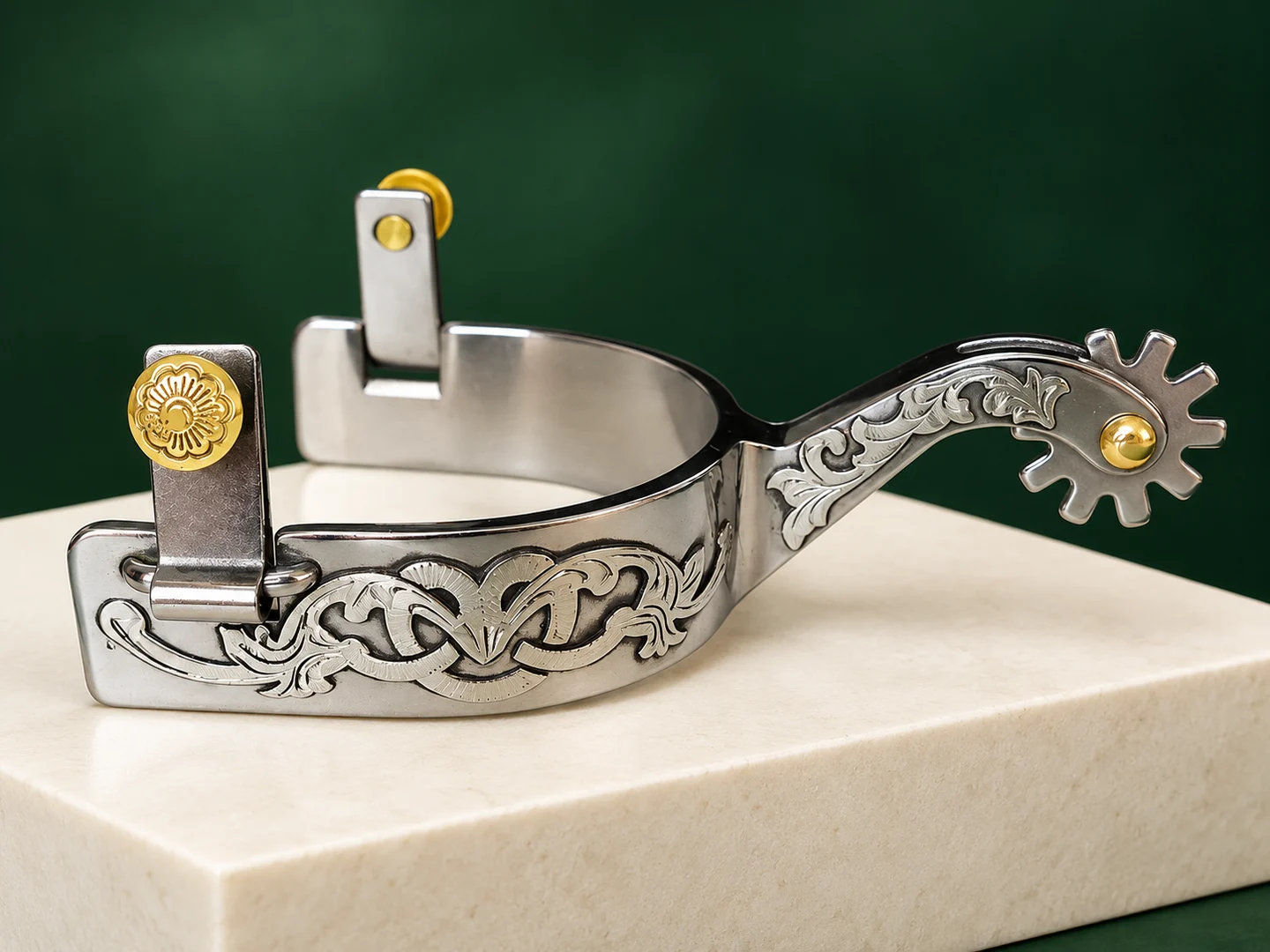
Keep the artwork attached to a product your customer can use and reorder. Relia manufactures its own spurs and supports your drawings and logo. We review the band, shank, rowel and decorative surfaces together, with materials, dimensions, appearance and assembled fit checked for the selected version.
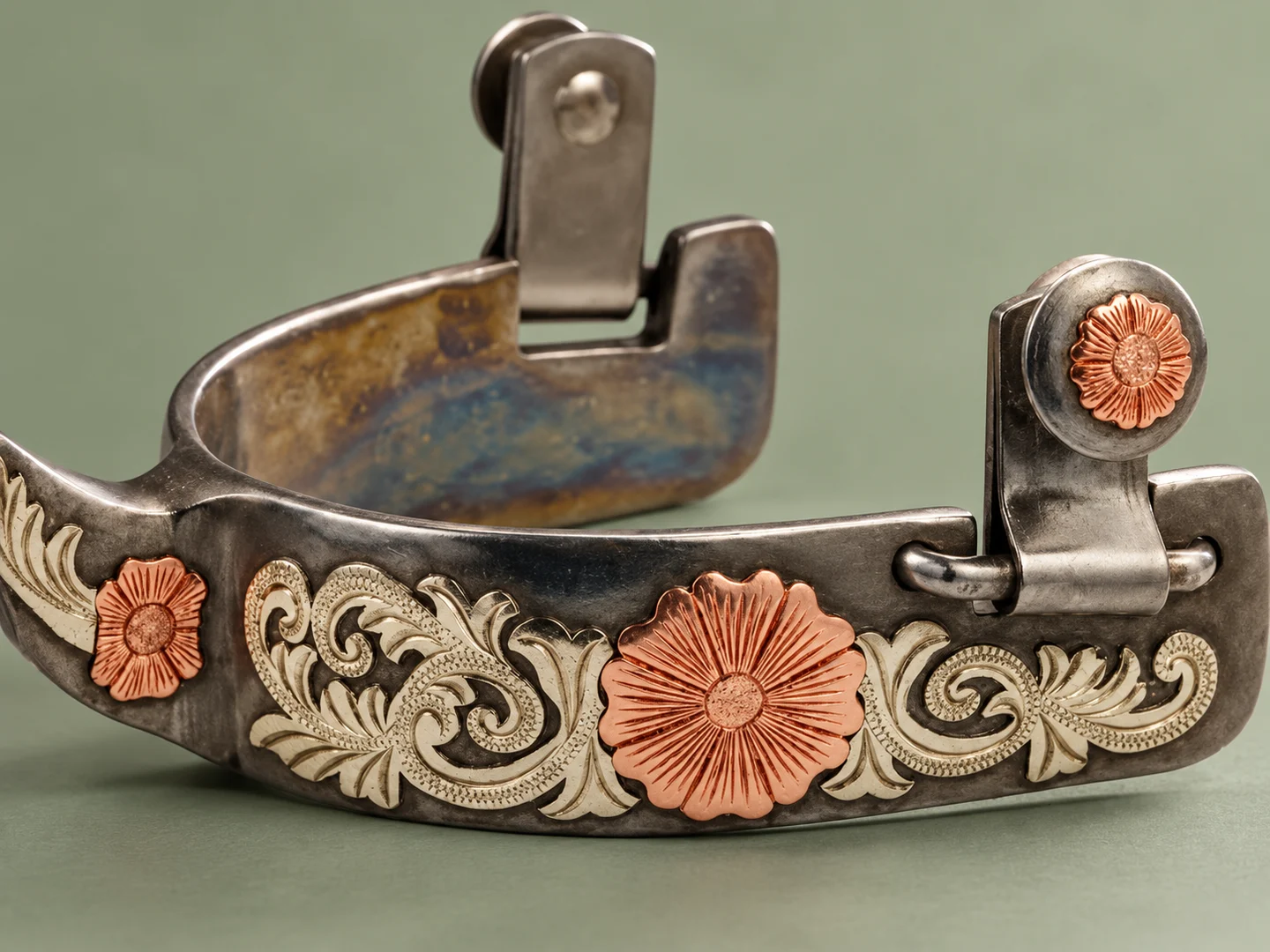
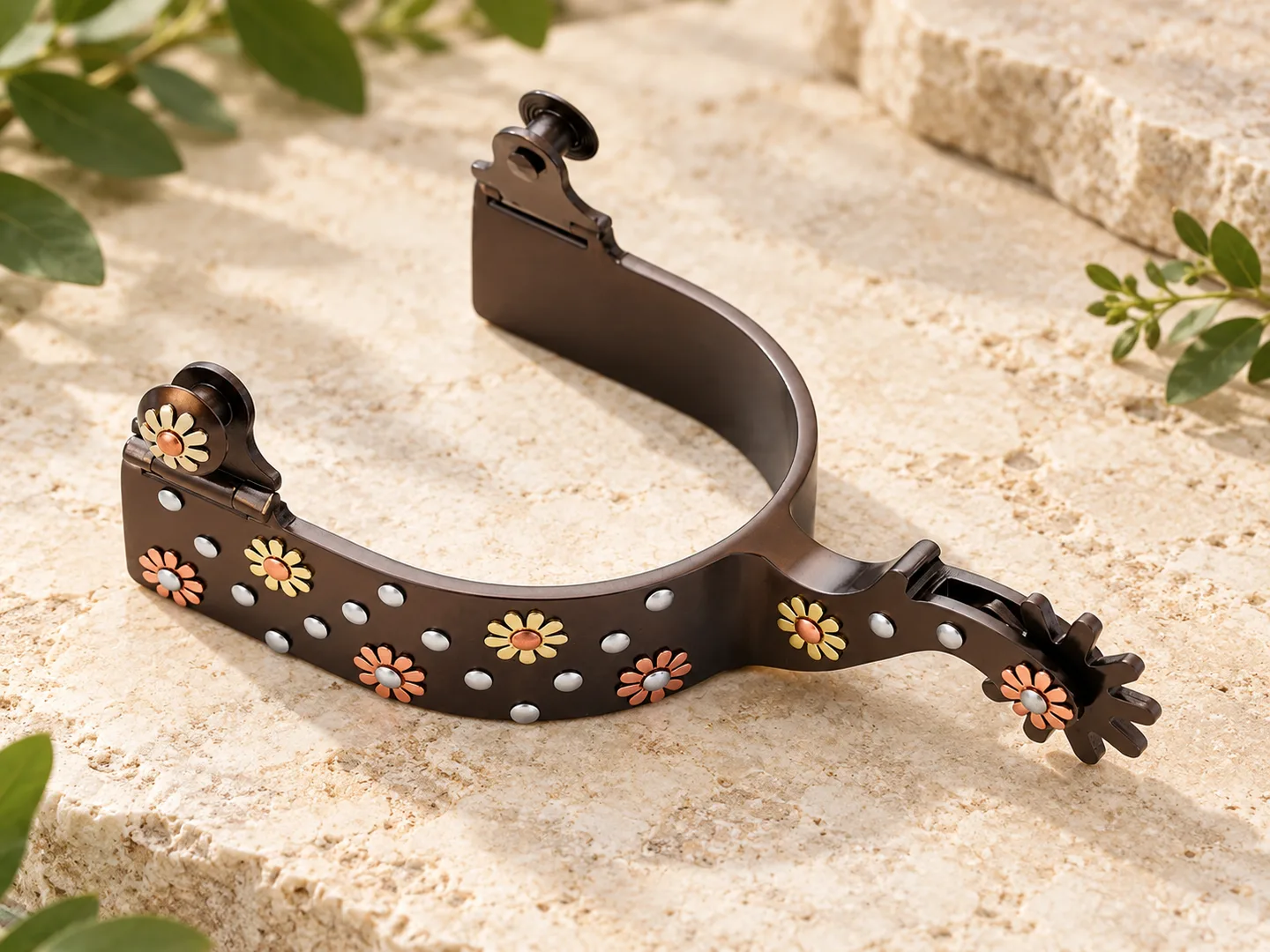
Choose the base before adapting the motif. The 81411LB-CF-E3/M combines a 1¼-inch band, 2¼-inch shank and 1½-inch twelve-point rowel with copper and German-silver trim. Keep that complete assembly with the artwork so a shared decorative direction does not conceal a different fit or wheel.
Separate the Base, Trim and Surface Finish
A decorative product has several material decisions. The base, applied trim and selected surface treatment should each be named. German silver is the model’s trim term here; do not treat a silver-coloured feature or that trade name as a claim of precious-metal content.
| Layer | Define | Reference |
|---|---|---|
| Structural base | Band, shank and rowel configuration | Approved complete model |
| Trim | Named material and attachment | Model example or actual sample |
| Pattern | Artwork, scale and placement | Dated artwork file |
| Finish | Base colour, texture and sheen | Physical appearance sample |
Fit the Pattern to the Curved Band
An artwork file should show which surface carries the design and where it ends. Keep buttons, connections, rowel clearances and boot-contact surfaces visible on the layout. A curved band also needs the pattern reviewed on the actual part, rather than approved only as a flat graphic.
For an artisan-cut pattern on this curved band, compare our full-size pattern and pair-direction review before approving the decorative layout.
Locate the visible band and shank faces used for decoration.
Keep fastening and moving-component boundaries identifiable.
Compare the full-size artwork with the curved sample.
Let the Sample Show the Decorative Method
Engraved, overlaid and otherwise decorated appearances should be named from the actual process used. A photograph of scrolling does not by itself identify the method. The sample discussion can connect the chosen look to the work needed on that specific base.
Keep Decoration and Structural Checks Separate
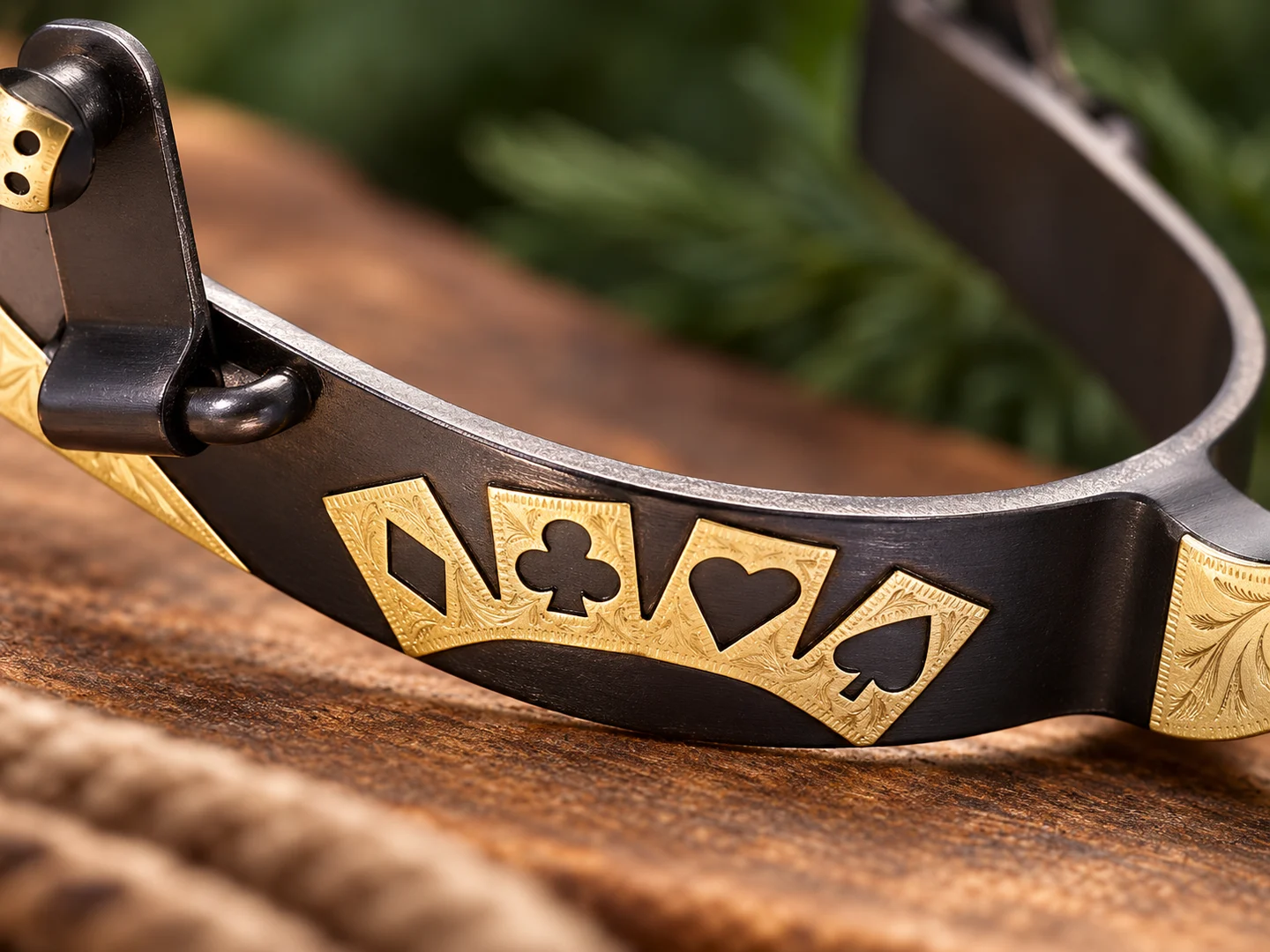
Structural work establishes the band, shank and rowel arrangement through the operations appropriate to the model. Decorative work follows its own defined surface and attachment details. Our production capabilities include polishing, surface treatment and assembly, while the exact motif and logo method are selected for the material, geometry and finish of your project.
We verify materials and dimensions, inspect appearance and check moving parts or assembly fit. Compare the finished trim location, accessible edges and physical finish with the same complete spur used for band and rowel acceptance. Keep that appearance sample alongside the artwork revision so screen colour and pattern files remain connected to an actual product.
- Base preparation
Confirm the geometry and surfaces before decoration.
- Decorative work
Match the accepted method to the artwork and trim.
- Appearance review
Compare colour, texture and detail on the physical sample.
- Assembly review
Check the complete spur, fastening and rowel connection.
Approve the Colour and Detail as One Reference
Use a physical sample for the overall appearance and a close view for the detail that matters to your brand. Keep lighting conditions consistent in approval photographs. This is particularly useful for darkened bases and contrasting trim that can look different on a screen.
| Reference | Record | Use |
|---|---|---|
| Complete sample | Code and finish revision | Overall colour and proportions |
| Detail view | Pattern area and viewing angle | Trim placement and edge definition |
| Artwork | File revision and scale | Repeat design identity |
| Structure | Base model and connection details | Keep fit decisions unchanged |
Develop One Clear Appearance at a Time
Compare SP5133 scrolling, YF11023MI antiqued motifs and YF11025MI floral styling as distinct starting points. Select a base and a decorative direction, then describe each accepted change against it.
Carry the Style into a Coordinated Range
A spur design can become part of a broader Western collection, but each product keeps its own dimensions and interfaces. Retain the base drawing, artwork and finish sample together when planning the next piece or reorder.
Share the Base Model and Artwork Direction
Send the selected spur code, a sketch or artwork file, target finish and sample quantity. Mark the surfaces you want to change and those that should retain their existing fit and component arrangement. Send your reference and required quantity to info@reliasaddlery.com, call +86 18561762631, or use WhatsApp +1 404 203 0971. Qingdao Relia Saddlery Co., Ltd., Changjiang Road, Qingdao, Shandong, China. You can also send a product enquiry.
- Choose the productSend the model code, product link or your drawing.
- Describe your versionInclude the size, construction or appearance you need to discuss.
- Plan the next stepAdd quantity and destination, then agree the sample and quotation scope with us.