

STABLE TOOL ALLOCATION
Grooming Supply for Riding Schools and Tool Replenishment
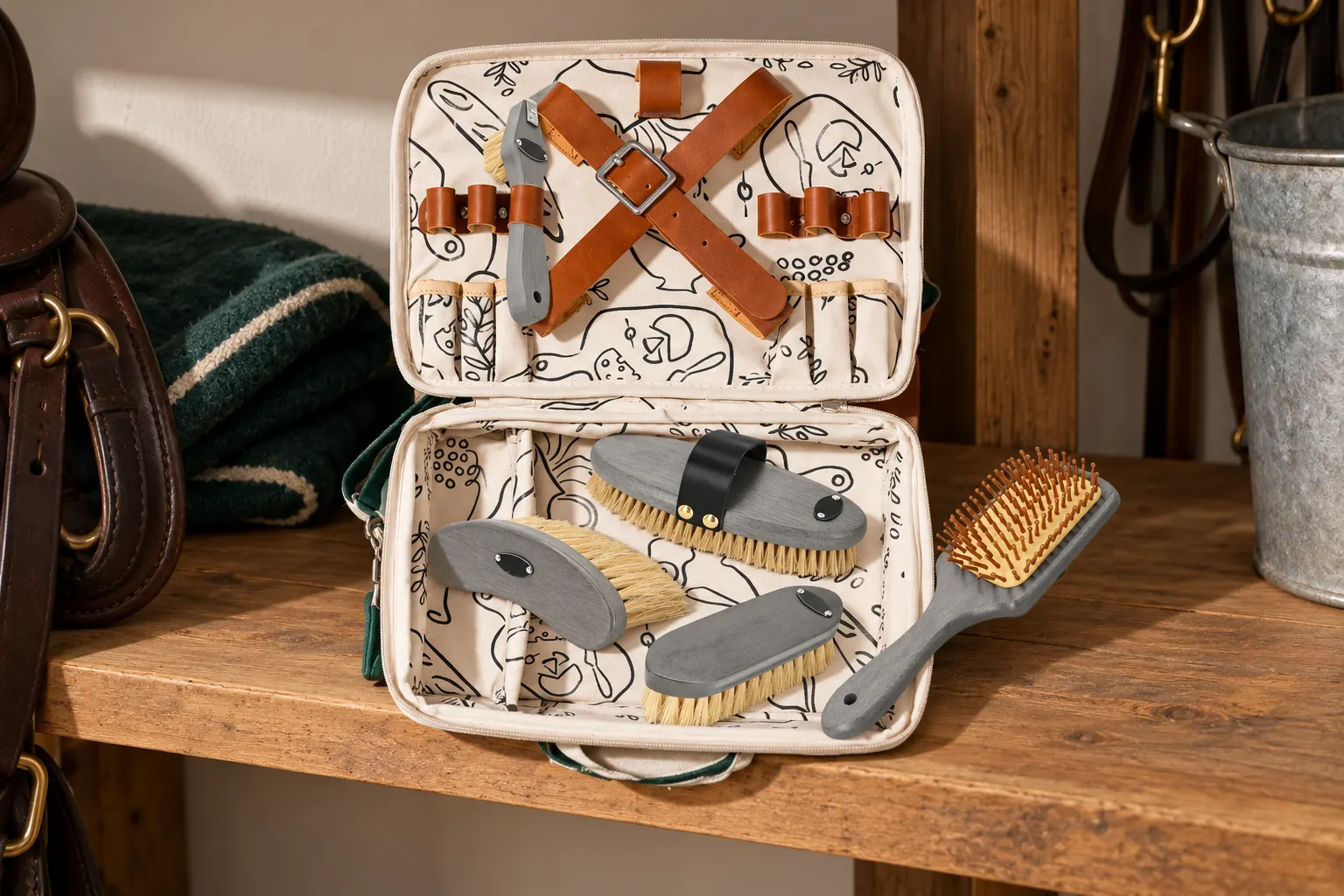
Equip new grooming stations and replenish missing tools with separate order lines. Start with the tools each station uses, the way students collect and return them and the storage available. Then allocate complete cases and loose refills by actual need, keeping care requirements with the selected tools.
- Allocate deliberatelyChoose who uses and returns each set.
- Name the refillKeep individual tools identifiable.
- Plan careMatch cleaning and storage to selected materials.
Choose for your application
Let the school’s issue system define the quantities
Relia can discuss complete cases and separate SD-0705 or SD-2002 tools around your station plan. Start with who collects and returns the tools, then assign actual contents rather than deriving a generic kit count from the horse total.
Connect the tools to school use
- IssueDefine who receives the tools.
- ReturnIdentify the storage and return point.
- RefillName the individual tools needed for existing stations.
Read the design and specification notes
Relia can discuss complete case formats for new tool stations and separate SD-0705 or SD-2002 quantities for existing ones. Start with who collects the tools, where they return them and which items each station needs. This connects the product choices to your allocation method, rather than deriving a generic set count from the number of horses or combining loose replacements with new complete kits.
Choose for your application
Keep a complete case separate from loose refills
Use the beech-reference case as one starting format for new stations, with an explicit contents list. Put individual hoof-pick and curry-brush quantities on separate lines so the purchase does not confuse replacements with additional complete cases.
Use two different purchase units
- Complete case
- Order the agreed tools and carrier together.
- Loose tool
- Name the individual reference to replenish.
- Station allocation
- Link either unit to the actual school plan.
Read the design and specification notes
The beech-reference grooming case provides a complete-kit starting point. A school may use it as an issue format while purchasing individual tools for existing stations. State the actual kit contents separately so loose hoof-pick or curry-brush quantities are not mistaken for additional complete cases.
A closer product look
Use SD-0705 to identify the hoof-pick brush
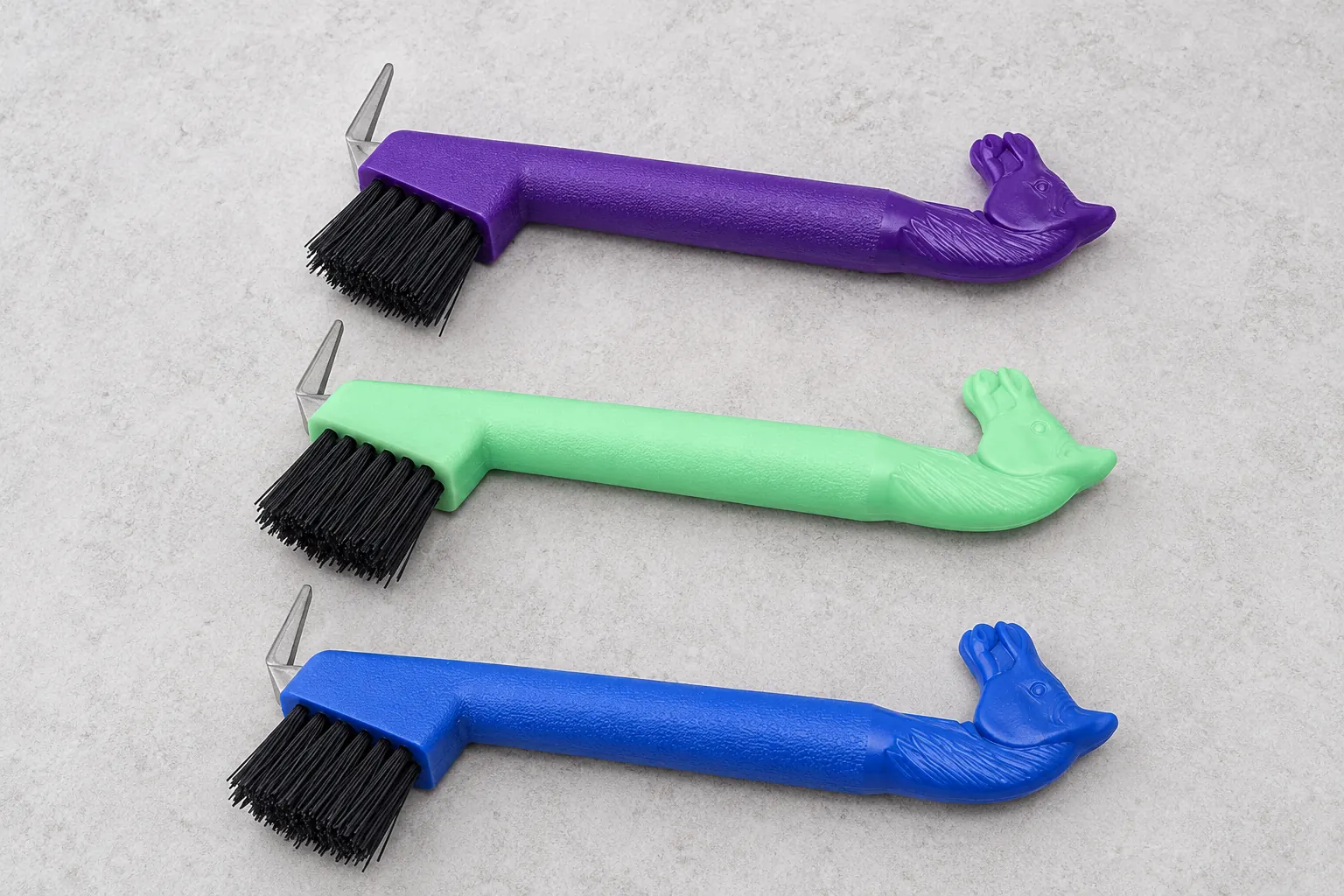
SD-0705 combines a pick, brush and horse-profile plastic handle. Use that recognisable model on the station list and refill order. Include its working end, brush area and grip in a sample comparison; request a confirmed tool mass if it matters to your packing plan.
Ask for the selected tool's confirmed mass and packing details when planning shipment.
Identify the combination tool
- PickKeep the hoof-pick end part of the tool description.
- BrushIdentify the brush area in the same reference.
- HandleRetain the horse-profile form for the station list.
Read the design and specification notes
SD-0705 lists plastic and combines the pick, brush and horse-profile handle. Use the model to identify the tool at the station and on the refill list. Compare the hook, bristle area and handle as separate parts of the tool. Ask for a confirmed tool mass if needed for your order.
Choose for your application
Make a station schedule that supports refills
Keep each tool’s role, selected reference and replacement unit in a short schedule. Quantities can then follow your actual allocation method; colour or an identification mark remains a separate request rather than an assumed supplied feature.
Give each station item an identity
- RoleName the task covered by the tool.
- ReferenceRecord the exact selected model.
- Replacement unitState whether replenishment counts individual pieces.
Read the design and specification notes
Keep the tool role, selected reference and refill unit in a short schedule. The quantity can then follow the school’s actual allocation method. Colour or a proposed identification mark is a separate request, not an assumed feature already supplied.
| Role | Reference | Purchasing unit |
|---|---|---|
| Complete issue | Beech-reference grooming case | Defined case contents |
| Hoof cleaning | SD-0705 | Individual tool |
| Curry task | SD-2002 | Individual brush |
Construction and making
Compare bristled and moulded faces differently
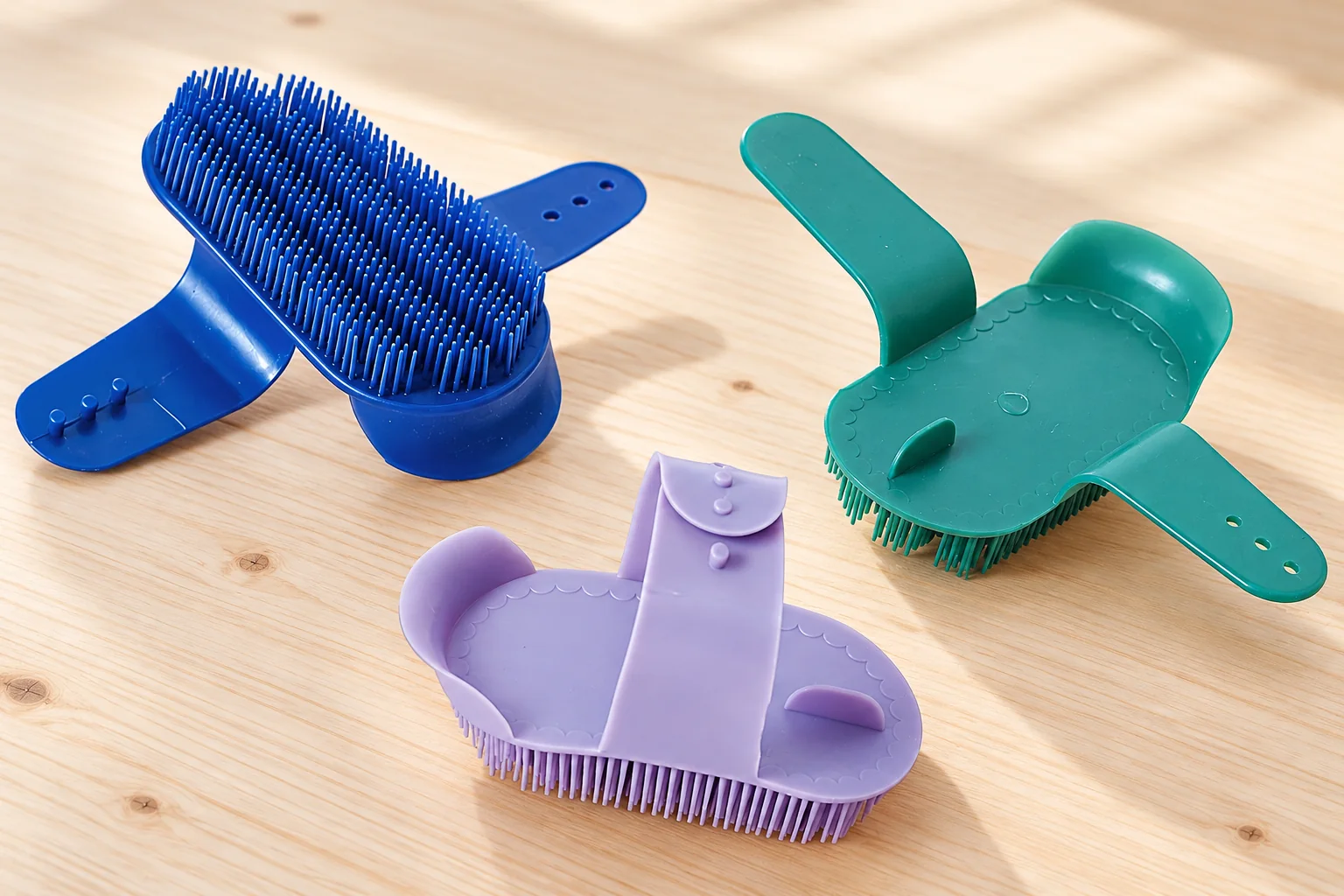
Tuft insertion and trimming define a bristled face, while a moulded curry form carries its contact pattern in the body. Describe SD-0705’s brush and SD-2002’s curry surface separately; their actual forming and tufting routes still need alignment.
Confirm the selected tools' construction and care instructions separately.
Connect construction to the working surface
- Bristled areaSpecify the tuft arrangement and finished face.
- Moulded curry formDescribe the formed contact pattern.
- Selected toolKeep its material and care needs with that construction.
Read the design and specification notes
Brush manufacture can separate backing formation from inserted tufts and their final trimming. A moulded curry face instead carries its contact pattern in the formed body. That explains why SD-0705's brush area and SD-2002's oval curry form need different working-face descriptions. Their actual forming and tufting routes remain to be aligned; plastic and PE identify material starting points, not a common production method or a disinfection result.
Share the product link and your intended use, with these details:
- School issue/return/storage layout and tools needed per station
- Chosen case contents plus separate SD-0705 and SD-2002 refill quantities
- Cleaning routine, drying/storage needs and identification requests
A closer product look
Choose the care routine around the actual tool
Describe the school’s intended cleaning routine and request care information for the selected plastic or PE tool. Keep drying and storage space in the plan; neither material names nor a general waterproof description establishes disinfection performance.
Request cleaning compatibility for your intended routine, with drying and storage instructions.
Turn care needs into practical inputs
- Cleaning routineDescribe what the school intends to use.
- DryingInclude the time and space needed in the station plan.
- StorageShow where the selected tools return after use.
Read the design and specification notes
Describe the cleaning routine the school intends to use and ask for care information for the selected tools. Plan drying and storage with the station layout. If a particular cleaning product or disinfection method matters, include it in the enquiry so compatibility can be discussed for that tool.
Choose for your application
Keep a kit-to-tool list for replacement requests
A station list lets you request SD-0705 when that tool is missing instead of reordering the entire assortment. Update the list whenever a different pick or curry tool is substituted, so the next refill refers to the actual station contents.
Make replenishment traceable to the station
- Station contentsKeep an itemised model list.
- Missing itemIdentify the exact tool needed.
- ReplacementUpdate the list if a different model is chosen.
Read the design and specification notes
Maintain a list of the actual models assigned to each kit or station. When a hoof pick is missing, the purchase request can name SD-0705 instead of ordering another whole assortment. If a different tool is substituted later, change the station list as well.
A closer product look
Send the school station and refill plan
Tell us the chosen case and its contents, the separate SD-0705 or SD-2002 quantities, and your storage and care needs. This keeps the enquiry tied to the school’s issue-and-refill system rather than one undifferentiated tool total.
Prepare the school-grooming enquiry
- EquipList complete stations and agreed contents.
- ReplenishName individual models and quantities.
- Support the routineDescribe storage, care and identification requests.
Read the design and specification notes
Send the selected kit reference, itemised contents and separate SD-0705 or SD-2002 quantities. Include the intended storage layout and any care or identification requirements. Relia can discuss the range around your actual issue-and-refill system rather than a generic grooming-tool total.
Products behind these choices
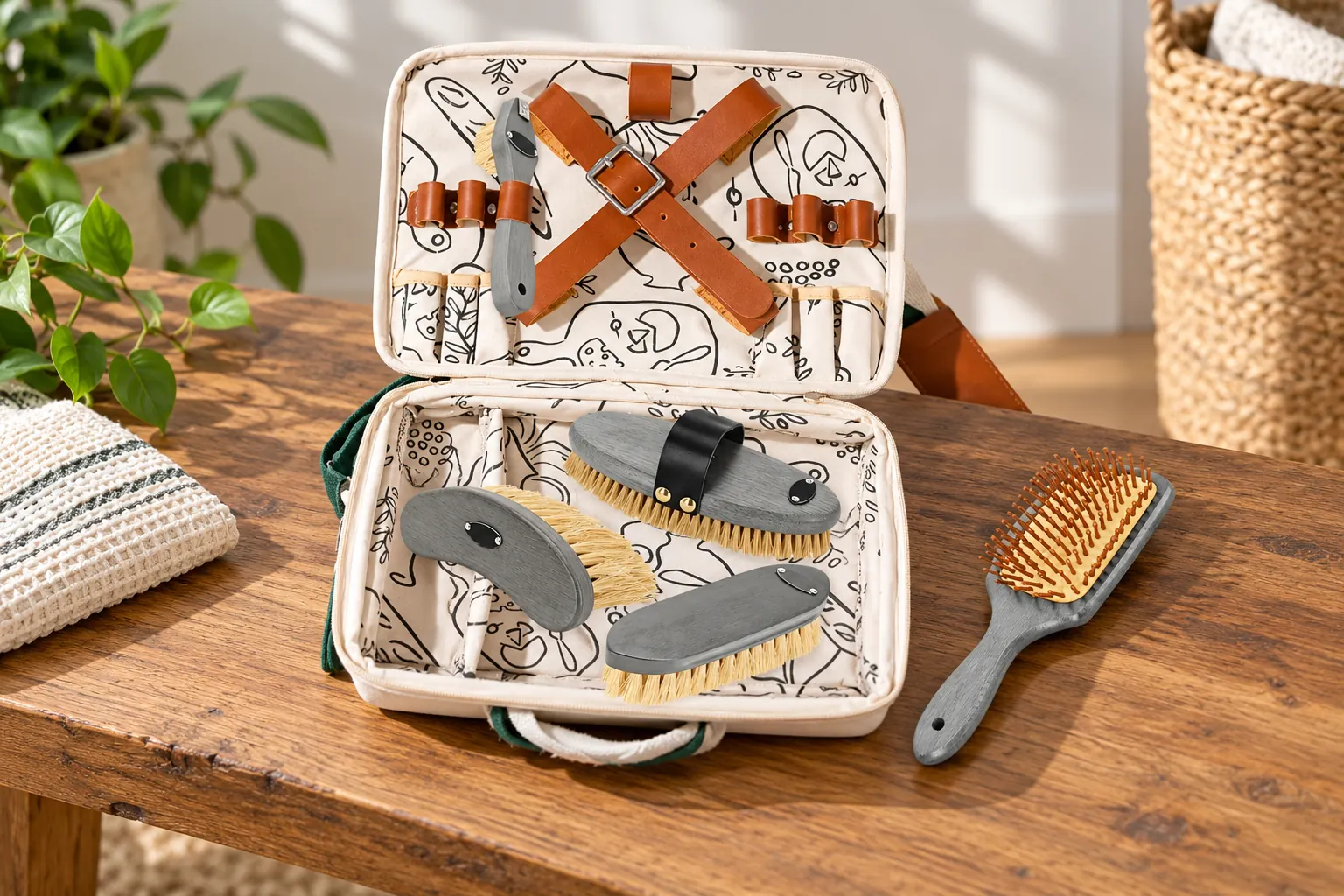
Beech Wood Horse Grooming Kit | 5-Piece Reference and Case
Define the contents and carrier for a new school tool station.
View this product →SD-0705 Hoof Pick and Brush with Horse-Profile Handle
Identify SD-0705 as a separate pick-and-brush refill.
View this product →SD-2002 Horse Curry Brush with Oval Face and Back Band
Compare the PE SD-2002 curry surface and its care requirements.
View this product →Start a product discussion
Retain replacement units and care needs together
Send your station contents, the chosen case format and quantities of each loose replacement tool. Add how tools are stored and the care routine you intend to use. We can discuss a practical first supply and a clear refill list for the school.
Qingdao Relia Saddlery Co., Ltd.Changjiang Road, Qingdao, Shandong, ChinaProduct discussion details
Keep the school schedule useful
- Assigned toolsRetain the actual station contents.
- Refill unitsCount selected tools as identifiable pieces.
- Care requirementsKeep the routine tied to the chosen materials.