
Make the selected version and measured features explicit
A useful stirrup enquiry connects each dimension to a named feature of a specific model. A single nominal size or a string of three measurements may identify a catalogue reference, but it does not explain every usable opening, tread dimension or attachment clearance. Start with the selected product link and version, then request a drawing that locates the measurements relevant to your intended arrangement.
This checklist is for preparing a wholesale sourcing discussion. It does not select a stirrup for a particular rider, establish a release setting or verify safety performance. A product name, visible side member or textured tread cannot answer those questions on its own. Keep dimensions, supplied configuration, material information and mechanism evidence as separate parts of the enquiry.
First, identify what the size label describes
Relia's catalogue includes reference YF11906AL with a nominal 120mm size reference. That number needs to be located on the drawing before it is used as a tread or opening measurement. Another listed stirrup reference carries 130mm × 125mm × 30mm wording and an Aluminum + Nylon material description. The order of those numbers should be preserved while their corresponding measured features are confirmed.
For each selected version, ask for front and side views with clear dimension arrows. Mark the usable tread area, the clear frame opening and the upper strap slot separately. If your own specification uses terms such as inside width, define exactly where that width is measured. A label that seems obvious to one reader may describe a different feature to another.
| Measurement area | Question for the drawing | What to avoid assuming |
|---|---|---|
| Tread | Which width and depth are measured, and at what edges? | That a nominal size equals usable tread width |
| Frame opening | Where are the clear internal spans taken? | That outside dimensions define internal clearance |
| Top attachment | What are the strap-slot dimensions and section? | That every strap will fit the visible slot |
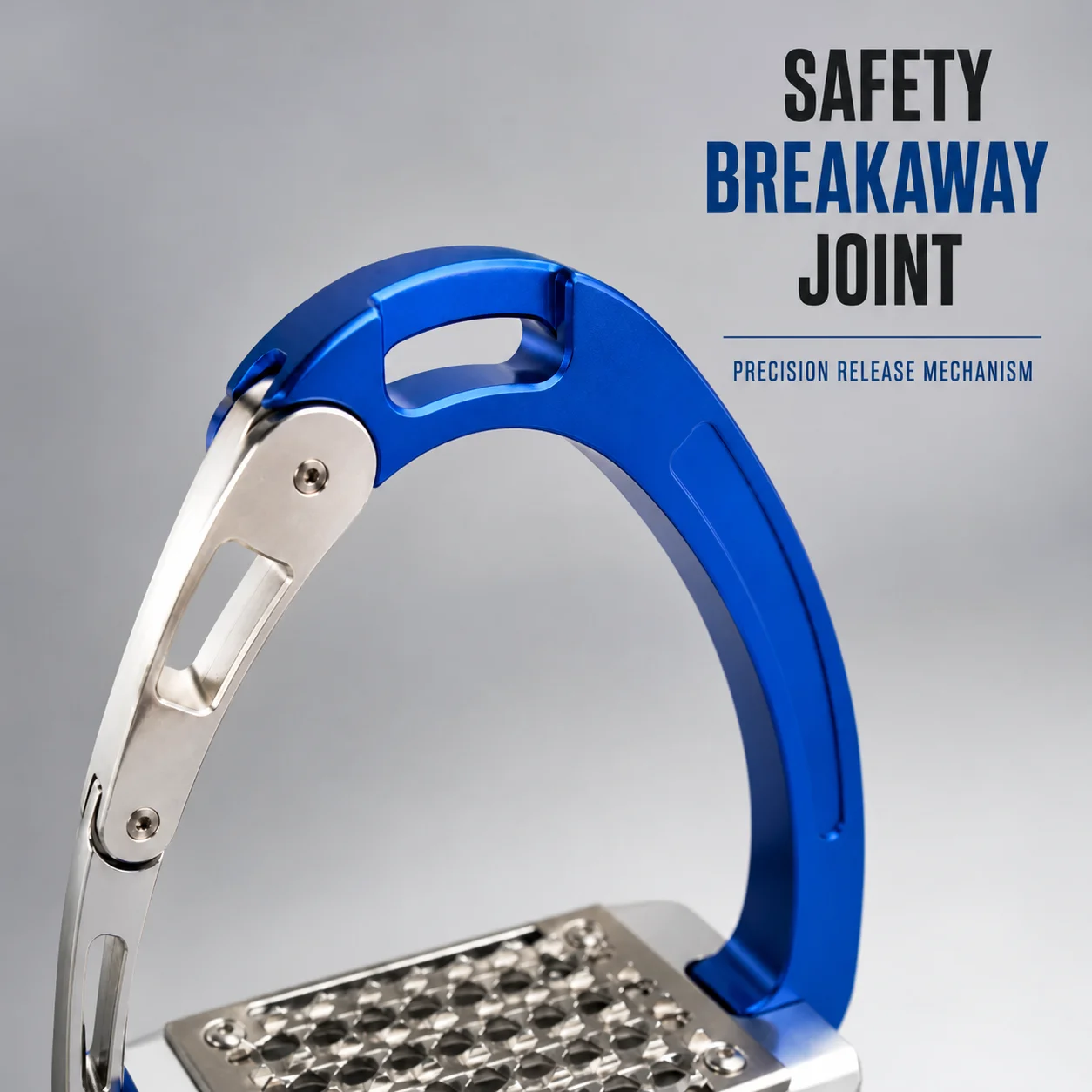
| Side member | What space is required for any specified movement? | That a visible joint proves release behaviour |
| Overall envelope | What are the outside dimensions and orientation? | That a three-number label identifies every feature |
Review the interface, not just the frame outline
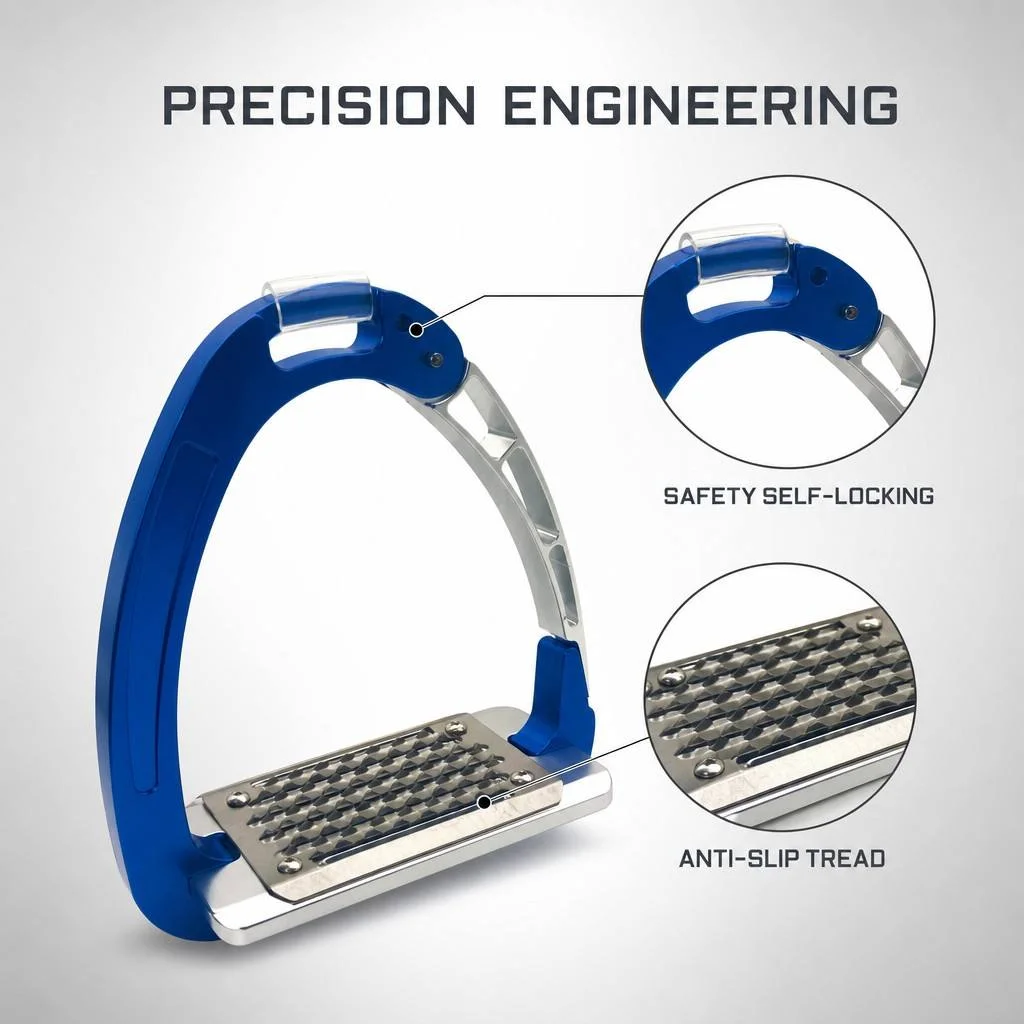
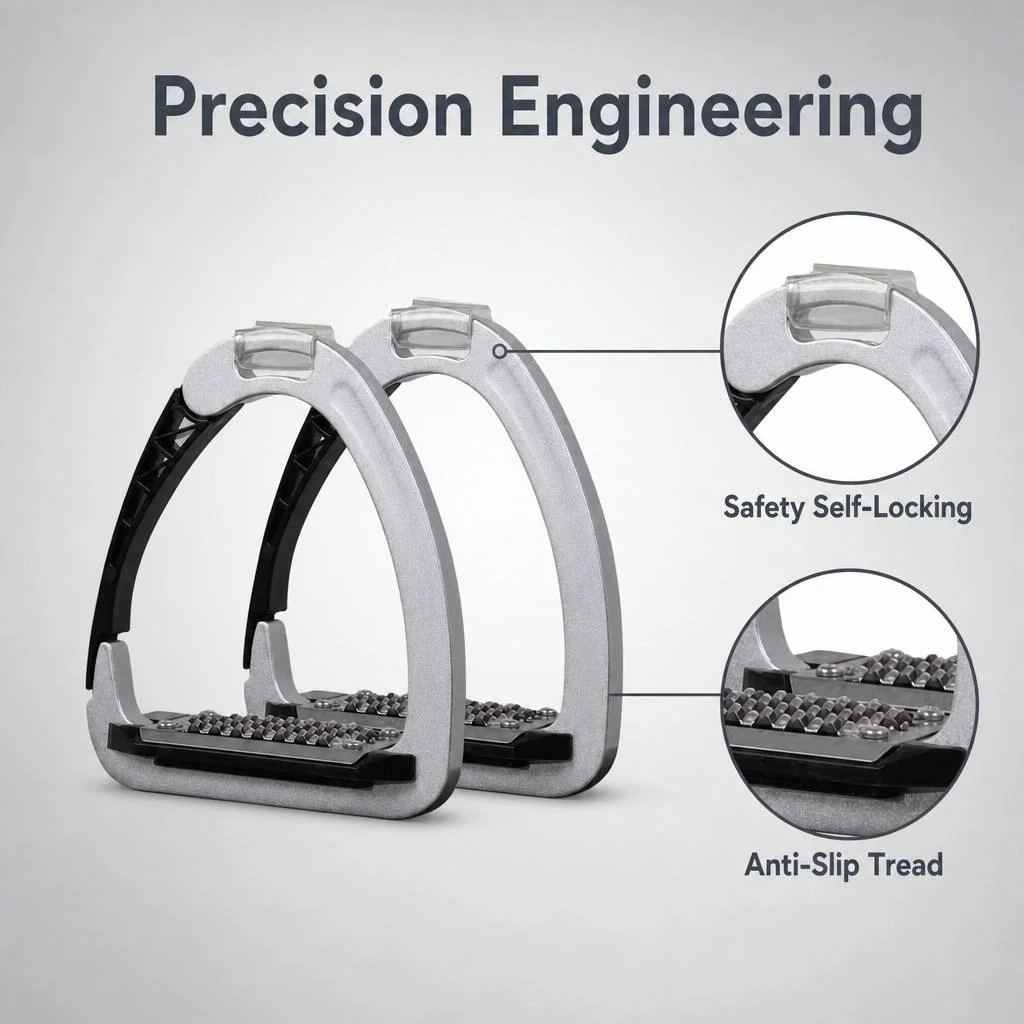
The upper attachment is one interface that deserves its own view. Provide the relevant strap details and ask how the selected version is intended to be attached. A photograph of the top slot cannot establish the complete assembled fit. Record the required dimensions and request the applicable instructions rather than relying on visual similarity to another model.
The tread and frame opening also need to be considered in the intended arrangement. If your purchasing team is reviewing compatibility with a particular boot or strap, identify that arrangement and request the relevant measurements and guidance. Do not turn a broad product-category description into a promise of universal fit. Any practical assessment should follow the selected model's instructions and the appropriate review for the intended use.
Where a side member moves, ask what operating space the actual mechanism requires. A still image cannot show the sequence, return action or conditions under which movement is intended. Keep the mechanism question connected to the exact model and version. Do not borrow an explanation from a different stirrup simply because both have a contrasting side component.
Confirm the supplied configuration and count
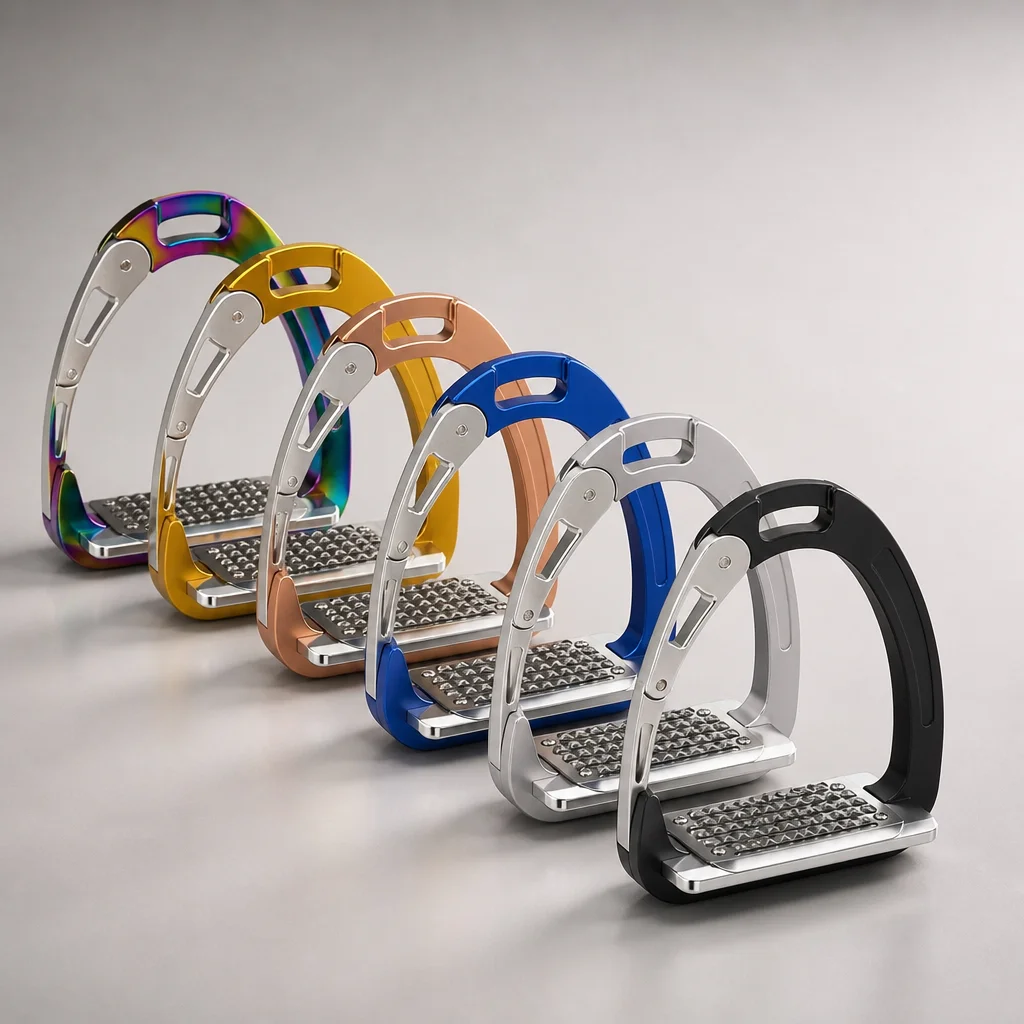
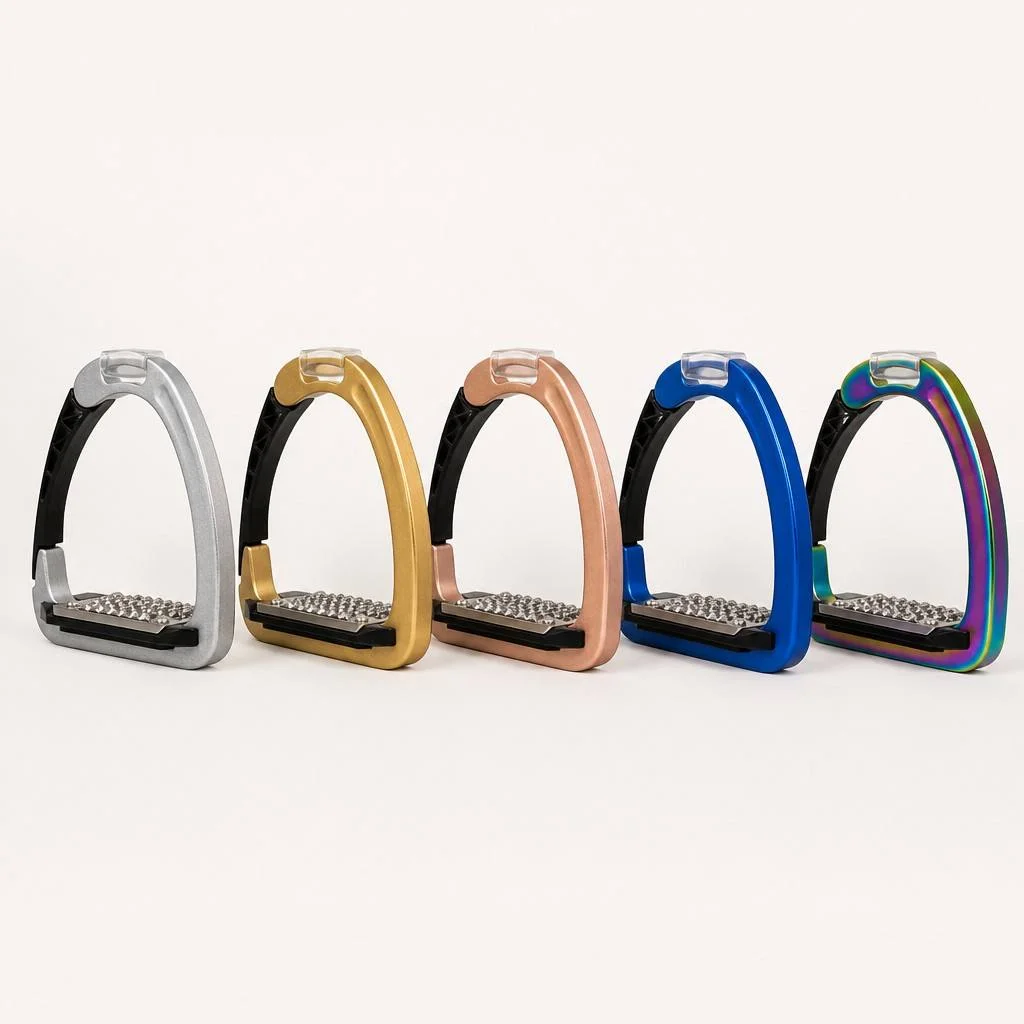
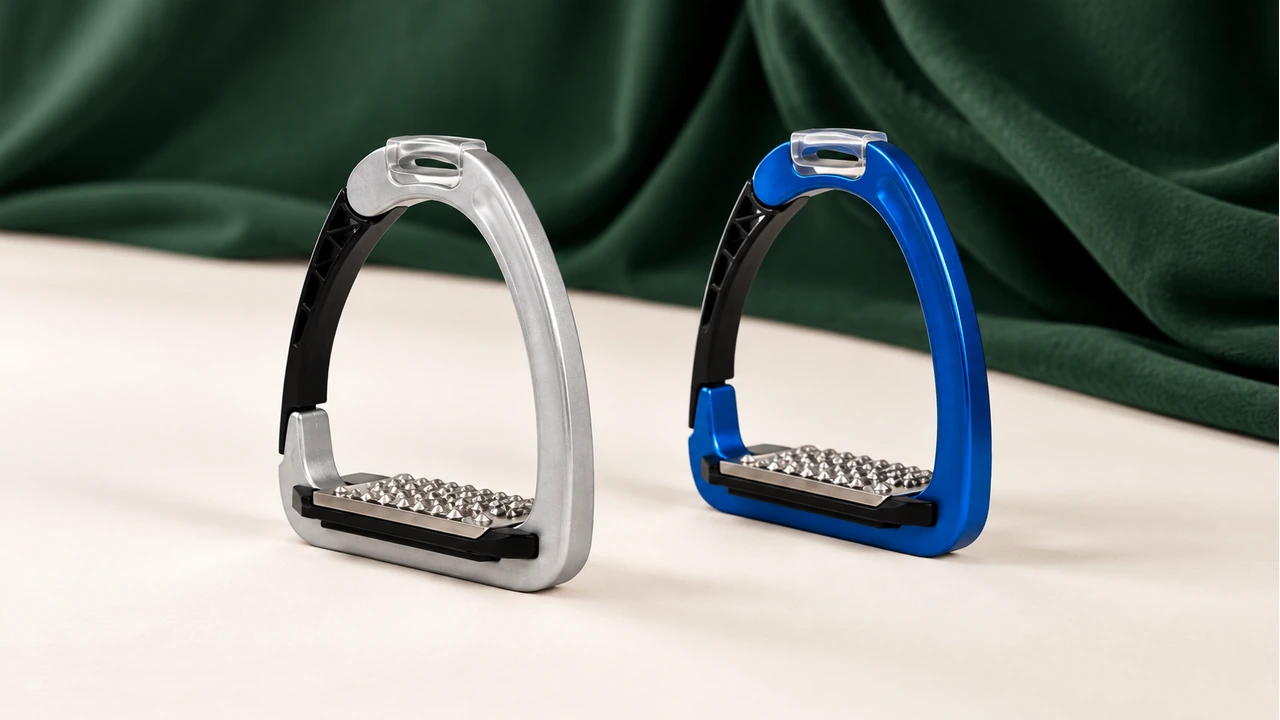
Write whether the quantity in your enquiry means individual stirrups, pairs or another defined pack. A photograph showing two items does not establish pair supply. A photograph showing five colours does not establish a five-piece set. Ask for the actual included-item list and keep it beside the selected reference and quotation.
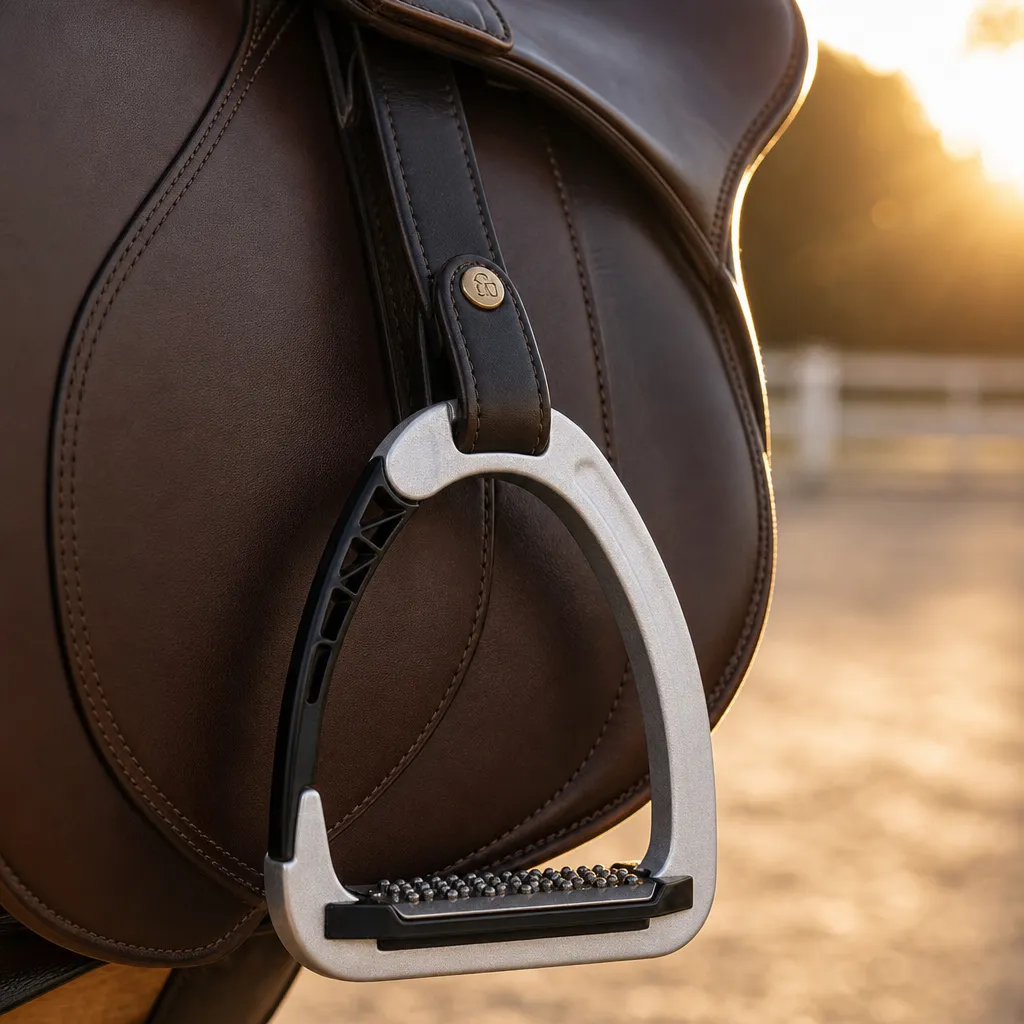
Check whether any pictured accessory is part of the proposed supply. A saddle, strap or display prop can help present a product without being included. If a tread insert, attachment part or other accessory matters to your enquiry, name it and ask whether it is included, supplied separately or available as a distinct request. Avoid using a general image count as a packing specification.
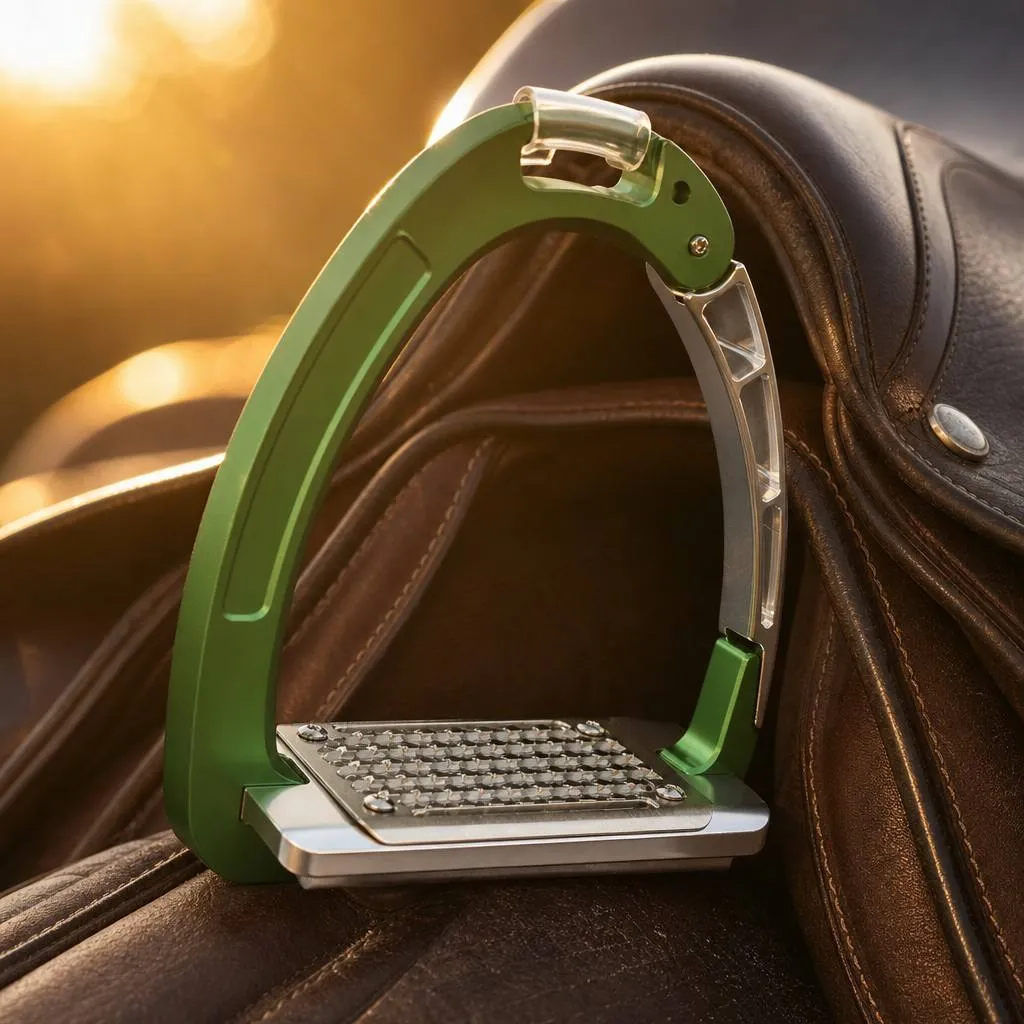
When ordering several colours, state the quantities separately. Use actual option names from the selected reference and distinguish any additional colour request from a standard selectable choice. The YF11906AL reference, for example, has named choices that need to be kept separate from a green-looking image. Appearance in a photograph does not automatically create an additional selectable variant.
Map materials and finishes to components
A combined description such as Aluminum + Nylon is a starting declaration. Ask which components it covers and what further grade or composition information is available for the selected version. The frame, tread, side member and attachment may need separate identification in your specification. Do not assume that a material named in the title describes every visible component.
Finish wording needs the same discipline. A colour called Gold identifies an appearance option; it does not establish precious-metal content. If the listing mentions a process, ask which selected component and version the description applies to. Keep the required finish, actual option label and any supporting declaration together so that appearance and technical scope remain distinguishable.
If your project requires material or surface documentation, include that request in the initial list. The document should identify the product or component it concerns, rather than describing an unrelated range. When comparing quotations, check that the documentation being offered belongs to the same selected version. A general marketing description is not a substitute for an item-specific record.
Ask for mechanism information in a reviewable form
A side-arm description or a word such as release does not establish a tested release threshold, injury-prevention outcome or working capacity. Ask for the actual movement sequence, intended-use instructions and any applicable model-specific evidence. If adjustment is mentioned, request an explanation of what is adjusted, how it is set and which instructions apply to the selected version.
A demonstration may help explain visible movement, but it should be identified as a demonstration. It does not automatically provide the conditions or results of a formal test. Where performance evidence is required, ask for the relevant method, sample identification, conditions and results, then review their scope against your intended requirement. Do not treat an unrelated video or generic report as proof for every model.
Obtain inspection, care and maintenance information for the exact supplied arrangement. Ask how a purchaser is expected to identify the version and any relevant replaceable parts. Keep the documentation request separate from your preferred colour or packaging. A commercially complete quotation can still leave technical questions unresolved, so review both parts before accepting the item specification.
Keep the sample review focused
When requesting a sample, state what your team needs to assess: dimensions, visible construction, finish, documentation or another defined point. Record the sample reference and selected options. If a physical sample is supplied, tie it to the same drawing or version record used in the enquiry. That connection helps prevent a later colour or component change from being mistaken for the approved item.
Separate a sample observation from a supply requirement. Measuring one sample records what was observed at that feature; it does not establish an agreed tolerance for all future items. If a dimension is critical to your project, specify the requested range and ask for it to be confirmed. Keep accepted values and unresolved questions visible in the final record.
A proposed custom size, logo or packaging change should be listed as a request rather than assumed from a catalogue entry. Provide artwork or a marked drawing as appropriate, and ask which changes can be reviewed for the selected reference and quantity. Sampling, acceptance and commercial terms remain subject to agreement for the actual proposal.
Keep technical review and commercial comparison connected
Before comparing prices, put the selected reference, count, colour and included parts beside each quotation. Note which drawing and documentation were provided. If one offer leaves a dimension or mechanism question unanswered, mark it openly rather than treating the products as equivalent. This makes the comparison more useful for colleagues who were not part of the original sourcing discussion.
For a later repeat enquiry, use the accepted version record instead of a screenshot alone. Ask whether the proposed supply matches that reference and identify any requested change separately. A different colour, component or tread arrangement may require additional review even when the overall silhouette looks familiar. Keeping those differences explicit helps prevent a commercial reorder from silently becoming approval of a changed configuration.
Your stirrup RFQ in seven lines
- Reference: product link, model and selected version.
- Dimensions: drawing with tread, opening, slot and overall features located.
- Arrangement: relevant attachment and intended compatibility questions.
- Supply: individual item or pair, included components and quantities.
- Materials: component allocation, required declarations and chosen finish.
- Mechanism: operating instructions and any applicable evidence required for review.
- Commercial request: destination, proposed packing and any sample or custom request.
Use one record per model when comparing a range. This keeps a dimension or mechanism explanation for one item from being applied to another. When a reply arrives, check the unresolved points first and confirm which version the quotation covers. Retain the accepted drawing, option list and documentation with the item record for future reference.
Explore stirrups, spurs and rider accessories and the product selection guide to organize your shortlist. Send Relia the model reference, marked measurements and required documents through the contact form. A clear item-specific request creates a more useful discussion than a broad request for a stirrup with an undefined size or mechanism.