
Build the list around tasks, then identify the tools
A horse grooming supply list works best when each line names a task, a selected product reference and the quantity required. A photograph of several brushes is a useful starting point, but it cannot confirm the contents of a kit. For a tack retailer, distributor or stable purchasing team, the immediate goal is a list that can be quoted and checked without guessing which tools, colours or storage pieces are included.
Start by separating body-grooming tools, mane and tail tools, hoof-care tools and storage requirements. These are purchasing categories, not a prescribed routine for every horse. Actual tool selection and use need to follow the relevant product instructions and guidance appropriate to the animal and task. Keep your sourcing document focused on identifiable products and the information needed to compare them.
A task map for the purchasing desk
| Purchasing category | Details to compare | What the enquiry should establish |
|---|---|---|
| Body brushes | Shape, dimensions, bristle description and grip | The exact reference and intended body-grooming task |
| Mane and tail tools | Tool form, tooth or bristle arrangement and handle | Which model is required and its intended-use guidance |
| Hoof-care tools | Pick form, brush inclusion and handle arrangement | The supplied item and relevant operating instructions |
| Storage | Container form, internal space and included accessories | Whether storage is included or ordered separately |
| Retail presentation | Count, identification and requested packing | The proposed pack configuration for confirmation |
Use the map to spot gaps in the list rather than to add a product automatically. A retailer may want individual replacement brushes as well as complete sets. A distributor may need separate item codes for different colours. A stable may already have storage and only require specific tools. Those requests can involve similar products while needing different quotations and packing arrangements.
Read a body-brush description in layers
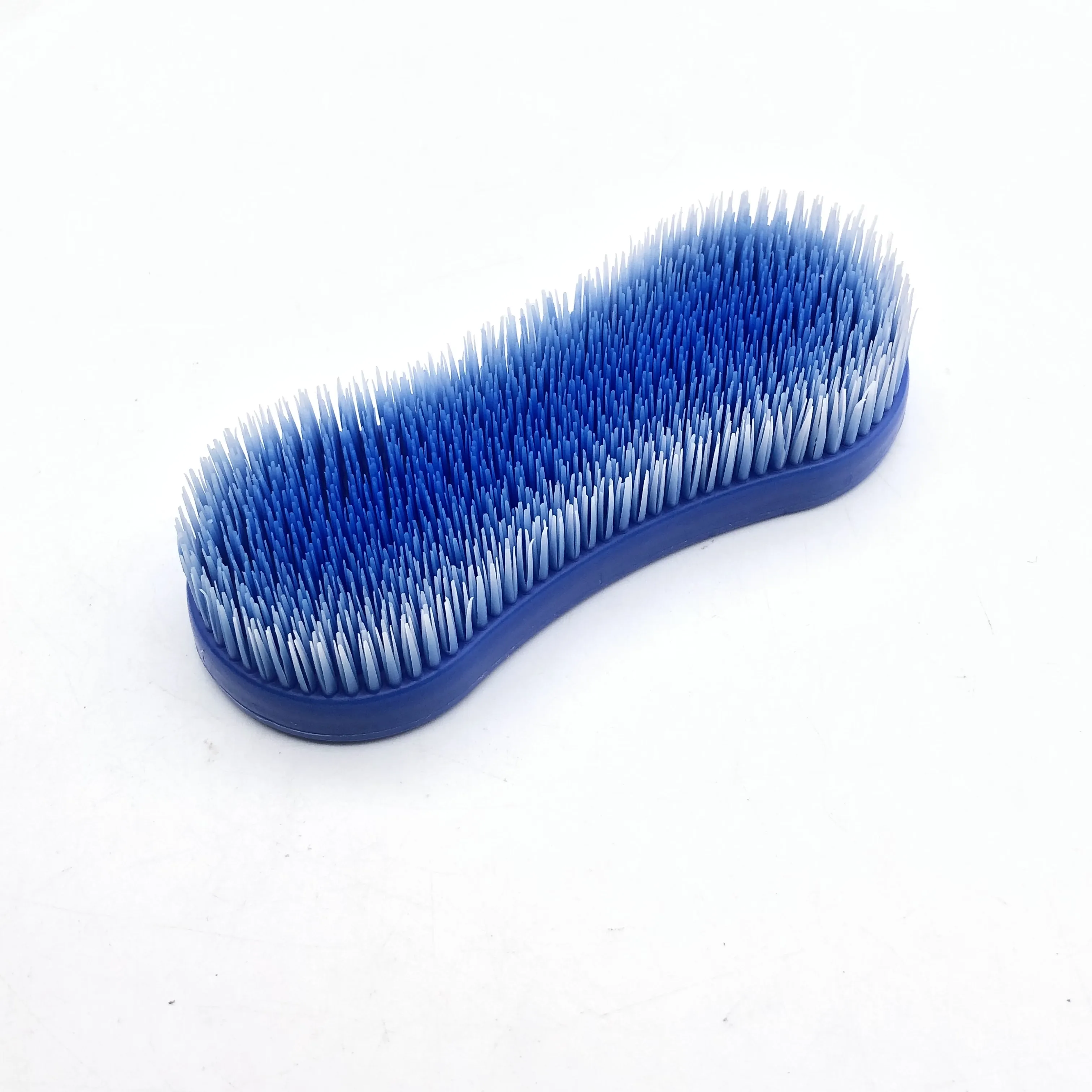
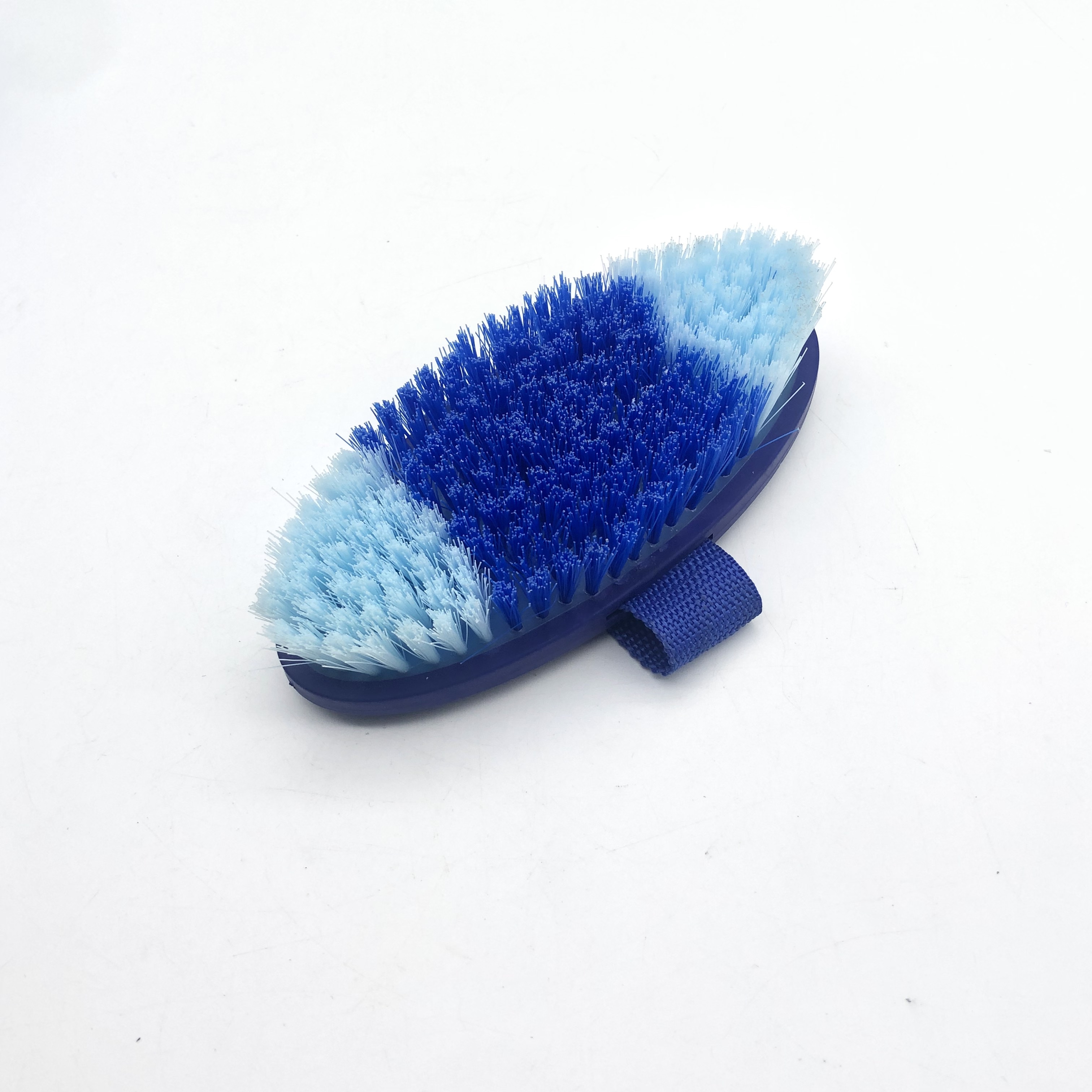
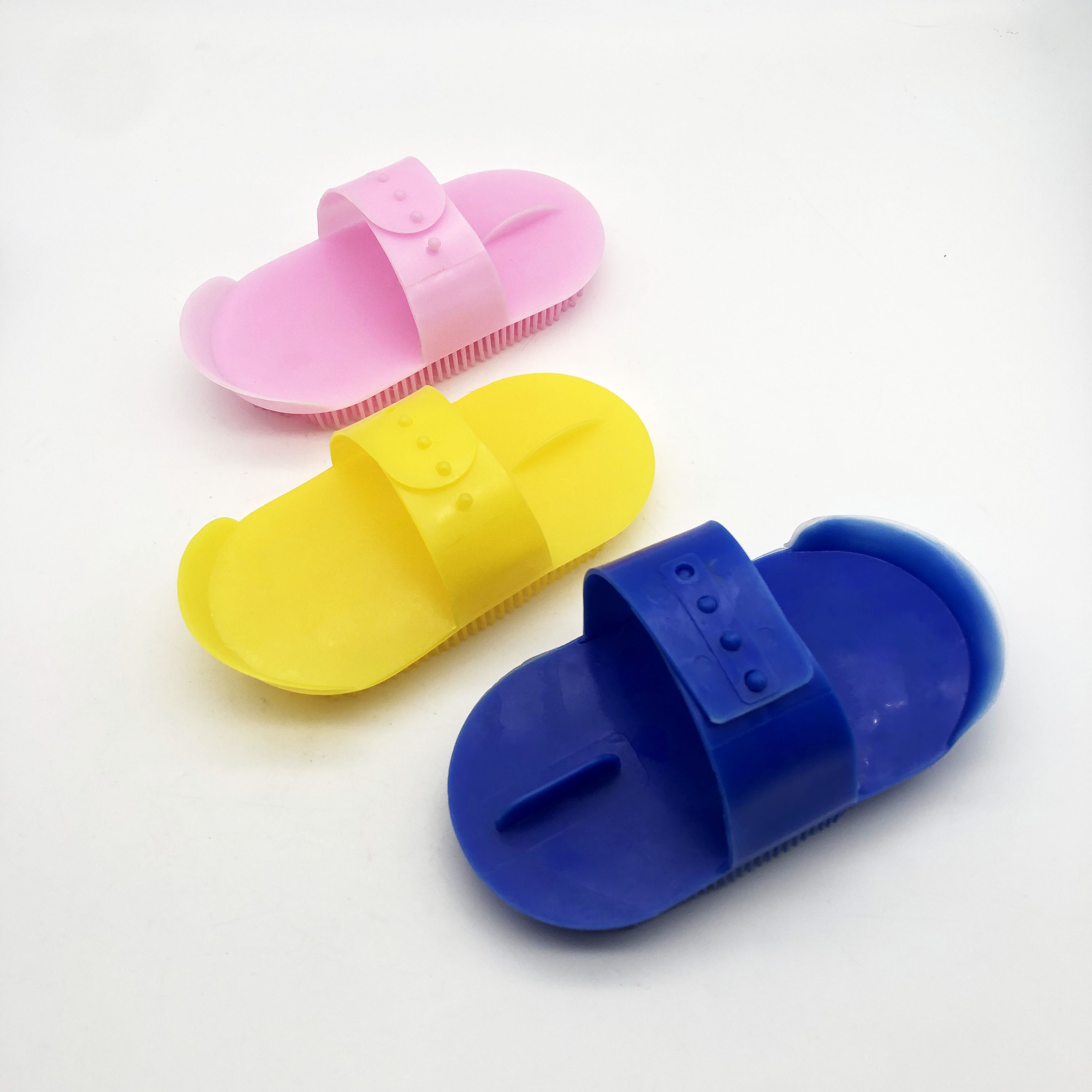
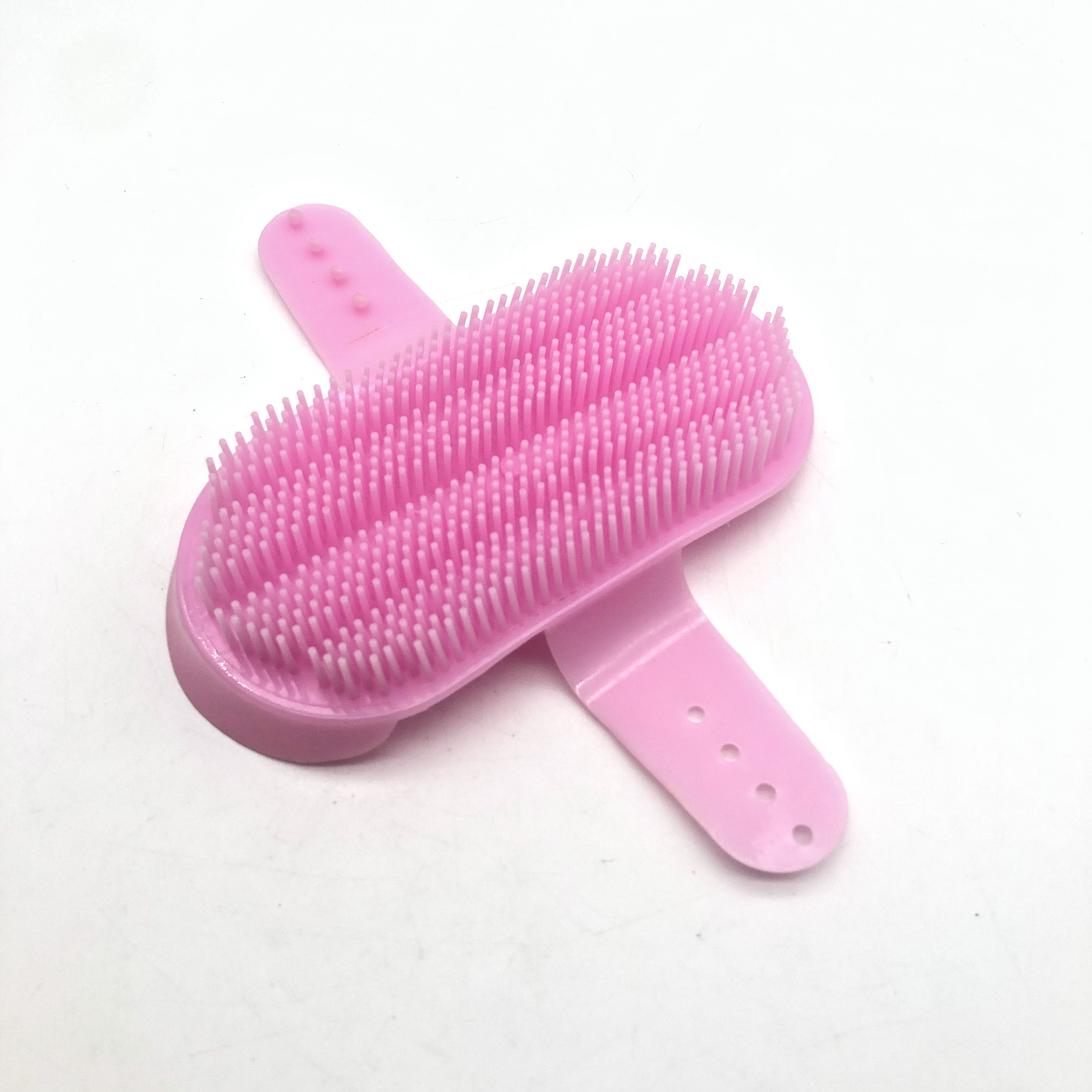
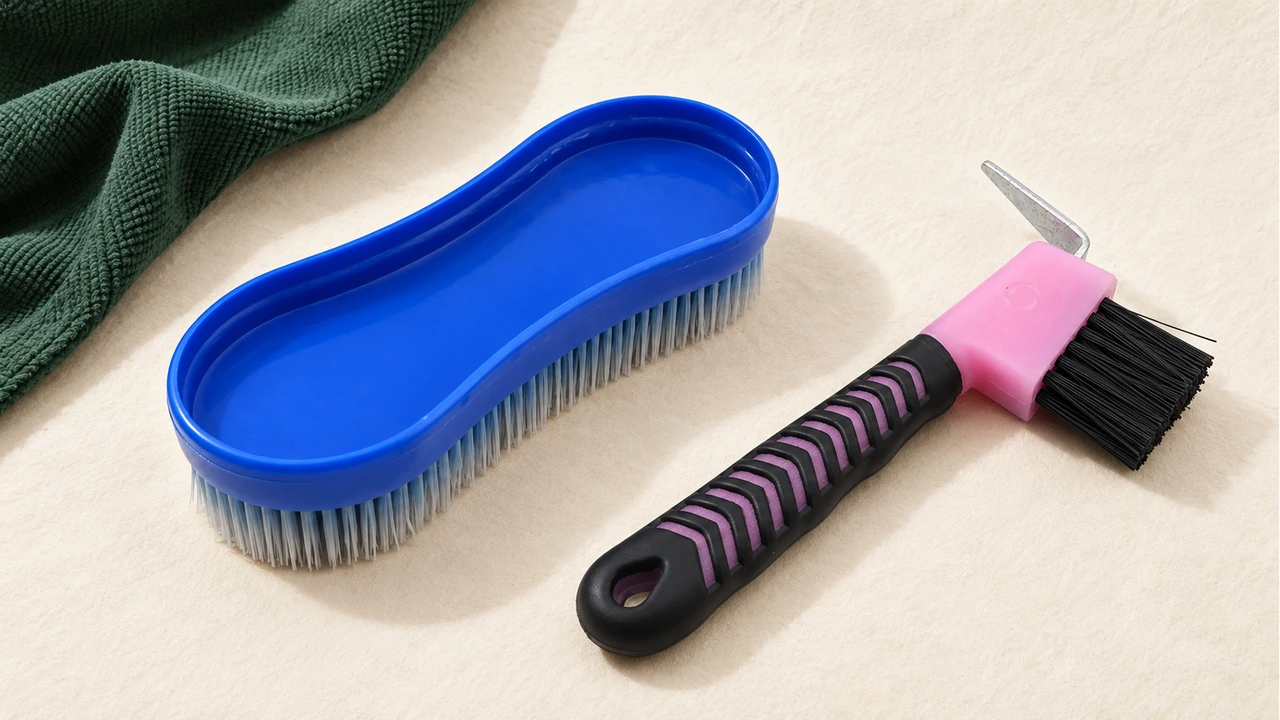
Reference 8111 in the Relia catalogue is described as a plastic and synthetic-fibre body brush with a qualitative soft-to-medium bristle range. The listed colour choices include Blue, Yellow and Pink. These details provide useful selection fields: product reference, material description, bristle description and colour. They do not remove the need to confirm dimensions, care instructions and the intended-use guidance relevant to your enquiry.
Separate overall size from the area occupied by bristles. A long brush body, a narrow waist and a recessed grip can affect the form a buyer wants to assess, but a photograph does not establish hand fit. If grip is important to your range, request a sample for the intended review and record what your team is checking. Avoid replacing that review with an unqualified claim that one design fits every user.
Keep qualitative bristle labels in their original context. Terms such as soft, medium or firm may help distinguish products within a range, but they should not be treated as a common numerical scale across unrelated references. Ask what the description applies to and request a sample if comparison is central to the purchase. Do not convert a descriptive word into a claim about sensitive skin or suitability for every coat area.
Recognize tools with more than one feature
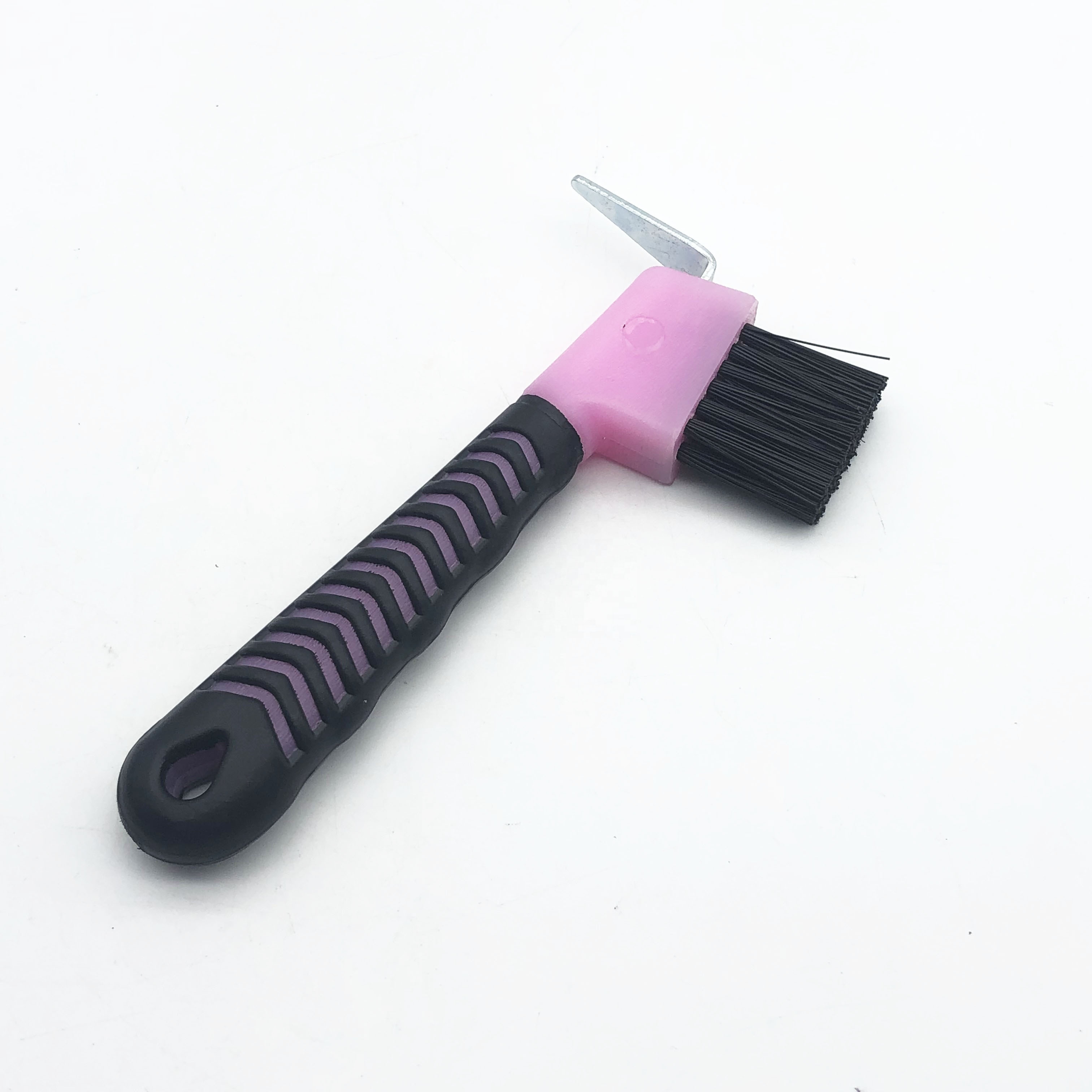
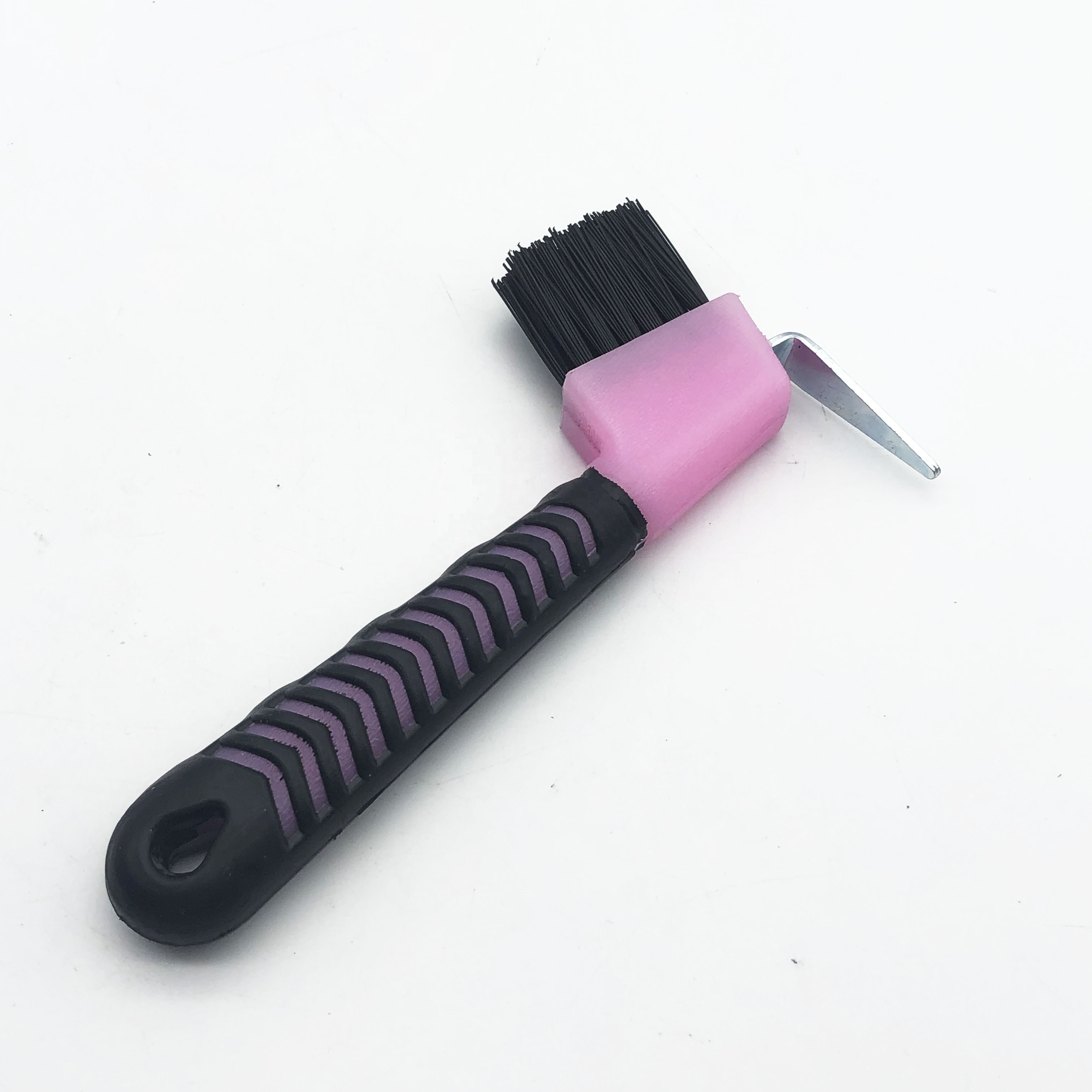
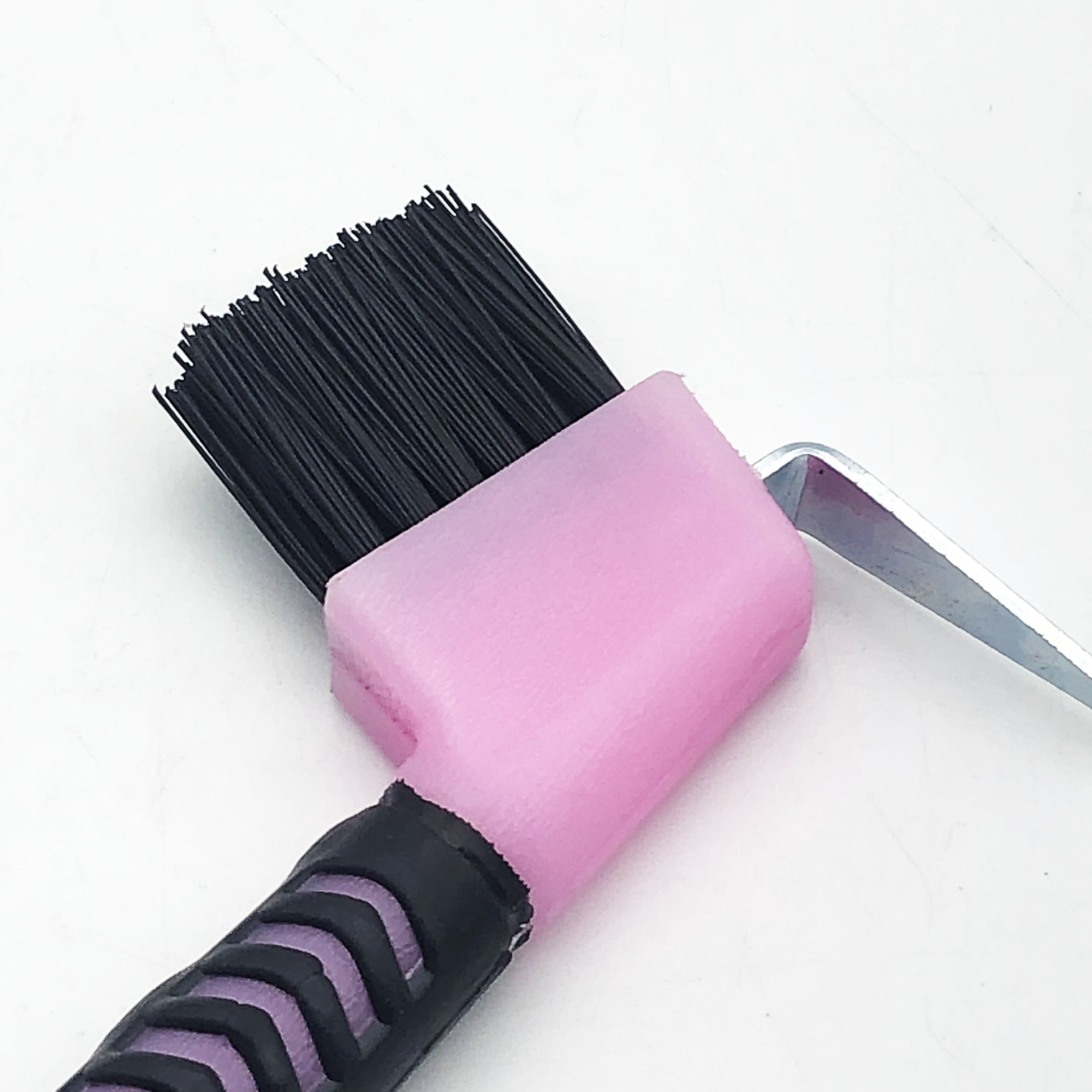
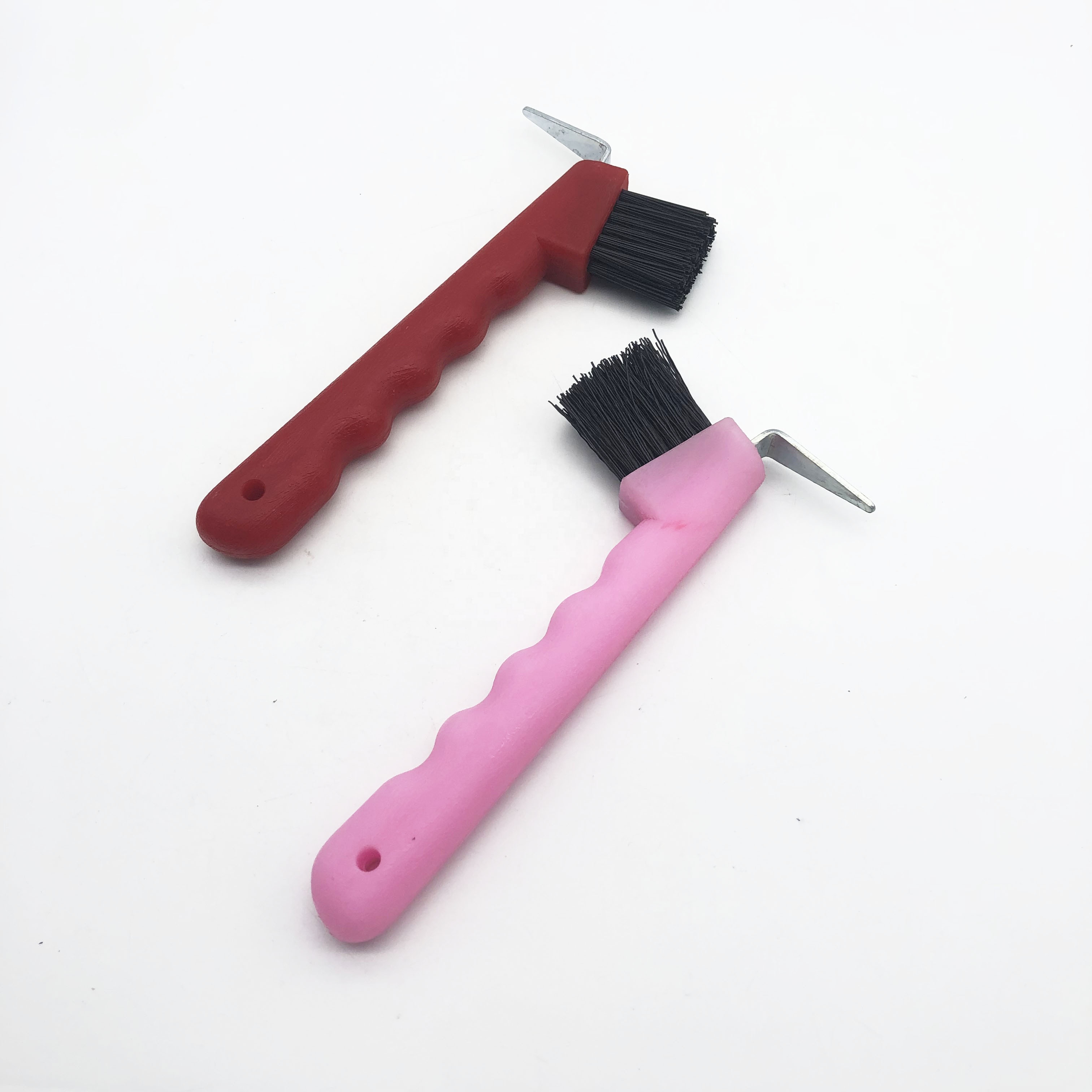
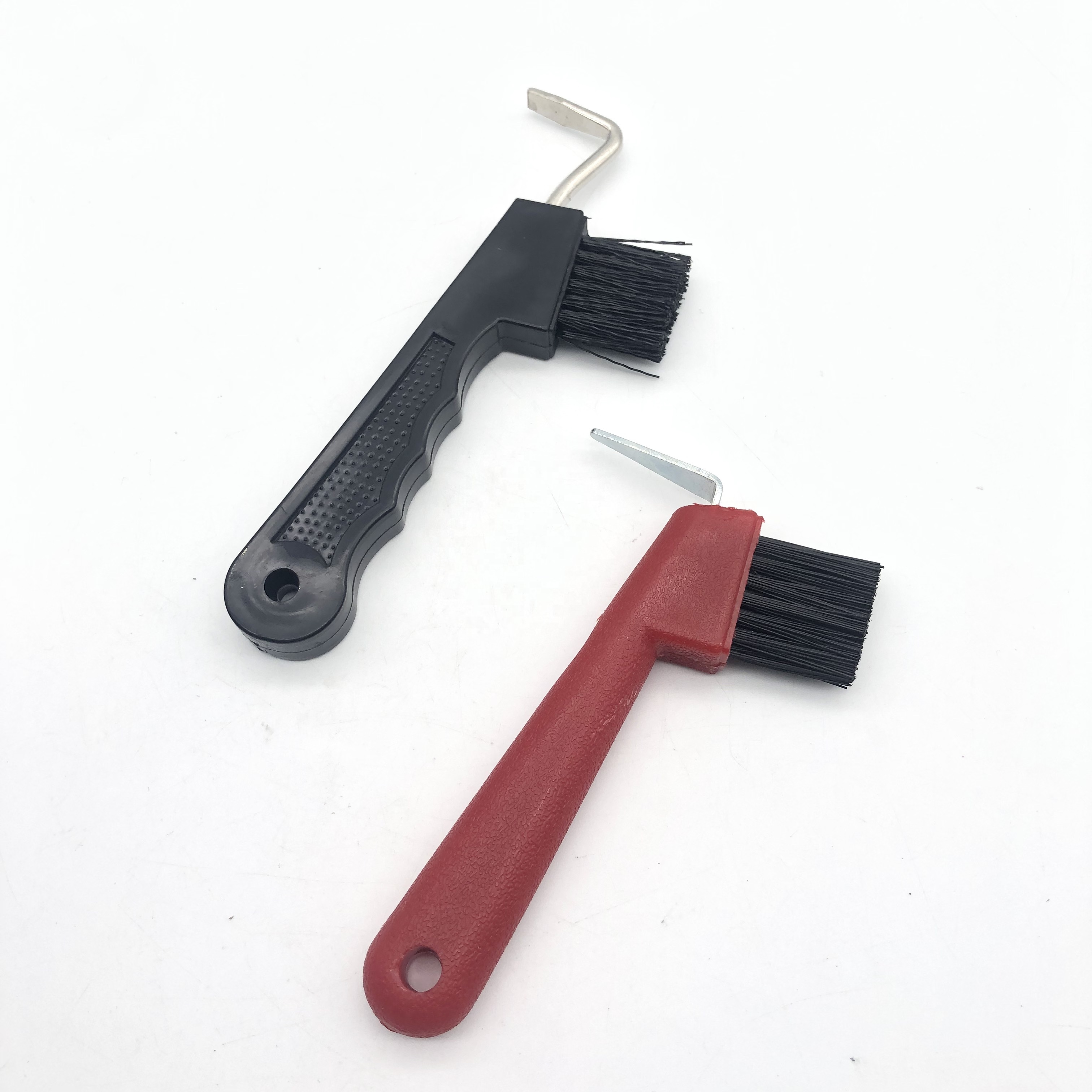
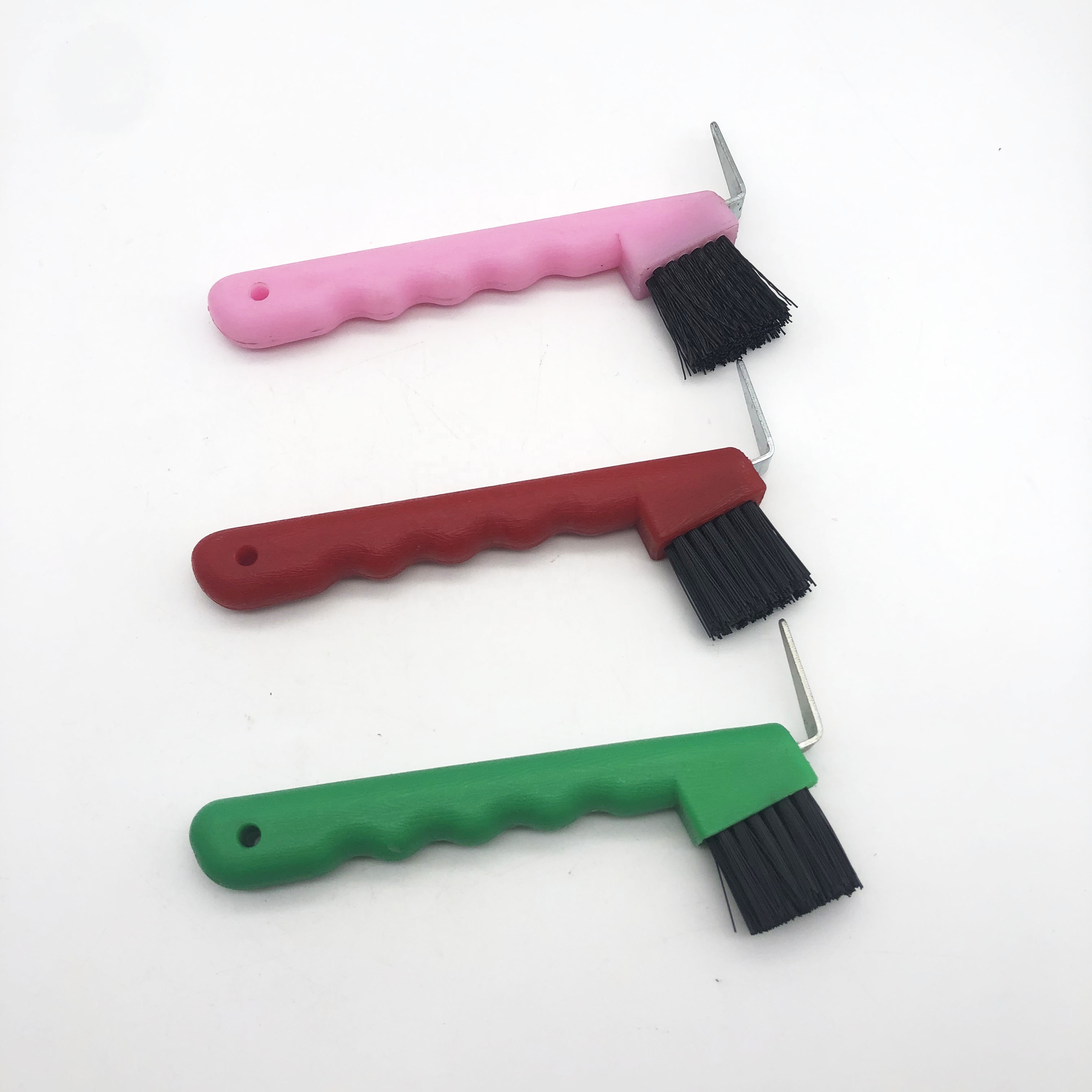
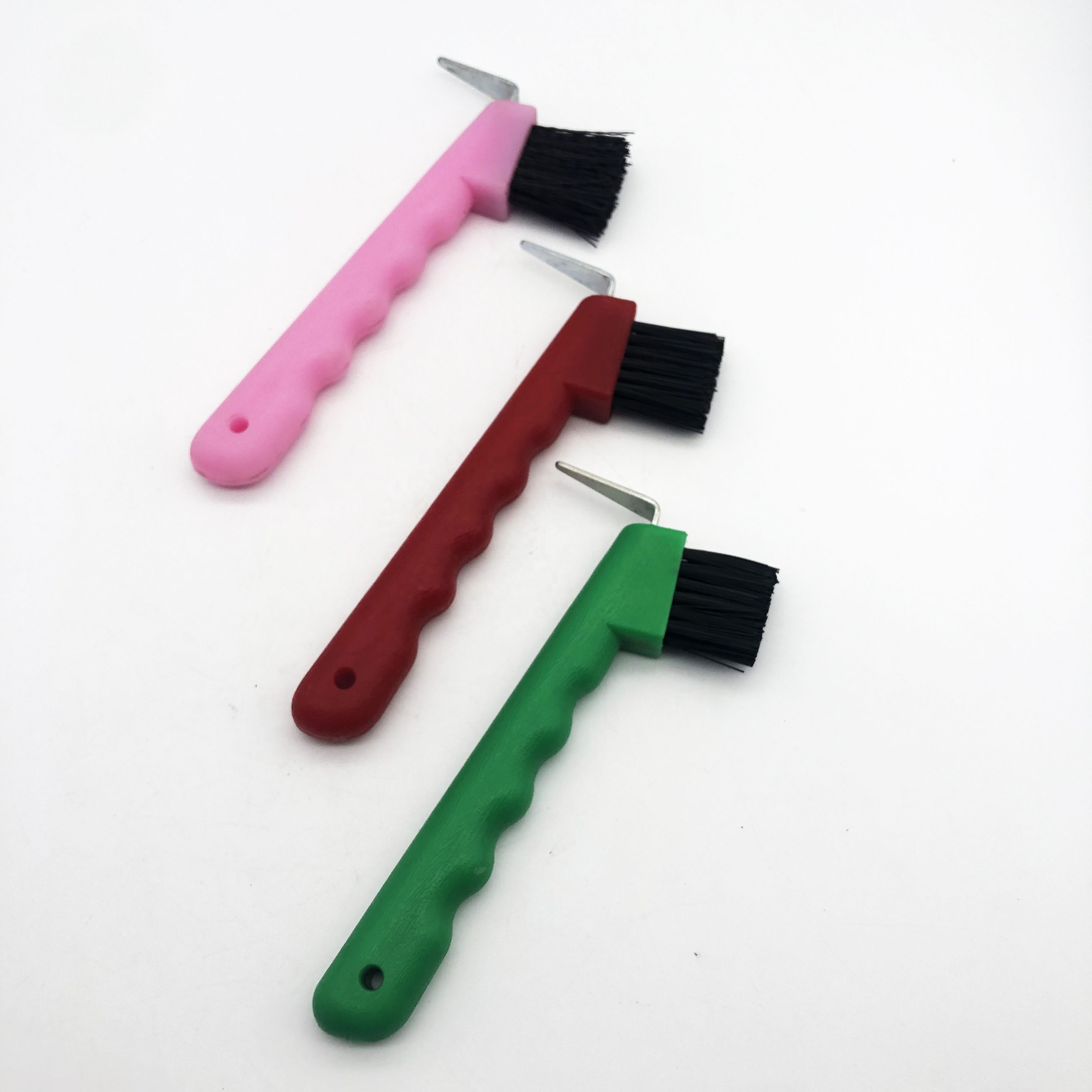
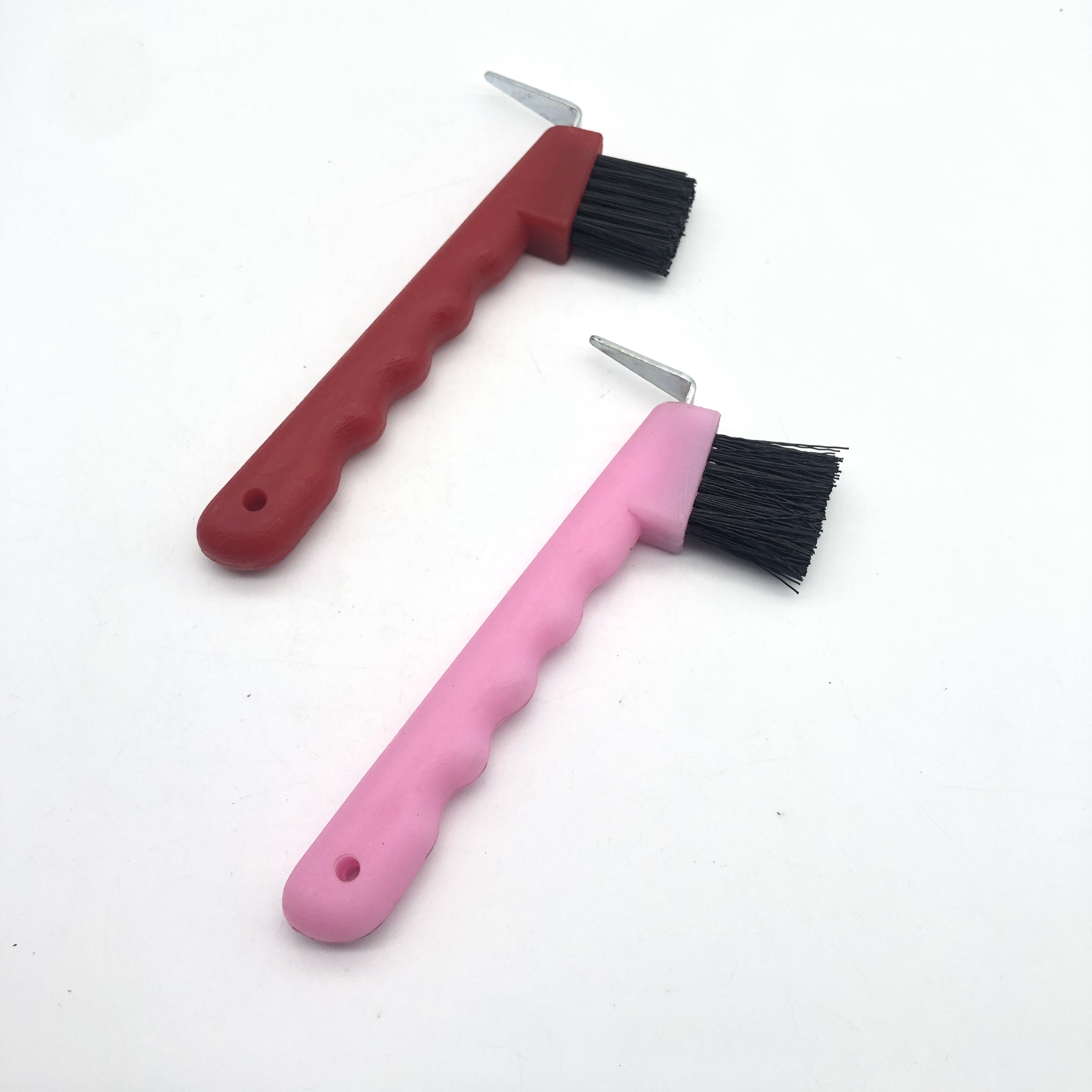
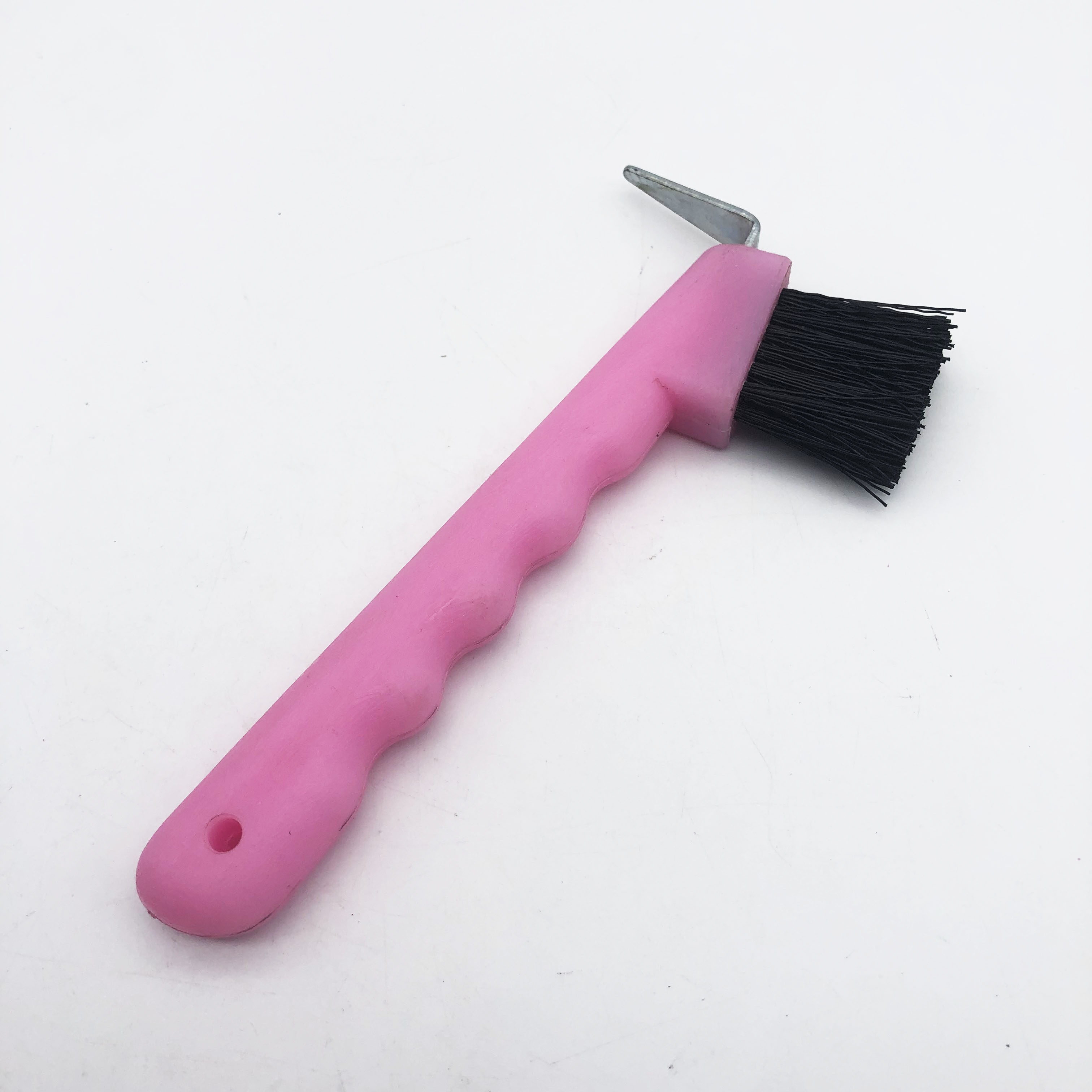
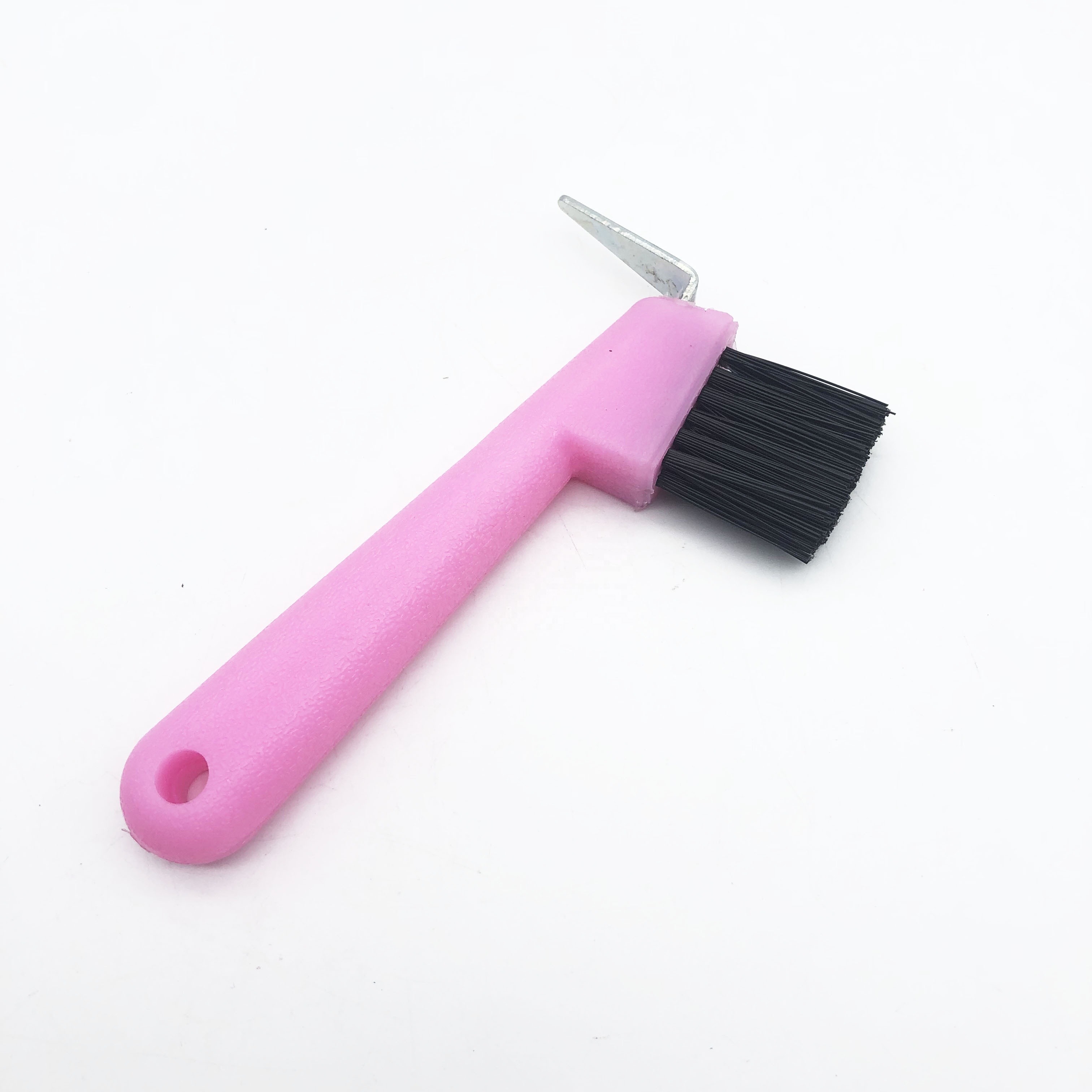
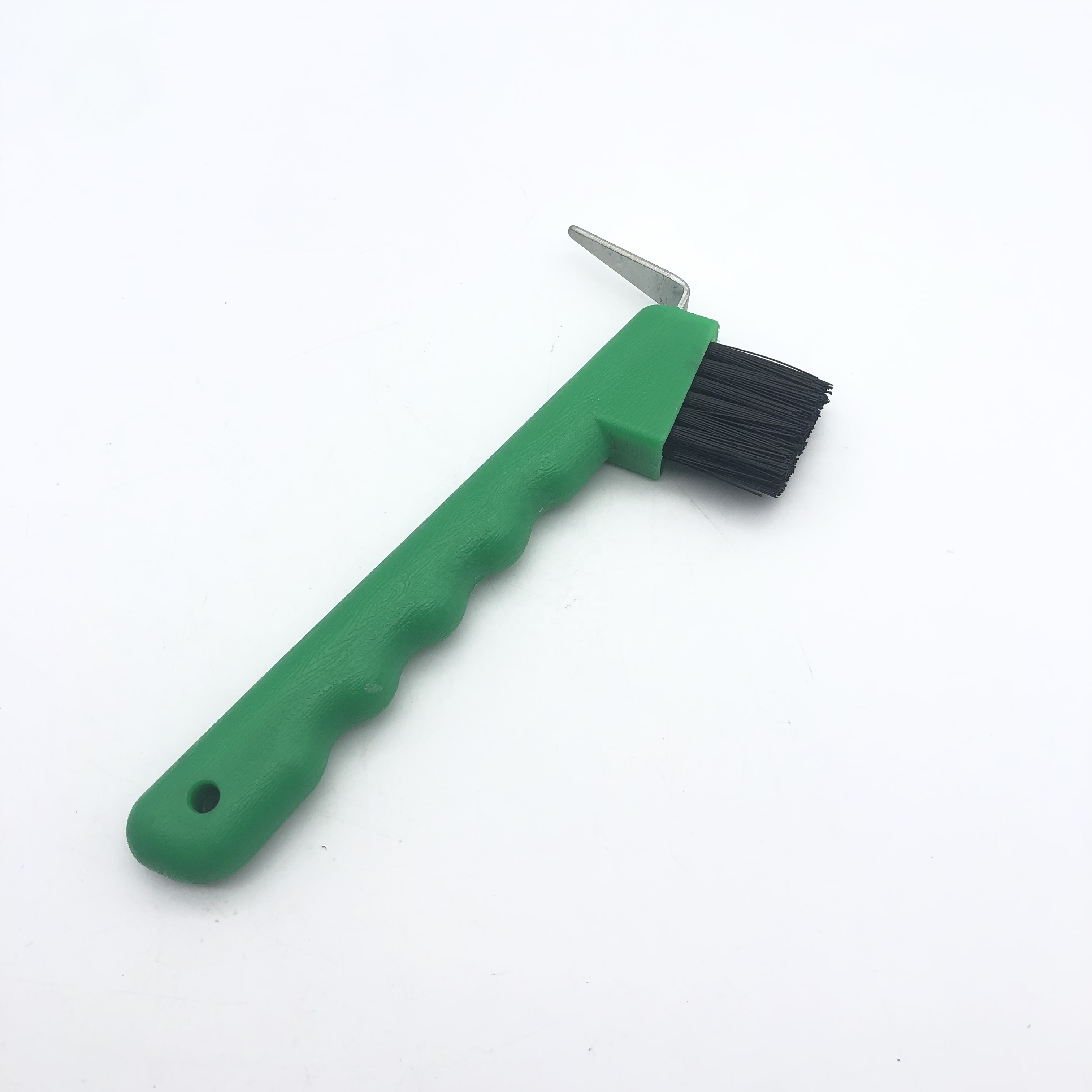
A hoof pick with a brush may combine a hooked metal element, a handle and a bristle block in one item. Identify all of these features when selecting the reference. The catalogue includes a 07002 hoof pick brush and a separate NO.024 grooming-tool reference. Similar roles do not mean the handle shapes, dimensions or supplied options are identical. Keep separate lines until the actual items have been compared.
A close photograph is useful when the tool shape matters. Ask for the relevant view of the hook, the handle and the brush area rather than relying on a distant group photograph. Record the selected reference and any colour choice beside that image. If a picture shows several coloured tools, make clear whether you want one colour, a mixed assortment or separate quantities for each colour.
Do not use an image of an individual tool to infer that it is included in a kit elsewhere in the catalogue. A set needs its own included-item list. Similarly, a tool pictured beside a bag, box or grooming container may be there to illustrate use or scale. Ask for the actual supply scope before making a product list, retail label or purchase commitment based on the image.
Write a kit contents list that can be counted
For each proposed kit, request a line-by-line contents record with the tool name, product reference where available, quantity and selected option. Include the storage item as its own line. This helps distinguish the number of different tool types from the total number of pieces. It also makes the meaning of the kit name clear when one pictured tool has several functional features.
- Name the kit or selected set reference.
- List every included tool and the quantity of that tool.
- Identify the colour or finish arrangement for each relevant item.
- State whether a bag, box, tray or other container is included.
- Record any label, printed insert or packaging request separately.
- Ask how a proposed substitution or change would be confirmed.
Do not let an overall piece count replace the detailed list. A count could include a container or small accessory that another supplier counts differently. Keep the written contents record and an approved photograph together, with both tied to the selected version. If the contents change during discussion, update the revision rather than keeping an old photograph next to a new count.
Plan individual items and sets as different stock lines
Individual brushes and complete grooming kits often serve different purchasing needs. A buyer might compare a starter set with separate top-up tools, but the quote should not merge their quantities. Use one line for the set and a different line for each additional tool. This prevents a request for extra brushes from being mistaken for a change to every set's included contents.
For a colour assortment, state whether the requested mix applies to each kit, each outer pack or the full order. If the mix is only a preference, label it as proposed. Ask which arrangements can be confirmed for the selected items and quantities. A catalogue colour list does not establish the availability of a particular mixed pack or a custom shade.
Leave room for your own item codes, but retain the supplier reference beside them. An internal retail description can be shorter than a technical description, yet the connection between the two must remain clear. A simple spreadsheet with both codes, selected options and quantities is often easier to reconcile than an email containing several images with no identifying labels.
Keep care and presentation requests specific
If your intended range includes wet grooming, shampoo use or a particular cleaning process, ask for the relevant care instructions for the selected tool. A broad material label alone does not settle compatibility with every product or cleaning method. State the planned conditions clearly and ask which supporting information is available. Keep any accepted guidance with the product record.
Custom logo or colour wording should become a defined request. For a printed mark, supply the artwork, intended position, approximate size and selected tool. For a colour request, use a clear reference and ask how it would be approved. Sampling, acceptance, quantities and commercial conditions need confirmation for the actual item; a customisation entry is not an unconditional promise covering every proposed change.
For retail presentation, distinguish the requirements of the tool from the requirements of the pack. Product identification, colour labels, inserts and outer-pack counts should be recorded explicitly where needed. If you require market-specific wording or documentation, provide that requirement for review rather than assuming it follows from a generic grooming-tool description.
Make replenishment easy to identify
Keep a simple record of the accepted tool or set, including the reference, colour, contents revision and any agreed presentation. For replacement tools, note whether they are intended to match an existing range or simply fill the same purchasing category. That distinction helps a supplier identify whether a proposed alternative needs a close visual comparison, a dimensional review or a separate contents decision.
When the range changes, update the record before sending the next enquiry. Remove discontinued internal item codes from the active list and mark proposed additions clearly. A short current spreadsheet is more useful than forwarding an old order and describing several changes in prose. It also gives your receiving team a recognizable item list to compare with the agreed packing details when the supply is arranged.
Prepare a list that leads to a comparable quotation
For each line, include the product link, supplier reference, selected colour, quantity and destination. Add dimensions or sample questions only where they affect your decision. A good list also flags unresolved points: contents awaiting confirmation, a preferred assortment, a proposed logo or an instruction sheet still needed. This lets the supplier reply to concrete questions instead of trying to infer the intended range.
When a quotation returns, compare the item and contents first, then review its commercial conditions. A lower number is not a like-for-like comparison if one offer contains fewer tools or excludes the storage item. Record the accepted version and retain any approved sample or contents photograph. Use that record when preparing a later replenishment enquiry.
Explore horse grooming and hoof-care tools, then use the wholesale sourcing guide to prepare an itemized request. Send Relia your selected tool references and proposed quantities through the contact form. Clear item identification and an explicit contents list give both sides a more practical starting point for discussing the supply.